
Short Answer
Overview
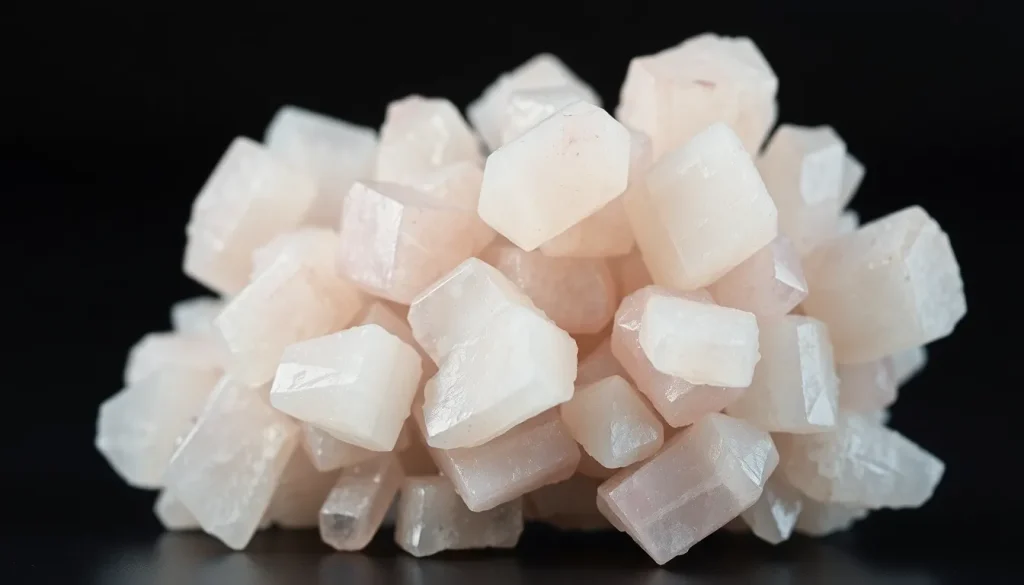
Polyhalite is a hydrated potassium‑calcium‑magnesium sulfate mineral with the chemical formula K₂Ca₂Mg(SO₄)₄·2H₂O. It typically forms colorless to white aggregates, sometimes displaying pale pink or green tints. Though its hardness (3.5–4 on the Mohs scale) limits its use in mainstream jewelry, it is prized by mineral collectors for its distinctive crystal habit and geological significance.
History and Origin
The name “polyhalite” derives from the Greek words poly (many) and halos (salt), reflecting its composition of multiple sulfate salts. First described in the early 19th century from deposits in Upper Lusatia, Germany, polyhalite occurs in evaporite sequences where seawater or lake water has evaporated, leaving layered sulfate minerals. Significant modern occurrences are found in the United Kingdom, Canada, the United States, Russia, and Poland.
Meaning and Symbolism
In traditional crystal‑healing lore, polyhalite is associated with perseverance and grounding. It is said to help one stay focused on long‑term goals and to support the ability to “weather” challenging circumstances. These meanings are cultural beliefs and not scientifically verified.
Healing and Metaphysical Properties
Crystal‑healing practitioners claim that polyhalite can aid in balancing the body’s mineral metabolism and promote calm during stressful periods. It is often linked to the Root Chakra, symbolizing stability. As with all metaphysical claims, these should be regarded as personal belief systems rather than medical advice.
Varieties and Types
Polyhalite does not have widely recognized gemstone varieties. Color variations are limited to:
- Colorless to white – the most common.
- Pale pink – caused by trace iron or manganese.
- Pale green – due to minor chromium content.
Specimens may appear as massive granular aggregates or as tabular crystals with a distinctive monoclinic habit.
Jewelry Uses and Care
Because of its relatively low hardness and perfect cleavage on {010}, polyhalite is rarely set in everyday jewelry. When used, it is typically incorporated into pendants, earrings, or brooches that are protected from abrasion. Care recommendations include:
- Clean gently with a soft, damp cloth; avoid ultrasonic cleaners.
- Do not expose to acids, harsh detergents, or prolonged moisture.
- Store separately from harder gemstones to prevent scratching.
Buying Guide
When purchasing polyhalite, consider the following:
- Clarity and Color: Look for specimens free of heavy inclusions and with even coloration.
- Cut and Setting: Since the stone is soft, a protective bezel or setting that shields the edges is advisable.
- Origin: Reputable dealers will disclose the locality; common sources include Germany and the United Kingdom.
- Treatment Disclosure: Polyhalite is generally untreated, but any artificial enhancement should be disclosed.
For valuable pieces, request a gemological report from a recognized laboratory.
FAQ
What is polyhalite good for?
Polyhalite is primarily valued by collectors for its unique crystal habit and as a geological indicator of evaporite environments. Traditional beliefs attribute grounding and perseverance qualities, but these are not medical facts.
Is polyhalite rare?
High‑quality, well‑crystallized polyhalite specimens are relatively uncommon because the mineral forms in limited evaporite settings and is soft, making it prone to damage. However, massive aggregates are more abundant in known localities.
How can you tell if polyhalite is real?
Check for a hardness of 3.5–4, perfect cleavage on {010}, and a white streak. Genuine polyhalite is translucent to transparent with a vitreous‑pearly luster. For certainty, have the stone examined by a certified gemologist or send it to a laboratory.
What chakra is polyhalite associated with?
In crystal‑healing traditions, polyhalite is linked to the Root Chakra, symbolizing stability and grounding. This association reflects belief systems, not scientific evidence.
How should you clean polyhalite?
Because polyhalite is soft and can be cleaved easily, clean it gently with a soft, damp cloth. Avoid ultrasonic cleaners, harsh chemicals, or prolonged exposure to water. Store it separately from harder gemstones to prevent scratches.
Leave a Reply