
Short Answer
Overview
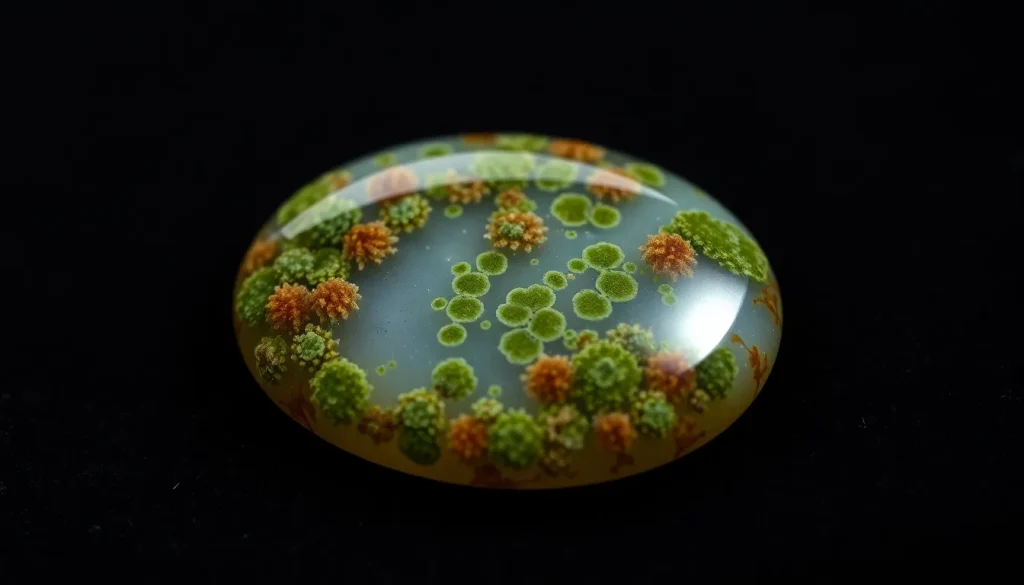
Moss agate is a translucent to opaque variety of chalcedony (microcrystalline quartz) distinguished by green, brown, black or yellowish mineral inclusions that resemble moss, foliage or lichen. Despite the name, it is not a true agate because it lacks the concentric banding typical of agate varieties. The stone is appreciated for its natural, earthy patterns and is used in both ornamental and metaphysical contexts.
History and Origin
The earliest recorded mentions of moss‑like chalcedony date to the 19th century when specimens from Brazil and the United States entered the European market. Historically, the stone was carved into cameos, seals and ornamental objects. Major sources include Brazil, India (particularly the state of Madhya Pradesh), Uruguay, the United States (Oregon and Idaho), and Canada (Ontario). Its distinctive pattern has made it a favorite among collectors and lapidary artists for more than a century.
Meaning and Symbolism
In traditional folklore, moss agate is associated with the natural world, growth, and perseverance. It is said to symbolize stability, grounding, and the ability to thrive in challenging environments—much like moss that clings to stone. The stone is often given as a token of friendship or as a talisman for travelers seeking safe passage.
Healing and Metaphysical Properties
Within crystal‑healing belief systems, moss agate is thought to promote emotional balance, reduce stress, and enhance one’s connection to the earth. Practitioners claim it can aid in overcoming grief, fostering patience, and encouraging personal growth. These properties are attributed to its earthy coloration and the visual impression of living moss. These statements reflect traditional beliefs and are not medical advice.
Varieties and Types
- Tree Agate: A term sometimes used for moss agate that exhibits larger, more tree‑like inclusions.
- Red Moss Agate: Features reddish‑brown inclusions, giving a warmer appearance.
- Blue Moss Agate: Displays bluish-green inclusions, rarer than the typical green‑brown type.
- Black Moss Agate: Dominated by dark inclusions, creating a dramatic contrast.
Jewelry Uses and Care
Moss agate’s relatively high hardness (6.5–7 on the Mohs scale) makes it suitable for rings, pendants, earrings, and cabochons. However, its porous nature means it can be sensitive to harsh chemicals and prolonged exposure to heat.
- Cleaning: Use warm, soapy water and a soft brush; avoid ultrasonic cleaners.
- Storage: Keep separate from harder gemstones (e.g., quartz, topaz) to prevent scratches.
- Maintenance: Re‑polish cabochons periodically if the surface becomes dull.
Buying Guide
When selecting moss agate, consider the following factors:
- Pattern: Look for natural, well‑distributed moss‑like inclusions without excessive cloudiness.
- Color: Genuine moss agate displays earthy greens and browns; vivid or overly uniform colors may indicate dyeing.
- Treatment: Some pieces are enhanced with heat or resin to improve clarity—request disclosure from the seller.
- Cut and Finish: High‑quality cabochons have a smooth, polished dome that showcases the internal pattern.
- Certification: For high‑value items, ask for a gem‑ological report from a recognized laboratory (e.g., GIA).
Buying from reputable dealers and requesting provenance information will help ensure authenticity.
FAQ
What is moss agate good for?
Moss agate is valued for its decorative appearance in jewelry and lapidary work. Traditionally, it is believed to promote grounding, emotional balance, and connection to nature, though these are not medical claims.
Is moss agate rare?
Moss agate is relatively common in good quality, especially from Brazil and India. High‑grade specimens with vivid, well‑defined moss patterns are less common and may command higher prices.
How can you tell if moss agate is real?
Authentic moss agate shows natural, irregular moss‑like inclusions and a waxy luster. Look for uneven color zones and avoid overly uniform or bright colors that suggest dyeing. A professional gem‑lab test can confirm composition.
What chakra is moss agate associated with?
In crystal‑healing traditions, moss agate is most commonly linked to the Heart (Anahata) chakra, supporting emotional healing and compassion.
How should you clean moss agate?
Clean moss agate with warm, soapy water and a soft brush. Rinse thoroughly and pat dry with a lint‑free cloth. Avoid ultrasonic cleaners, harsh chemicals, and prolonged exposure to high heat.
Leave a Reply