
Short Answer
Direct Answer
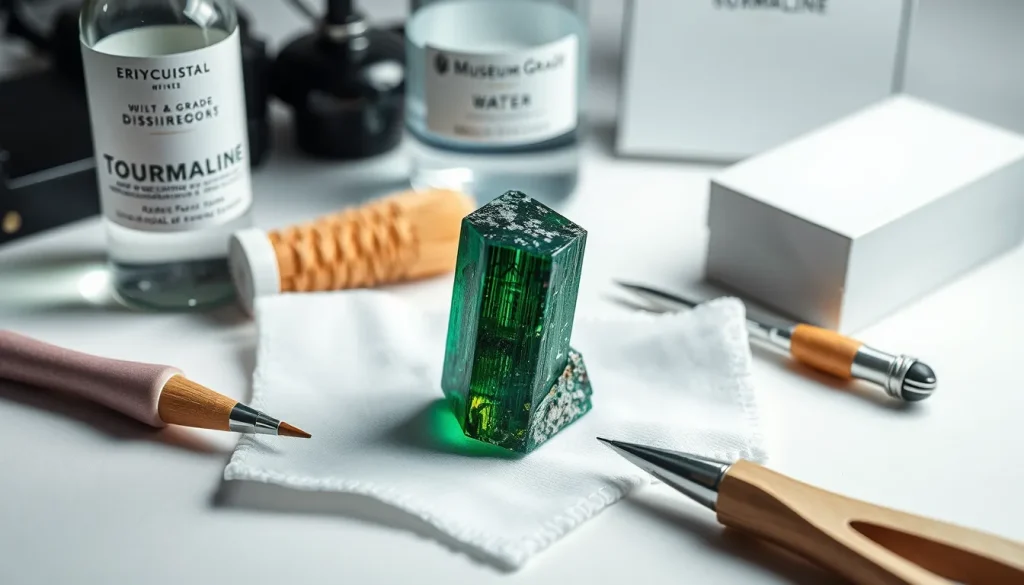
Cleaning and storing rare silicate minerals requires a conservative approach centered on the principle of minimal intervention. Silicates—a vast group including quartz, beryl, tourmaline, and garnet—vary significantly in hardness and chemical stability. The primary goal is to remove surface contaminants without etching the mineral surface, leaching internal water (in the case of hydrated silicates), or causing mechanical fracture. Proper care involves using distilled water, soft-bristled tools, and climate-controlled, acid-free storage environments to ensure long-term stability and value retention.
Relevant Conditions
Before applying any cleaning agent, a gemologist must evaluate the specific condition and variety of the silicate. Not all silicates react the same way to environmental stressors:
- Hardness (Mohs Scale): While most silicates are hard (e.g., Quartz at 7), some are relatively soft or brittle, making them prone to scratching during cleaning.
- Cleavage and Fracture: Minerals with perfect cleavage (like some feldspars) are susceptible to splitting if subjected to high-pressure water or mechanical scrubbing.
- Sensitivity to Chemicals: Certain rare silicates can react with acidic or alkaline solutions, leading to permanent surface pitting or discoloration.
- Hydration Levels: Zeolites and other hydrated silicates may lose structural water if exposed to extreme heat or certain desiccants, altering their chemical composition.
Recommended Steps
To maintain the integrity of a rare silicate specimen, follow this professional sequence of cleaning and storage:
Step 1: Dry Cleaning
Always begin with the least invasive method. Use a soft-bristled natural brush or a bulb blower to remove loose dust and debris. This prevents particles from being ground into the surface during wet cleaning.
Step 2: Aqueous Cleaning
If surface grime persists, use distilled water. Tap water contains minerals that can leave deposits or react with the specimen. Use a soft cloth or a cotton swab dipped in distilled water, applying gentle pressure. For stubborn organic deposits, a mild, pH-neutral detergent may be used, followed by a thorough rinse with distilled water.
Step 3: Drying
Allow the mineral to air dry on a soft lint-free towel. Avoid using high-heat blow dryers, as rapid temperature changes can cause thermal shock in minerals with internal inclusions or fractures.
Step 4: Archival Storage
Store specimens in a controlled environment using the following guidelines:
- Containers: Use acid-free cardboard boxes or museum-grade plastic (polypropylene). Avoid PVC plastics, which release hydrochloric acid over time.
- Padding: Use archival foam or acid-free tissue paper to prevent the mineral from shifting.
- Environment: Maintain a stable temperature and humidity level. Avoid direct sunlight, which can cause fading in certain color-center silicates (e.g., some varieties of amethyst or kunzite).
Expert Tip: When storing high-value crystals, always place the specimen on its most stable face to prevent tipping and ensure that the contact point is cushioned to avoid “pressure bruising.”
Exceptions
Certain silicate minerals require specialized care that deviates from standard procedures:
| Mineral Type | Contraindication | Recommended Alternative |
|---|---|---|
| Opal (Hydrated Silicate) | Avoid prolonged soaking in water. | Use a damp cloth; avoid ultrasonic cleaners. |
| Tektites/Glassy Silicates | Avoid abrasive scrubbing. | Use only soft microfiber cloths. |
| Fragile Zeolites | Avoid high-pressure water jets. | Use a soft brush and distilled water mist. |
When to Ask a Professional
In several scenarios, DIY cleaning can be catastrophic. Consult a professional conservator or senior gemologist if:
- The specimen has deep-seated inclusions or visible internal fractures that may expand when exposed to liquids.
- The mineral is covered in calcified crusts or iron stains that require chemical acids (like HCl) for removal.
- The specimen is of extreme rarity or museum-grade value, where any alteration of the surface could significantly decrease its market value.
- You observe efflorescence (white powdery deposits) forming on the surface, which may indicate a chemical breakdown.
FAQ
Can I use an ultrasonic cleaner for silicate minerals?
It depends on the mineral. While hard, stable silicates like quartz can often handle it, minerals with fractures, inclusions, or those that are hydrated (like opal) can shatter or crack under ultrasonic vibration. Always test a small area or consult a professional.
Is it safe to use soap on my minerals?
Only use mild, pH-neutral detergents. Avoid harsh soaps, bleach, or ammonia, as these can react with the mineral's chemistry or leave a residue that is difficult to remove without risking the specimen.
How should I store minerals to prevent color fading?
Store light-sensitive silicates (like some amethysts or kunzites) in opaque containers or in a room with UV-filtered lighting and no direct sunlight.
Leave a Reply