
Short Answer
Overview
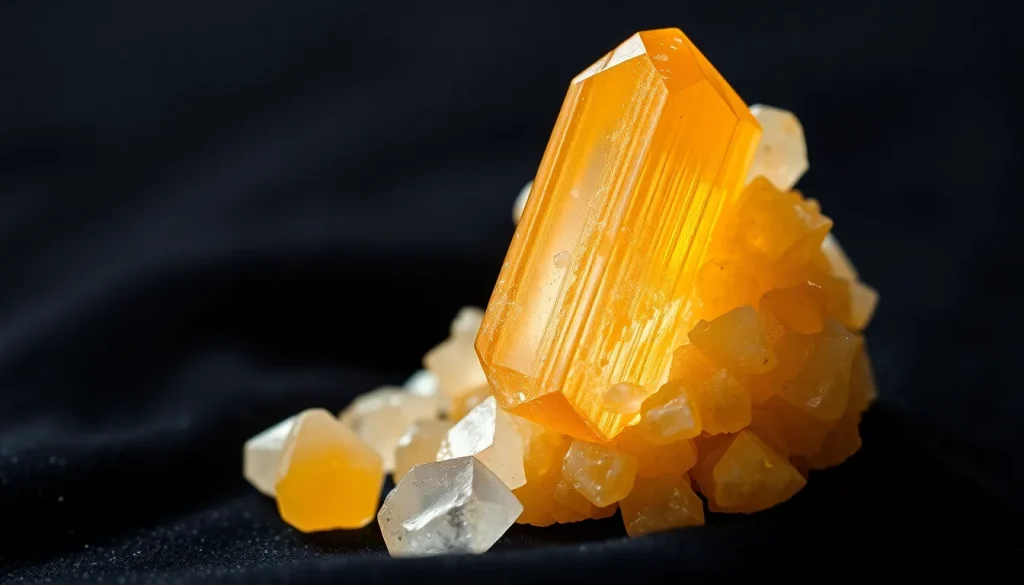
Strontianite is a naturally occurring carbonate mineral composed of strontium carbonate (SrCO3). It crystallizes in the orthorhombic system and typically forms prismatic or tabular crystals, though massive and granular habitus are also common. Color varies widely, ranging from colorless and white to shades of yellow, orange, brown, red, and pink, often depending on trace impurities. With a Mohs hardness of 3.5‑4, strontianite is relatively soft compared with many traditional gemstones, which influences its use in jewelry.
History and Origin
The mineral was first described in 1792 from the village of Strontian in the Scottish Highlands, where it occurs in carbonated hydrothermal veins associated with lead and zinc ores. The name derives directly from this locality. Early mineralogists noted its bright yellow crystals, and the element strontium, isolated later in 1798, was named after the same locality. Today, strontianite is found in several carbonate‑rich districts worldwide, often as a secondary mineral in oxidized zones of ore deposits.
Meaning and Symbolism
In ornamental and metaphysical contexts, strontianite’s vivid colors are associated with optimism, creativity, and emotional expression. Yellow and orange specimens are traditionally linked to joy and personal power, while pink and red varieties are said to evoke warmth and compassion. Because the mineral contains strontium—a metal historically used in fireworks—it is sometimes symbolically connected to celebration and illumination.
Healing and Metaphysical Properties
Crystal‑healing practitioners attribute several traditional benefits to strontianite. Common beliefs include:
- Grounding and stability: The mineral’s earthy base is said to help anchor scattered energy.
- Emotional balance: Yellow stones are thought to uplift mood and reduce anxiety, while pink stones are linked to heart‑centered love.
- Detoxification: Some traditions claim strontianite assists in cleansing the body of negative influences, particularly when placed on the solar plexus.
These claims are based on folklore and should not replace professional medical advice.
Varieties and Types
Strontianite occurs in several recognizable varieties, primarily distinguished by color and crystal habit:
- Colourless/White: Typically transparent to translucent, prized for clarity.
- Yellow to Orange: Caused by iron or manganese impurities; the most common commercial colour.
- Red to Pink: Rare, often containing trace chromium.
- Brown/Gray: Result from oxidation or inclusion of other metal ions.
Specimens may also display a distinct banded or radial growth pattern, especially in well‑formed prismatic crystals. Synthetic strontianite is rarely produced, as the natural mineral is generally preferred for collectors.
Jewelry Uses and Care
Because of its modest hardness, strontianite is best suited for pendants, earrings, and brooch settings where abrasion risk is low. It is often cut en cabochon to showcase its colour and avoid cleavage‑related fractures. When incorporated into jewelry, the stone should be protected from scratches, harsh chemicals, and prolonged exposure to sunlight, which can fade some hues.
Care recommendations:
- Clean with lukewarm water, a soft brush, and mild soap; avoid ultrasonic cleaners.
- Store separately from harder gemstones such as quartz or diamonds.
- Do not expose to high‑temperature heat treatments or rapid temperature changes.
Buying Guide
When selecting strontianite, consider the following factors:
- Color intensity: Vivid, even coloration is more desirable than mottled or washed‑out tones.
- Clarity: Inclusions are common; however, large cracks or visible fractures reduce value.
- Cut and polish: A well‑polished cabochon or faceted stone will display higher luster and depth.
- Origin: Specimens from classic localities such as Scotland or the Canadian Shield are often sought after by collectors.
- Treatment disclosure: Ensure any heat‑treatment or dyeing is disclosed; untreated natural stones command a premium.
For valuable pieces, request a gemological report from a reputable laboratory (e.g., GIA or IGI) to verify authenticity and any treatments.
FAQ
What is strontianite good for?
Strontianite is valued by collectors for its vivid colors and crystal forms, and it is occasionally used in pendants and earrings. Traditionally, crystal‑healing enthusiasts attribute grounding and emotional‑balance benefits to the stone, though these are not medically verified.
Is strontianite rare?
High‑quality, vividly colored strontianite is relatively uncommon, especially in large, inclusion‑free crystals. However, the mineral itself is not exceedingly rare, as it occurs in several mining districts worldwide.
How can you tell if strontianite is real?
Real strontianite has a Mohs hardness of 3.5‑4, a white streak, and perfect cleavage on two directions. It exhibits a vitreous to pearly luster and a refractive index around 1.52–1.56. Professional testing, such as a gemological report, confirms authenticity and reveals any treatments.
What chakra is strontianite associated with?
In crystal‑healing traditions, strontianite does not have a universally accepted chakra association; some sources link its yellow varieties to the Solar Plexus, while others consider it a general grounding stone.
How should you clean strontianite?
Clean strontianite gently with lukewarm water, a soft brush, and mild soap. Avoid ultrasonic cleaners, harsh chemicals, and high‑temperature heat, as the stone is soft and can be damaged by abrasion or thermal shock.
Leave a Reply