
Short Answer
Overview
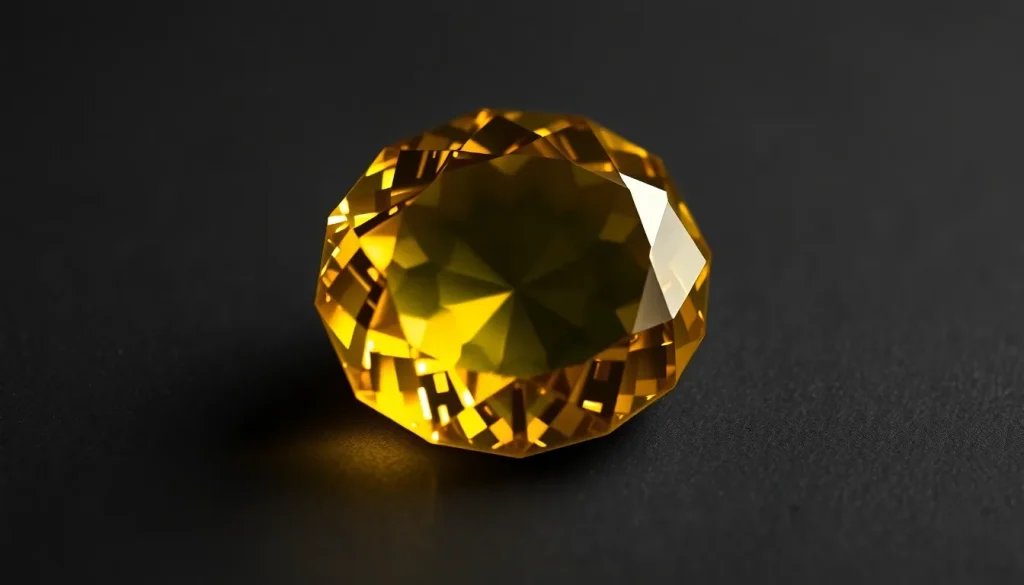
Anatase is one of the three natural polymorphs of titanium dioxide (TiO₂), the others being rutile and brookite. It crystallises in the tetragonal system and is prized for its high refractive index and adamantine luster, which give cut specimens an exceptional brilliance. While most commonly encountered as a collector’s mineral, high‑quality, transparent crystals are occasionally cut into cabochons or faceted gems for use in fine jewelry.
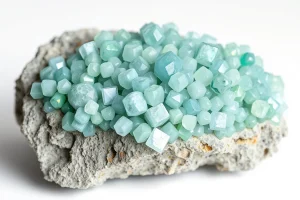
Typical colors include bright yellow, golden brown, deep red, vivid blue, and occasionally colourless or greenish hues. The colour is caused by trace impurities and structural defects that affect light absorption.
History and Origin
The name “anatase” derives from the Greek word anatasis, meaning “rise” or “extension”, a reference to the crystal’s tendency to grow in elongated prisms. The mineral was first described scientifically in 1840 by French mineralogist René Just Haüy. Natural occurrences are reported from a wide range of geological settings, most often as a secondary mineral in hydrothermal veins, pegmatites, and metamorphic rocks where titanium‑rich fluids precipitate the oxide.
Significant localities include Brazil (particularly Minas Gerais), Madagascar, Sri Lanka, the United States (California and Arizona), Nigeria, India, and Canada. In many of these deposits anatase forms as well‑rounded crystals that are prized by mineral collectors.
Meaning and Symbolism
In traditional gemstone lore, anatase is associated with clarity of thought and personal empowerment. Its bright yellow and gold tones are said to represent the sun’s energy, encouraging confidence and optimism. Blue varieties are linked to communication and truth, while red specimens are thought to stimulate passion and courage.
Because anatase is a relatively uncommon gemstone, it is sometimes viewed as a symbol of uniqueness and personal distinction. Its high dispersion (the ability to split white light into spectral colours) is metaphorically linked to the wearer’s ability to see many facets of a situation.
Healing and Metaphysical Properties
Crystal‑healing practitioners attribute a range of metaphysical qualities to anatase based on colour and composition. Common beliefs include:
- Yellow/Gold Anatase: Enhances personal power, clears mental fog, and promotes a sunny outlook.
- Blue Anatase: Supports honest communication, aids in self‑expression, and assists in throat‑chakra work.
- Red Anatase: Stimulates vitality, courage, and motivation for action.
These properties are part of traditional belief systems and are not supported by medical science. Users are advised to treat anatase as a decorative or spiritual aid rather than a therapeutic device.
Varieties and Types
Anatase occurs in several visual varieties, each defined primarily by colour and crystal habit:
- Yellow Anatase: The most common commercial colour, ranging from pale lemon to deep mustard.
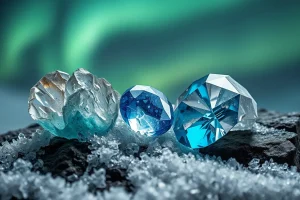
- Blue Anatase: Rare, often displaying a deep sapphire hue caused by vanadium or iron impurities.
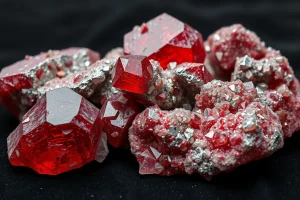
- Red Anatase: Very rare; colour is due to reduced titanium or trace chromium.
- Brown/Golden‑Brown Anatase: Rich earthy tones, popular among collectors.
- Colourless/Transparent Anatase: Less common; prized for its clarity when cut.
In addition to natural colour, some specimens are heat‑treated to alter or enhance hue, a practice that must be disclosed to buyers.
Jewelry Uses and Care
Because anatase rates 5.5–6 on the Mohs scale, it is softer than many traditional gemstones such as sapphire or quartz. Consequently, it is best suited for pieces that receive limited wear, such as pendants, earrings, and brooches. Cabochon cuts are preferred, as they reduce the risk of chipping along the crystal’s natural fracture planes.
Care recommendations:
- Avoid harsh chemicals, ultrasonic cleaners, and steam cleaners; these can damage the surface or alter colour.
- Clean gently with warm, soapy water and a soft brush or a lint‑free cloth.
- Store separately from harder gemstones to prevent scratches.
- Protect from prolonged exposure to direct sunlight, which can cause colour fading in some specimens.
Buying Guide
When purchasing anatase, consider the following factors:
- Colour Quality: Uniform, vivid colour without brownish or cloudy inclusions is most desirable.
- Clarity: Transparent or translucent stones with minimal fractures are preferred for jewelry.
- Cut: Well‑proportioned cabochons or faceted stones that showcase the stone’s natural luster.
- Treatment Disclosure: Reputable sellers should disclose any heat treatment, irradiation, or dyeing.
- Certification: For high‑value pieces, request a gemological report from a recognized laboratory (e.g., GIA, IGI).
Because large, flawless anatase crystals are uncommon, prices vary widely. Small, well‑coloured cabochons are generally affordable, while rare blue or red specimens can command premium prices.
FAQ
What is anatase good for?
Anatase is valued as a collector’s mineral and, when cut, as a decorative gemstone with high brilliance. Traditional crystal‑healing beliefs attribute it with clarity, confidence, and communication support, but these are not medical facts.
Is anatase rare?
High‑quality, transparent anatase is relatively uncommon, especially in vivid blue or red hues. Bulk specimens are more abundant in yellow or brown, making gem‑grade material rarer and often more expensive.
How can you tell if anatase is real?
Real anatase exhibits a high refractive index (≈2.5), adamantine luster, and a white streak. It is softer than quartz and shows conchoidal fracture. Professional gemologists use refractometers, spectroscopy, and microscopy to confirm authenticity.
What chakra is anatase associated with?
Traditional beliefs link yellow anatase to the Solar Plexus chakra, blue anatase to the Throat chakra, and red anatase to the Root chakra. These associations are symbolic and not scientifically validated.
How should you clean anatase?
Clean anatase gently with warm, mildly soapy water and a soft cloth or brush. Avoid ultrasonic cleaners, harsh chemicals, and prolonged sunlight exposure. Store separately from harder gemstones to prevent scratches.
Leave a Reply