
Short Answer
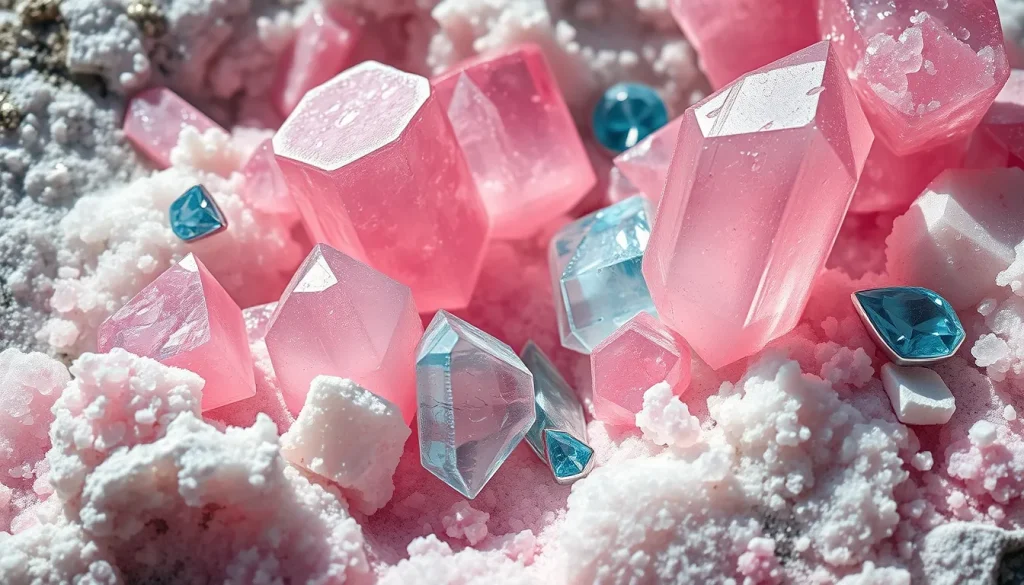
In the realm of mineralogy, few environments are as captivating or as productive as the pegmatite. These coarse-grained igneous rocks act as geological “treasure chests,” concentrating rare elements that are otherwise dispersed throughout the Earth’s crust. For the gemologist and collector, pegmatites are the primary source of some of the most visually stunning and chemically complex crystals in existence.
What Is Pegmatite?
A pegmatite is an igneous rock characterized by exceptionally large crystals, often measuring several centimeters to several meters in length. Unlike standard granite, which forms from the slow cooling of magma, pegmatites form during the final stages of magma crystallization. As the bulk of the magma solidifies, the remaining fluid becomes enriched with water, volatiles (such as fluorine and boron), and incompatible elements that do not fit into the crystal structures of common minerals.
This water-rich “residual melt” allows ions to migrate rapidly to growth sites, facilitating the development of massive, well-formed crystals. The resulting rock typically consists of quartz, feldspar, and mica, but it is the accessory minerals—the gemstones—that make pegmatites scientifically and commercially significant.
Varieties and Related Materials
Pegmatites are categorized based on their chemical composition, which dictates the types of gemstones they produce. The most gemstone-rich are the LCT pegmatites (Lithium, Cesium, Tantalum). Within these formations, several distinct gemstone families emerge:

- Beryls: This family includes the highly prized Aquamarine, Morganite, and Emerald (though emeralds more commonly form in hydrothermal veins, some pegmatitic varieties exist).
- Tourmalines: Known for their vivid colors and pleochroism, tourmalines are hallmark pegmatite minerals, ranging from the deep greens of Verdelite to the pinks of Rubellite.
- Spodumene: This group includes Kunzite (pink/violet) and Hiddenite (green), which form as elongated, striated prisms.
- Feldspars: While often considered common, high-quality Amazonite and Moonstone are frequent pegmatite residents.
Identification and Look-Alikes
Identifying gemstones from pegmatites often involves analyzing the mineral association. If a crystal is found alongside coarse-grained lepidolite (lilac mica) and quartz, there is a high probability it originated in a pegmatite.
| Pegmatite Gemstone | Common Look-Alike | Key Distinguishing Feature |
|---|---|---|
| Kunzite | Rose Quartz | Kunzite has strong pleochroism and a distinct prismatic habit. |
| Aquamarine | Blue Topaz | Aquamarine typically exhibits hexagonal crystals and different refractive indices. |
| Tourmaline | Zircon | Tourmaline has a trigonal crystal system and often shows color zoning. |
Quality and Value Factors
In pegmatite gemstones, value is driven by the intersection of rarity and crystalline perfection. Because these crystals grow in open pockets (called miars), they often exhibit superior face development compared to gemstones formed under high pressure in metamorphic rocks.
Expert Tip: When evaluating pegmatite crystals, look for “euhedral” forms—crystals with well-defined, sharp faces. These are significantly more valuable to collectors than fragmented stones, even if the internal clarity is similar.
Key value drivers include:
- Color Saturation: Intense, pure hues in tourmaline or kunzite command premiums.
- Crystal Size: Due to the nature of pegmatites, oversized single crystals are highly coveted.
- Clarity: The absence of “veils” or fluid inclusions, which are common in beryl varieties.
Jewelry Suitability and Care
Many pegmatite gemstones are ideal for jewelry, but their physical properties vary wildly. For instance, while Beryl is relatively hard (7.5–8 on the Mohs scale), Spodumene is softer and prone to cleavage.
- Beryls (Aquamarine/Morganite): Highly durable; suitable for rings and necklaces. Avoid harsh chemicals.
- Tourmalines: Durable but can be sensitive to extreme temperature changes (thermal shock).
- Kunzite: Caution: Kunzite is photosensitive and can fade in prolonged sunlight. It should be stored in the dark and is best suited for earrings or pendants rather than daily-wear rings.
FAQ
Why are crystals in pegmatites so much larger than in other rocks?
The presence of water and volatiles in the residual melt lowers the viscosity of the magma, allowing ions to move quickly to the growing crystal faces, resulting in massive growth.
Can you find diamonds in pegmatites?
No. Diamonds form under extreme pressure in the Earth's mantle (kimberlites), whereas pegmatites form in the crust at much lower pressures.
Are all pegmatites gemstone-bearing?
No. While many contain minerals of interest, only those enriched with rare elements (like Lithium or Boron) produce high-quality gemstones.
Leave a Reply