
Short Answer
Magnesium (Mg) is a versatile element in the mineral kingdom, acting as a primary constituent in some of the most coveted gemstones and rare collector’s specimens. Because magnesium often substitutes for iron or aluminum in crystal lattices, it creates a diverse array of chemical compositions and vibrant colors that fascinate gemologists and mineralogists alike.
What Is a Magnesium-Based Mineral?
In gemology, magnesium-based minerals are those where magnesium is a dominant cation in the chemical formula. These minerals typically form in high-temperature environments, such as the Earth’s mantle or through metamorphic processes. The most prominent examples include the Olivine group (specifically Forsterite) and various Pyroxenes and Amphiboles.
The presence of magnesium often influences the stability and refractive index of the mineral. For instance, in the Olivine series, the end-member Forsterite is entirely magnesium-based, while Fayalite is iron-based. Most gem-quality specimens are magnesium-rich, as iron often introduces unwanted dark tints or opacity.
Varieties and Related Materials
Magnesium minerals span a wide spectrum of rarity and aesthetic appeal. Below are the most significant varieties for collectors:
Peridot (The Gem-Quality Olivine)
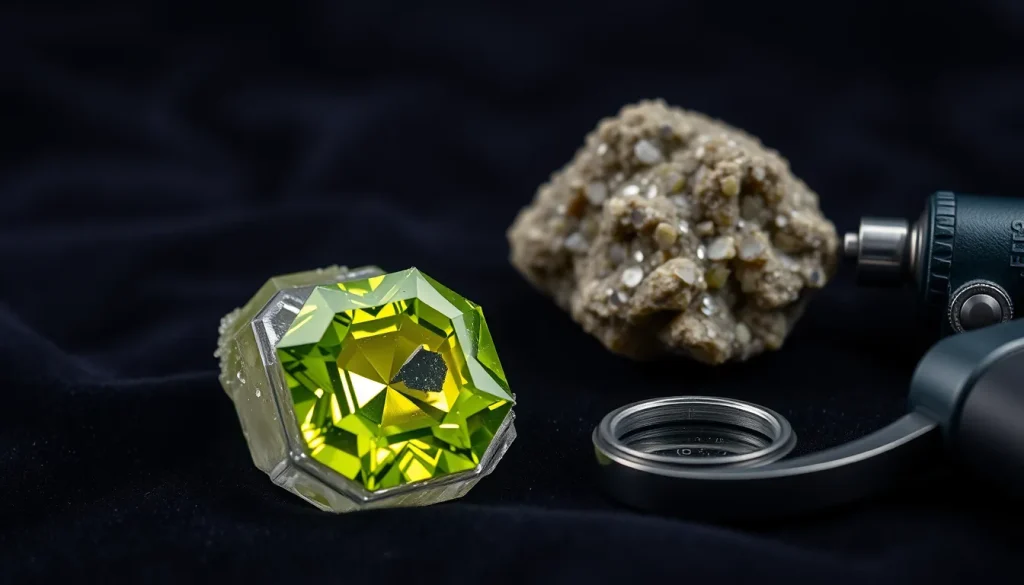
Peridot is the most famous magnesium silicate. Its characteristic olive-green color is derived from iron, but the mineral’s structural backbone is magnesium. It is one of the few gemstones that occurs in only one color.
Forsterite
While Peridot is the trade name for gem olivine, Forsterite is the specific mineral species that is magnesium-rich. Rare colorless or pale yellow Forsterite crystals are highly prized by mineral collectors for their purity and crystal habit.
Pargasite and Magnesium-Amphiboles
Pargasite is a rare sodium-magnesium-iron amphibole. It often appears in deep greens or browns and is prized more for its crystalline form than for jewelry use. Other magnesium-rich amphiboles include certain varieties of Tremolite and Actinolite.
Magnesite and Dolomite
These are magnesium carbonates. While rarely used in high jewelry due to their lower hardness, they are essential for collectors of crystalline minerals, often forming striking rhombohedral crystals.
Identification and Look-Alikes
Distinguishing magnesium minerals from other silicates requires a combination of visual inspection and laboratory testing. Many magnesium minerals are mistaken for more common stones:
- Peridot vs. Tsavorite Garnet: Both are green, but Peridot has a distinct yellowish-green tint and a lower refractive index than Tsavorite.
- Forsterite vs. Quartz: Colorless Forsterite can look like Quartz, but it possesses a higher specific gravity and different cleavage patterns.
- Pargasite vs. Tourmaline: Both can be green and elongated, but Pargasite exhibits different crystal symmetry and chemical compositions.
Expert Tip: When identifying magnesium silicates, always check for the presence of “lily pad” inclusions (characteristic of Peridot) using a 10x loupe, which can immediately separate them from synthetic imitations.
Quality and Value Factors
For the collector, the value of magnesium-based minerals is determined by several critical factors:
| Factor | Impact on Value | Ideal Characteristic |
|---|---|---|
| Color Saturation | High | Vivid green (Peridot) or pure colorless (Forsterite) |
| Clarity | Medium-High | Eye-clean; absence of heavy iron-oxide spotting |
| Crystal Habit | High (Specimens) | Well-defined, undamaged crystals with natural terminations |
| Origin | Medium | Rare localities (e.g., specific deposits in Pakistan or Myanmar) |
Jewelry Suitability and Care
Not all magnesium minerals are suitable for jewelry. Peridot is widely used, but others are too soft or brittle.
- Hardness: Peridot ranks 6.5 to 7 on the Mohs scale, making it suitable for rings but requiring care to avoid scratches.
- Cleaning: Most magnesium silicates should be cleaned with warm soapy water. Avoid ultrasonic cleaners for specimens with internal fractures.
- Chemical Sensitivity: Magnesium carbonates like Magnesite are sensitive to acids and should never be exposed to harsh chemical cleaners.
FAQ
Is Peridot the same as Forsterite?
Yes, in a gemological context. Peridot is the trade name for gem-quality olivine, and Forsterite is the magnesium-rich end-member of the olivine group.
Are magnesium minerals rare?
While magnesium is common in the Earth's crust, gem-quality crystals of magnesium minerals (like Pargasite or colorless Forsterite) are quite rare.
How do I store magnesium-based mineral specimens?
Store them in acid-free containers, away from direct sunlight and extreme temperature fluctuations to prevent dehydration or chemical degradation.
Leave a Reply