
Short Answer
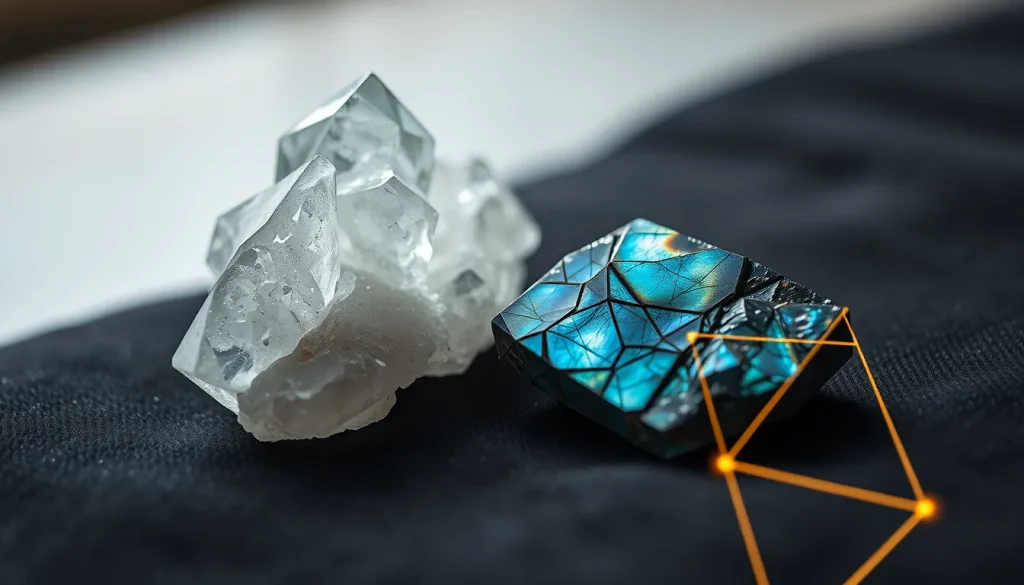
In the realm of mineralogy, tectosilicates represent the most complex and abundant group of silicate minerals. From a gemological perspective, they are defined by a three-dimensional framework of SiO4 tetrahedra, where every oxygen atom is shared between two tetrahedra. In the context of crystal healing, this structural integrity is often interpreted as a metaphor for total stability, holistic integration, and the manifestation of higher consciousness into the physical plane.
Documented Context
The application of tectosilicates in healing is rooted in the belief that the physical structure of a mineral dictates its energetic vibration. Because tectosilicates—which include quartz, feldspars, and zeolites—form a rigid, interlocking 3D network, they are historically associated with structural strength and mental clarity. Unlike phyllosilicates (sheets) or inosilicates (chains), the framework nature of tectosilicates is seen as a symbol of complete connectivity and unwavering support.
Place and Period
While the scientific classification of tectosilicates is a product of modern chemistry, the use of these specific minerals dates back to antiquity. Quartz, the quintessential tectosilicate, has been utilized since the Neolithic period across Asia and Europe for divination and ritual. The use of zeolites for purification dates back to ancient Greek practices, where the term “zeolite” (meaning “boiling stone”) referred to their ability to release water when heated, a property now understood as molecular sieving.
Historical Uses
Throughout history, tectosilicate minerals have been employed for diverse metaphysical purposes:
- Quartz (Clear and Rose): Used by ancient Egyptians and Greeks for clarity of thought and emotional healing.
- Feldspars (Amazonite, Moonstone): Utilized in various cultures to enhance intuition and balance the feminine and masculine energies.
- Zeolites: Historically used in traditional medicine and spiritual cleansing to “absorb” negative energies or toxins from the environment.
Later Interpretations
With the rise of modern New Age movements in the 20th century, the interpretation of tectosilicates shifted toward energy amplification. The piezoelectric properties of quartz—the ability to generate an electric charge under mechanical stress—led to the belief that these minerals could program information or amplify the intentions of the practitioner. The “framework” nature is now often linked to the concept of the Lightbody or the spiritual grid that connects the individual to the cosmos.
Modern Associations
Today, practitioners of crystal healing categorize tectosilicates based on their specific structural variations:
| Mineral Group | Metaphysical Association | Common Examples |
|---|---|---|
| Quartz Group | Amplification and Clarity | Amethyst, Citrine, Clear Quartz |
| Feldspar Group | Balance and Grounding | Labradorite, Moonstone, Amazonite |
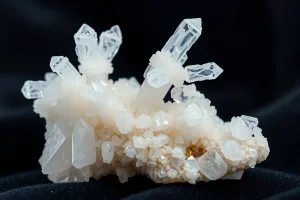
| Zeolite Group | Detoxification and Release | Stilbite, Heulandite, Natrolite |
Gemologist’s Note: While the spiritual associations are culturally significant, it is the actual chemical bonding—the shared oxygen atoms in a 3D lattice—that gives these minerals their characteristic hardness and stability, which in turn informs their symbolic meaning of “strength.”
Source Limitations
It is important to note that there is no empirical scientific evidence supporting the claim that mineral structures can heal biological ailments or manipulate “energy fields.” The meanings attributed to tectosilicates are based on symbolic association and traditional belief systems rather than clinical data. Practitioners should use these minerals as complementary tools for mindfulness and emotional support rather than replacements for professional medical treatment.
FAQ
What makes tectosilicates different from other silicates in healing?
Tectosilicates have a full 3D framework, whereas others have chains or sheets. In healing, this is interpreted as providing 'complete' or 'all-encompassing' support compared to the more linear energy of other silicates.
Is quartz the only tectosilicate used in crystal healing?
No, while quartz is the most famous, feldspars (like Moonstone) and zeolites (like Stilbite) are also tectosilicates and are widely used for balance and detoxification.
Can the physical structure of a mineral actually affect energy?
From a scientific standpoint, there is no evidence that crystal lattices affect human energy fields. However, the symmetry and geometry are used as focal points for meditation and psychological grounding.

Leave a Reply