Short Answer
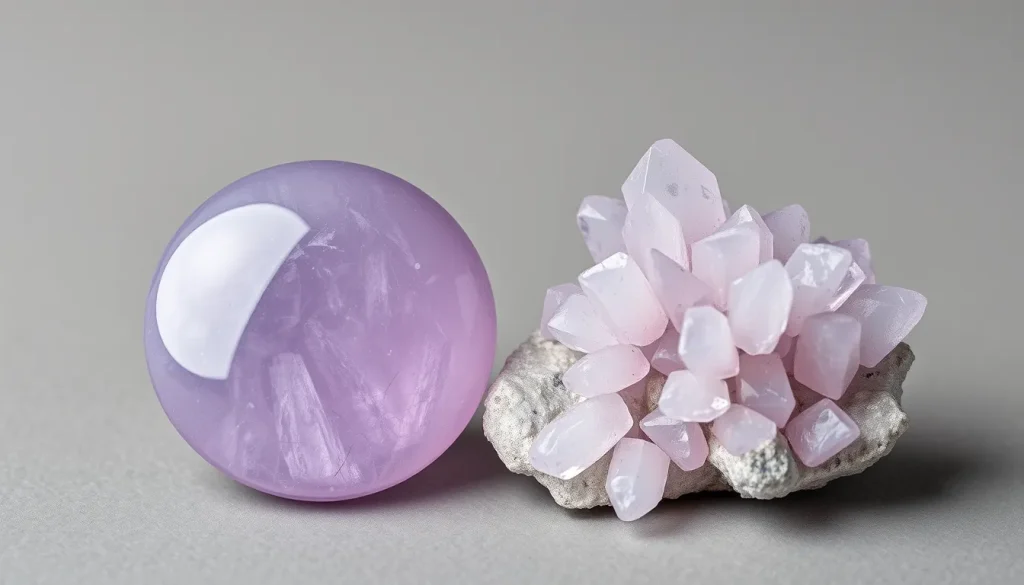
Lepidolite is a complex lithium-aluminum phyllosilicate that captures the attention of collectors and jewelry designers alike with its shimmering, pearlescent luster and characteristic soft violet to lilac coloration. As a member of the mica group, it is distinguished not only by its aesthetic appeal but also by its significant lithium content, which makes it an important mineral for both industrial and metaphysical interests.
What Is Lepidolite?
Lepidolite is a lithium-rich mica mineral. The name is derived from the Greek word lepis, meaning ‘scale,’ referring to the mineral’s tendency to form thin, scale-like sheets or plates. Chemically, it is a complex silicate, often containing fluorine and hydroxyl groups. While it occurs in various shades, the most sought-after specimens are those exhibiting a pale purple or lavender hue, caused by the presence of manganese.
In nature, lepidolite is typically found in granitic pegmatites. It often occurs alongside other lithium-bearing minerals such as spodumene and tourmaline. Due to its perfect basal cleavage, it can be split into extremely thin, flexible sheets, a hallmark of the mica family.
Practical Uses and Limitations
Historically and industrially, lepidolite has served as a primary source of lithium, which is essential for the production of batteries and certain pharmaceuticals. In the realm of gemstones, its use is primarily decorative and ornamental rather than functional.
Limitations in Durability
The most significant limitation of lepidolite is its softness. With a Mohs hardness of only 2.5 to 3, it is easily scratched by common household objects and even by other gemstones. Consequently, it is not suitable for high-wear jewelry such as engagement rings.
Identification and Look-Alikes
Lepidolite can be identified by its characteristic lilac color and its shimmering, micaceous luster. However, it is frequently confused with other purple minerals:
- Amethyst: Much harder (Mohs 7) and lacks the platy, layered structure of lepidolite.
- Fluorite: While it can be purple, fluorite has an octahedral cleavage and a different luster.
- Purple Quartz: Lacks the distinct mica-like cleavage and pearlescent sheen.
Jewelry Suitability and Care
Because of its fragility, lepidolite is best utilized in jewelry that is protected from frequent impact. It is commonly found in:
- Cabochons: Polished into smooth, rounded shapes to minimize the risk of chipping edges.
- Beaded Jewelry: Used in necklaces and bracelets where the stones are less likely to be struck.
- Collector’s Specimens: Kept in their raw, crystalline form for display.
Expert Tip: To maintain the luster of lepidolite jewelry, avoid using ultrasonic cleaners or steam cleaning. Use only a soft, damp cloth and mild soap to remove surface dust.
Symbolism and Modern Beliefs
In contemporary metaphysical circles, lepidolite is often referred to as the “Stone of Transition.” Because of its lithium content—an element used in mood-stabilizing medications—many believe the stone possesses natural calming properties. It is frequently associated with the relief of stress, anxiety, and the promotion of emotional balance during periods of significant life change.
FAQ
Is lepidolite a hard gemstone?
No, lepidolite is quite soft, ranking between 2.5 and 3 on the Mohs scale, making it prone to scratches.
What causes the purple color in lepidolite?
The lilac to purple coloration is primarily caused by the presence of manganese within the mineral structure.
Can I wear lepidolite every day?
It is recommended for occasional wear or in protected settings (like pendants) rather than rings, due to its softness.
Leave a Reply