
Short Answer
Overview
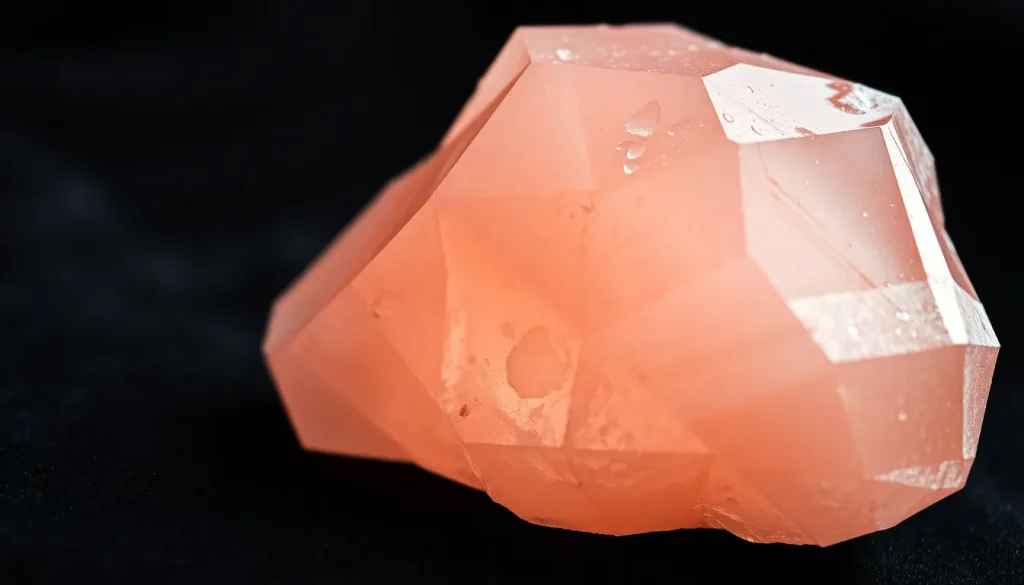
Manganoan calcite, often labeled as Mn‑calcite or simply pink calcite, is a manganese‑rich variety of the mineral calcite (chemical formula CaCO₃). The substitution of Mn²+ for a portion of Ca²+ imparts a range of delicate pink, salmon, peach, or orange colors while preserving calcite’s characteristic rhombohedral crystal habit and perfect cleavage.
Because calcite belongs to the carbonate family, it is relatively soft (Mohs 2.5–3) and displays a vitreous to pearly luster. Its transparency varies from transparent to translucent, and the stone frequently exhibits a white streak. The most common sources include Brazil, Madagascar, Namibia, the United States (California), and Mexico.
History and Origin
Calcite has been known since antiquity, but the manganese‑rich variant was first distinguished by mineralogists in the early 20th century when analytical techniques revealed trace Mn content responsible for its pink hue. Geological formation occurs in sedimentary environments where calcium carbonate precipitates in the presence of manganese‑bearing fluids, often as part of limestone or marble deposits. Over time, hydrothermal activity can recrystallize the material into well‑formed rhombohedral crystals that are prized by collectors.
Meaning and Symbolism
In gemstone lore, manganoan calcite is associated with love, emotional healing, and compassion. Its gentle pink tones are thought to open the heart, encouraging forgiveness and nurturing relationships. The stone is also linked to creativity, helping artists and designers to express themselves freely.
Healing and Metaphysical Properties
Traditional crystal‑healing beliefs attribute the following properties to manganoan calcite:
- Emotional balance: Supports the release of suppressed feelings and promotes inner peace.
- Heart chakra activation: Enhances the flow of love and compassion.
- Physical support: Said to aid circulatory health and reduce inflammation (note: these are not medical claims).
- Mental clarity: Helps focus the mind during meditation or creative work.
Practitioners often place the stone on the chest during meditation or wear it as jewelry to keep its energy nearby.
Varieties and Types
Manganoan calcite occurs in several forms:
- Rhombohedral crystals: Well‑defined, often transparent specimens prized by collectors.
- Massive or botryoidal aggregates: Rounded, pebble‑like masses used in carvings and ornamental objects.
- Heat‑treated specimens: Some stones are gently heated to intensify or modify color, creating deeper orange hues.
Color variations range from pale blush pink to vivid salmon, orange‑peach, and occasionally reddish‑purple tones, depending on manganese concentration and local geology.
Jewelry Uses and Care
Because of its softness, manganoan calcite is best suited for earrings, pendants, brooches, and rings that are set in protective settings (e.g., bezel or channel). It should never be used for high‑impact pieces such as bracelets that endure frequent knocks.
Care recommendations:
- Avoid ultrasonic cleaners and steam cleaning; the stone’s perfect cleavage makes it vulnerable to fracture.
- Wipe gently with a soft, damp cloth and mild soap if needed.
- Store separately from harder gemstones (e.g., quartz, sapphire) to prevent scratches.
- Limit exposure to prolonged sunlight, which can fade delicate pink hues over many years.
Buying Guide
When selecting manganoan calcite, consider the following factors:
- Color intensity: Rich, even coloration without zoning is most desirable.
- Clarity: Look for stones free of large inclusions or fractures.
- Cut and shape: Well‑cut facets can enhance brilliance, but overly deep cuts may conceal internal flaws.
- Treatment disclosure: Ask the seller whether the stone has been heat‑treated or dyed; untreated material typically commands a higher price.
- Certification: For high‑value pieces, obtain a gemological report from a reputable laboratory (e.g., GIA, IGI) confirming identity and any treatments.
Prices vary widely based on size, color saturation, and provenance, ranging from modest amounts for small cabochons to premium rates for large, flawless crystals.
FAQ
What is manganoan calcite good for?
Manganoan calcite is prized for its attractive pink‑orange color in jewelry and ornamental objects, and it is traditionally believed to support emotional healing, love, and creativity.
Is manganoan calcite rare?
High‑quality, vivid pink or orange specimens are less common than standard calcite, especially those without treatment. However, the mineral itself is relatively abundant in suitable manganese‑rich deposits.
How can you tell if manganoan calcite is real?
Real manganoan calcite exhibits perfect rhombohedral cleavage, a white streak, and a specific gravity around 2.7. A professional gemologist can confirm identity with refractive index measurements and, if needed, spectroscopy.
What chakra is manganoan calcite associated with?
In crystal‑healing traditions, manganoan calcite is most often linked to the Heart (Anahata) chakra, where it is said to promote love and emotional balance.
How should you clean manganoan calcite?
Clean gently with a soft, damp cloth and mild soap. Avoid ultrasonic cleaners, steam, and harsh chemicals, and store separately from harder gemstones to prevent scratches.
Leave a Reply