
Short Answer
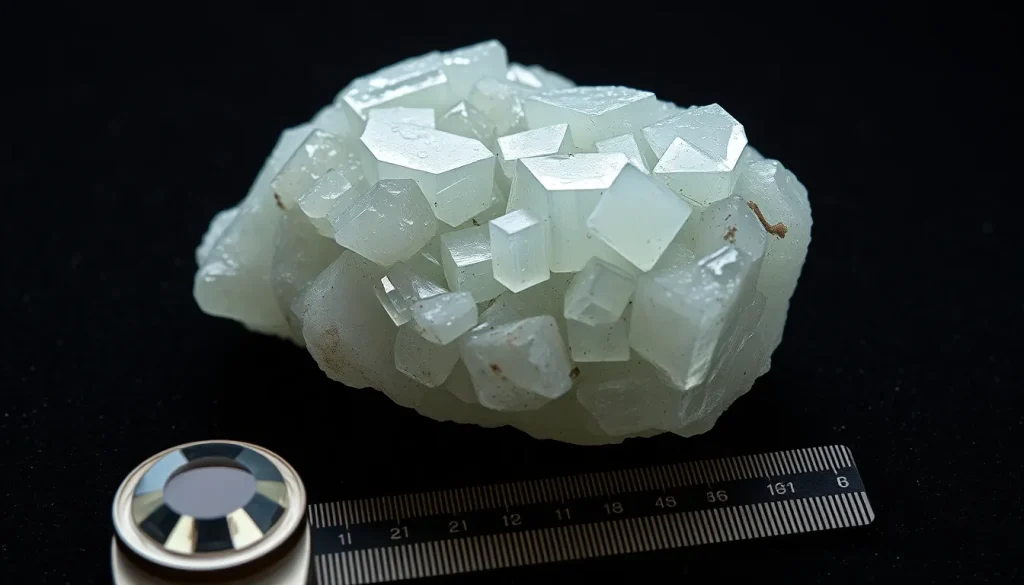
The intersection of potassium (K) and magnesium (Mg) in mineralogy often results in complex silicate and phosphate structures. While many of these minerals remain in the realm of specimen collecting, select varieties possess the hardness, clarity, and color necessary to be classified as gemstones. These minerals typically form in alkaline igneous rocks, pegmatites, or through metamorphic processes, making them highly prized for their rarity and geological significance.
What Is Potassium and Magnesium Minerals?
Potassium and magnesium minerals are a diverse group of chemical compounds where these two alkali and alkaline earth metals serve as primary structural cations. In the context of gemstones, this most frequently manifests in the Feldspar group (specifically potassium-rich varieties like Sanidine or Adularia) and various Magnesium Silicates (such as Forsterite or certain Pyroxenes) that may coexist or substitute within the same crystal lattice.
The synergy between these elements often dictates the crystal habit and the potential for trace element substitutions, which in turn create the vibrant colors sought by collectors. Because these elements are common in the Earth’s crust but rarely concentrate in gem-quality crystals together, these specimens are often found in specialized geological environments like carbonatites or rare-earth element (REE) deposits.
Varieties and Related Materials
The spectrum of K-Mg minerals ranges from common rock-forming minerals to exotic, rare gemstones. Key varieties include:

- Potassium Feldspars: While common, specific varieties like Moonstone (adularia) exhibit a shimmering effect caused by the exsolution of sodium and potassium.
- Forsterite (Mg-rich Olivine): The magnesium end-member of the olivine series, which can occur in colorless or pale green gem-quality crystals.
- Phlogopite: A magnesium-potassium mica that, while too soft for jewelry, is highly valued as a collector’s mineral for its golden-brown luster.
- Rare Carbonatites: Minerals found in alkaline complexes where K and Mg are prevalent, often leading to the formation of rare phosphates.
Identification and Look-Alikes
Identifying these minerals requires a combination of physical observation and instrumental analysis. Because many K-Mg minerals appear similar to more common gemstones, the following distinctions are critical:
| Feature | K-Mg Rare Minerals | Common Look-Alikes |
|---|---|---|
| Hardness | Variable (4 to 7 Mohs) | Quartz (7) or Calcite (3) |
| Luster | Vitreous to Pearly | Greasy or Waxy |
| Specific Gravity | Generally Moderate | Varies widely by species |
Expert Tip: When distinguishing between rare potassium feldspars and common quartz, look for the characteristic cleavage planes. Feldspars exhibit two directions of cleavage at nearly 90 degrees, whereas quartz has no cleavage and exhibits conchoidal fracture.
Quality and Value Factors
The value of potassium and magnesium-based gemstones is driven primarily by rarity and visual purity. The following factors are most influential:
- Color Saturation: In Mg-silicates, a vivid green or rare colorless state increases value. In K-feldspars, the intensity of the adularescence (glow) is paramount.
- Crystal Integrity: Due to the fragility of many of these minerals, a specimen without significant fractures or inclusions commands a premium.
- Provenance: Stones from legendary localities (e.g., specific alkaline massifs in Africa or Canada) are more desirable to museum-grade collectors.
- Transparency: Most K-Mg minerals are translucent; those achieving true transparency are exceptionally rare.
Jewelry Suitability and Care
Not all K-Mg minerals are suitable for jewelry. Their application depends entirely on their Mohs hardness:
- Hardness 6-7: Suitable for rings and pendants, provided they are protected by secure settings.
- Hardness 4-5: Only suitable for earrings or collector’s pendants; they are prone to scratching.
- Care Instructions: Avoid ultrasonic cleaners for these minerals, as internal tensions or inclusions can cause them to shatter. Use only warm, soapy water and a soft brush.
FAQ
Are potassium and magnesium minerals common in jewelry?
Generally, no. While potassium feldspars like moonstone are common, the specific rare varieties combining high K and Mg concentrations are mostly found in collector specimens.
How do I clean a rare K-Mg gemstone?
Use only mild soap and lukewarm water. Avoid chemicals and ultrasonic cleaners, as these minerals can be sensitive to thermal shock or vibration.
What makes these minerals 'rare' compared to others?
Their rarity stems from the specific geological conditions required to concentrate both elements into a clear, well-formed crystal rather than a common rock-forming mass.
Leave a Reply