
Short Answer
Direct Answer
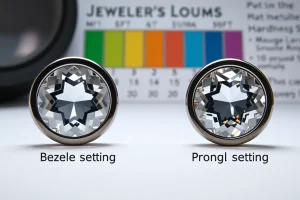
The best jewelry settings for brittle gemstones are those that provide maximum structural support and minimum localized pressure. For stones prone to cleavage or fracturing, the gold standard is the bezel setting, which encircles the entire perimeter of the stone. Other highly recommended options include full surrounds, tension-free channels, and protective baskets. The primary goal is to shield the stone’s edges (the most vulnerable areas) and ensure that any external impact is absorbed by the metal rather than the gemstone.
Relevant Conditions
Brittleness in gemstones is typically a result of low toughness, which is distinct from hardness. While a stone may be hard (resistant to scratching), it may lack the structural integrity to resist impact. Conditions that necessitate specialized settings include:
- Perfect Cleavage: Stones like fluorite or certain diamonds that split easily along specific crystallographic planes.
- Low Toughness: Gemstones like opal, tanzanite, or emerald that are prone to chipping or cracking under slight pressure.
- Internal Inclusions: Stones with significant “garden” or fractures (common in emeralds) that create internal stress points.
- High-Impact Usage: Jewelry intended for daily wear, such as engagement rings, where the stone is frequently exposed to knocks.
“In gemology, toughness is the ability of a mineral to resist fracturing. A gemstone can be a 10 on the Mohs scale but still be brittle; the setting must compensate for this physical vulnerability.”
Recommended Steps
When designing or selecting jewelry for a brittle gemstone, follow these professional guidelines to ensure longevity:
- Prioritize the Bezel Setting: A full metal rim protects the girdle of the stone from side-impacts. This is the safest choice for opals and emeralds.
- Opt for Heavy Prongs (if necessary): If a bezel is not aesthetically desired, use wider, rounded prongs rather than thin wires. Ensure prongs are seated securely but not tightened to the point of creating stress concentrations.
- Implement a Protective Gallery: Use a “basket” or gallery rail beneath the stone to prevent the bottom (culet) from being crushed or chipped.
- Avoid Tension Settings: Never place a brittle gemstone in a tension setting. The constant lateral pressure can lead to catastrophic failure along cleavage planes.
- Choose Appropriate Metal: Use metals with a slight degree of malleability (like 14k or 18k gold) that can absorb some shock, rather than extremely rigid alloys.
Exceptions
There are specific scenarios where standard “safe” settings may be modified:
- Light-Sensitive Stones: While a bezel is safest, it may block light from entering the pavilion. For stones where brilliance is paramount, a semi-bezel or a protected prong setting may be used, provided the stone’s toughness allows it.
- Cabochons: Since cabochons lack the fragile facets and sharp edges of brilliant cuts, they are slightly more resilient to chipping, making them more suitable for simpler bezel or cup settings.
- Hard but Brittle Stones: Some stones are extremely hard (e.g., Zircon) but very brittle. These require precise fitting; if the setting is too tight, the stone may shatter during the setting process.
When to Ask a Professional
Consult a certified gemologist or a master goldsmith in the following instances:
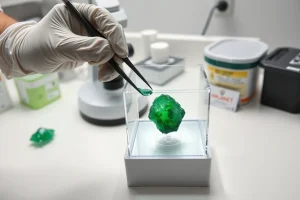
- Setting an Emerald: Due to their frequent internal fractures, emeralds often require “oil-filling” and specific setting pressures to avoid cracking during mounting.
- Repurposing Heirloom Stones: If you are moving a brittle stone from an old setting to a new one, a professional must inspect the stone for existing micro-fractures.
- Custom Design: When creating a piece that involves complex geometry, a professional can perform a stress analysis to ensure the stone isn’t being squeezed at a vulnerable angle.
FAQ
Is a prong setting ever okay for brittle stones?
Yes, but only if the prongs are thick, rounded, and the stone is not subject to high-impact wear. A 'protected prong' with a surrounding gallery is preferred.
What is the difference between hardness and brittleness?
Hardness is resistance to scratching (Mohs scale), while brittleness refers to the likelihood of a stone fracturing or shattering upon impact.
Why are emeralds considered brittle?
Emeralds typically contain numerous internal inclusions and fractures (called 'jardin'), which create weak points in the crystal structure.
Leave a Reply