
Short Answer
Overview
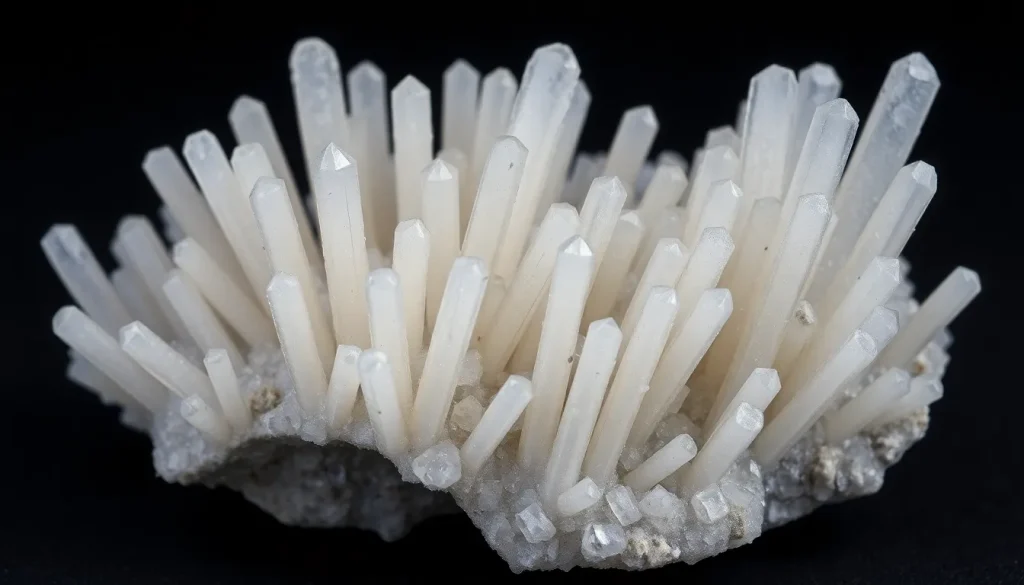
Wollastonite is a calcium silicate mineral (CaSiO3) belonging to the inosilicate (chain silicate) family. It typically forms slender, acicular crystals or fibrous aggregates that display a vitreous to silky luster. Natural specimens range from colourless‑white to pale gray, with occasional greenish or pinkish tints caused by trace impurities. With a Mohs hardness of 4.5‑5, wollastonite is relatively soft compared with many traditional gemstones, yet its distinct crystal habit and high refractive index (1.590‑1.608) give it a subtle sparkle that is prized in specialty jewelry and ornamental pieces.
History and Origin
The mineral was first described in 1808 by the English chemist William Hyde Wollaston, after whom it is named. Early occurrences were documented in the United Kingdom, but substantial deposits were later discovered in the United States (notably in California and Maine), Canada, Norway, Finland, Italy, China, Brazil, and Madagascar. Wollastonite forms in metamorphic environments where limestone is subjected to high temperatures and pressures, often in contact‑metamorphosed skarns and marble. Synthetic wollastonite has been produced since the mid‑20th century for industrial applications, but natural crystals remain the focus of gem collectors.
Meaning and Symbolism
In traditional gemstone lore, wollastonite is associated with clarity of thought and the ability to articulate ideas. Its smooth, fibrous texture is thought to symbolize flexibility and adaptability, encouraging wearers to flow with change while maintaining inner stability. Some cultures view the mineral as a protective talisman against negative energies, especially those that hinder communication.
Healing and Metaphysical Properties
Crystal‑healing practitioners attribute the following properties to wollastonite, based on longstanding belief systems rather than scientific evidence:
- Throat Chakra: Enhances verbal expression, public speaking, and truthful communication.
- Mind‑Body Alignment: Said to promote mental clarity, reduce confusion, and support logical decision‑making.
- Emotional Balance: Believed to calm anxiety, foster self‑confidence, and assist in releasing old emotional patterns.
These claims are part of traditional metaphysical practice and should not be taken as medical advice.
Varieties and Types
While natural wollastonite is the most common form encountered in gem collections, several variations exist:
- Natural Acicular Crystals: Thin, needle‑like crystals prized for their rarity and unique growth patterns.
- Fibrous Masses (Wollastonite Fiber): Often used in industrial applications; in jewelry, they are cut as cabochons for a silky appearance.
- Heat‑Treated Specimens: Controlled heating can intensify pale green or pink hues, though such treatments are uncommon.
- Synthetic Wollastonite: Produced from high‑temperature processes; generally used for industrial purposes but occasionally fashioned into imitation gemstones.
Jewelry Uses and Care
Because of its moderate hardness, wollastonite is best suited for pendants, earrings, and brooches rather than rings that endure heavy wear. It is commonly cut as:
- Cabochons – highlighting its silky luster.
- Faceted stones – used sparingly to showcase its refractive qualities.
When caring for wollastonite jewelry:
- Clean with a soft, damp cloth; avoid abrasive cleaners that can scratch the surface.
- Use mild soap and lukewarm water for deeper cleaning, then dry thoroughly.
- Store separately from harder gemstones (e.g., quartz, sapphire) to prevent abrasion.
- Avoid prolonged exposure to harsh chemicals, acids, or high‑temperature environments, which may alter the surface.
Buying Guide
When selecting wollastonite, consider the following factors:
- Color and Clarity: Pure white or subtle pastel hues are most valued; inclusions are acceptable if they do not detract from overall appearance.
- Crystal Habit: Well‑formed acicular crystals or smooth cabochons indicate higher quality.
- Cut and Finish: A high‑polish finish enhances the stone’s natural luster.
- Origin: Provenance from recognized localities (e.g., California, Norway) can add confidence, though many reputable dealers source from multiple mines.
- Treatment Disclosure: Ask whether the stone has been heat‑treated or synthetically produced; untreated natural specimens generally command higher prices.
Prices vary widely, ranging from a few dollars per carat for lower‑grade material to higher amounts for large, flawless acicular crystals. Always request a certificate of authenticity or a laboratory report when purchasing high‑value pieces.
FAQ
What is wollastonite good for?
Wollastonite is valued for ornamental jewelry, decorative carvings, and metaphysical practices that focus on communication and mental clarity. It also has industrial uses, but in gemology its appeal lies in its unique crystal habit and subtle sparkle.
Is wollastonite rare?
Natural, high‑quality wollastonite crystals are relatively uncommon, especially well‑formed acicular specimens. However, the mineral is abundant in several countries, and synthetic versions are widely produced, making lower‑grade material more accessible.
How can you tell if wollastonite is real?
Real wollastonite shows a characteristic silky luster, a hardness of 4.5‑5 (scratchable with a steel file), and a white streak. Professional gemologists can confirm identity with refractive index measurements and X‑ray diffraction. When in doubt, seek a certified laboratory report.
What chakra is wollastonite associated with?
Traditional crystal‑healing beliefs link wollastonite to the Throat (Vishuddhi) chakra, where it is thought to aid clear communication and self‑expression.
How should you clean wollastonite?
Clean wollastonite with a soft, damp cloth and mild soap if needed. Avoid ultrasonic cleaners, harsh chemicals, or abrasive pads, as the stone’s moderate hardness and possible surface treatments can be damaged.
Leave a Reply