
Short Answer
Overview
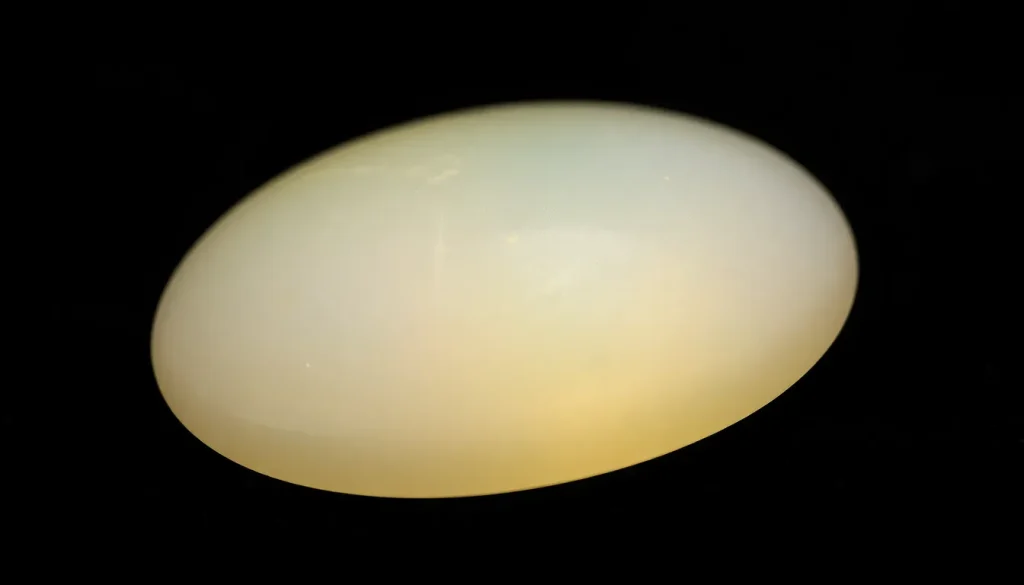
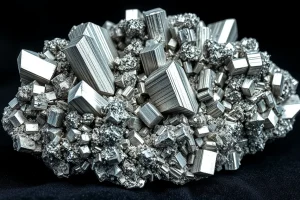
Witherite is a naturally occurring mineral composed of barium carbonate (BaCO₃). It belongs to the carbonate family and crystallises in the orthorhombic system. Pure specimens are colourless to white, though trace impurities can impart pale yellow, brownish, or even pinkish hues. With a Mohs hardness of 3–3.5 and a relatively high specific gravity (4.34–4.48), Witherite is denser than most common gemstones, a characteristic that both collectors and lapidaries find intriguing.
History and Origin
The mineral was first described in 1790 from the town of Buchenthal in Bavaria, Germany. It was named after the English physician and botanist William Withering, who studied barium compounds in the late 18th century. Throughout the 19th and early 20th centuries, Witherite was primarily mined as a source of barium for industrial applications, such as glass and ceramic production. Today, gem‑quality material is chiefly obtained from a few well‑known localities, including the United States (Kentucky and New Mexico), Canada (Ontario), Russia, China, and Mexico.
Meaning and Symbolism
In traditional gemstone lore, Witherite is associated with grounding and stability. Its heavy, dense nature is said to help the wearer feel more anchored in the physical world, promoting practicality and perseverance. Some cultures view it as a stone of transformation, believing that its ability to change colour under ultraviolet light mirrors personal growth and hidden potential.
Healing and Metaphysical Properties
Crystal‑healing practitioners attribute several metaphysical qualities to Witherite. It is believed to stimulate the root chakra, encouraging a sense of security and connection to the earth. Practitioners also claim it can aid in the absorption of calcium and other minerals, supporting bone health when placed on the body (note: these are spiritual beliefs and not medical advice). Additionally, Witherite’s fluorescence under UV light is thought to cleanse and energise a space, making it a popular choice for meditation rooms.
Varieties and Types
While the majority of Witherite is colourless or white, variations exist:
- Pale Yellow Witherite: Caused by trace iron or manganese, giving a subtle honey hue.
- Brownish Witherite: Resulting from organic inclusions or weathering.
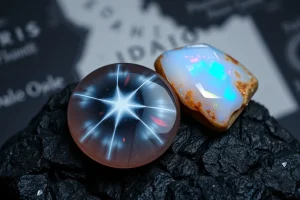
- Fluorescent Witherite: Exhibits bright blue‑white fluorescence under short‑wave ultraviolet light, a prized characteristic among collectors.
Specimens may also display perfect cleavage on the {010} plane, producing smooth, reflective surfaces when cut.
Jewelry Uses and Care
Because of its relatively low hardness, Witherite is best suited for pendants, earrings, and cabochons that are set in protective settings. Cabochons can showcase its brilliance and occasional fluorescence, especially when displayed in low‑light environments. Care recommendations include:
- Avoid abrasive cleaning; use a soft, lint‑free cloth.
- Do not expose to harsh chemicals or acids, which can etch the surface.
- Store separately from harder gemstones to prevent scratching.
When cleaning, a mild soap solution and lukewarm water are sufficient, followed by thorough drying.
Buying Guide
When evaluating Witherite for purchase, consider the following factors:
- Color and Clarity: Colourless or lightly tinted stones with minimal inclusions are most desirable.
- Fluorescence: Genuine fluorescence can be verified with a short‑wave UV lamp; treated stones may lose this property.
- Cut and Setting: Look for well‑cut cabochons that protect the stone’s perfect cleavage.
- Origin Documentation: Reputable dealers often provide provenance from known localities such as Bavaria or Kentucky.
- Professional Verification: Because Witherite can be confused with similar‑looking minerals (e.g., calcite or barite), a gemological laboratory report is advisable for high‑value pieces.
Beware of synthetic or dyed imitations marketed as “enhanced Witherite.” Authentic specimens will not display uniform, intense colours that are atypical for natural Witherite.
FAQ
What is Witherite good for?
Witherite is valued by collectors for its high density and occasional fluorescence, and it is occasionally used in specialty jewelry. Traditional crystal‑healing beliefs associate it with grounding and stability, but these are not medical claims.
Is Witherite rare?
Gem‑quality Witherite is relatively uncommon because high‑quality, clear material is limited to a few localities. While the mineral itself is not extremely rare, fine, transparent specimens suitable for jewelry are considered scarce.
How can you tell if Witherite is real?
Real Witherite is colourless to white, has a vitreous luster, and exhibits perfect cleavage on {010}. It is slightly softer than quartz (Mohs 3‑3.5) and has a high specific gravity. A professional gemological test, such as refractive index measurement or X‑ray diffraction, confirms authenticity.
What chakra is Witherite associated with?
In crystal‑healing traditions Witherite is often linked to the Root (Muladhara) chakra, supporting grounding and security, though this association is based on belief rather than scientific evidence.
How should you clean Witherite?
Clean Witherite with warm, soapy water and a soft cloth. Avoid ultrasonic cleaners, harsh chemicals, or abrasive tools that could damage its perfect cleavage. After cleaning, dry thoroughly before storage or setting.
Leave a Reply