
Short Answer
Overview
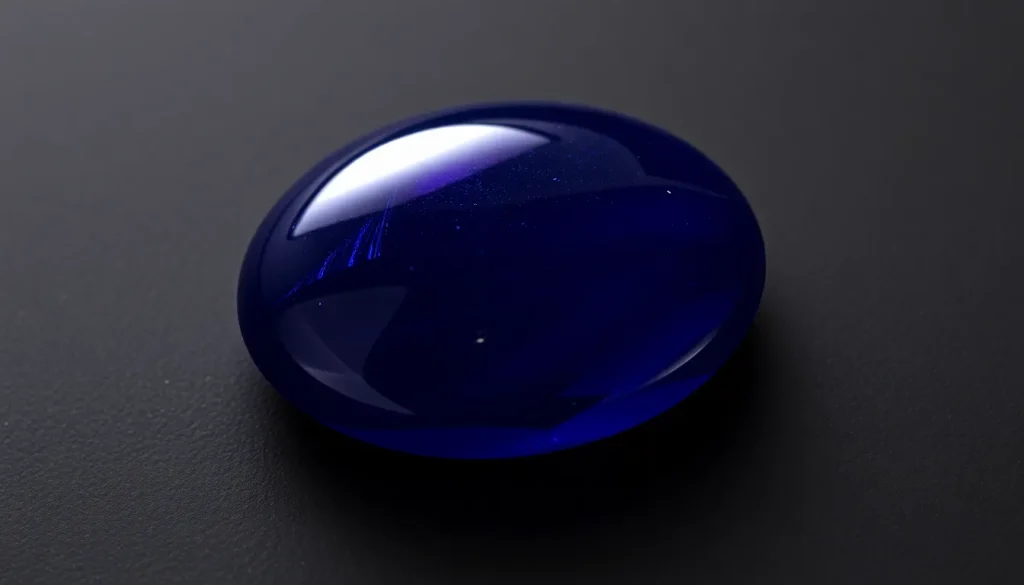
Umbalite is a rare, deep‑blue to violet mineral belonging to the sodalite group of feldspathoid silicates. It crystallizes in the isometric system and is most commonly found as massive aggregates or well‑formed cubes. The stone is prized for its intense color, vitreous luster, and occasional translucency, making it a popular choice for high‑end jewelry and collector pieces.
History and Origin
The name “umbalite” derives from the Umba River valley in northeastern Tanzania, where the first notable specimens were discovered in the early 20th century. Similar occurrences have been reported from Kenya, Madagascar, and a few localities in the United States, but Tanzanian material remains the most celebrated for its color saturation and crystal quality. Historically, the stone was used by local artisans as a decorative inlay before entering the international gemstone market.
Meaning and Symbolism
In traditional gemstone lore, umbalite is associated with clarity of thought, inner truth, and calm communication. Its blue hue is thought to reflect the sky and water, symbolizing openness, honesty, and spiritual insight. The stone is sometimes given as a gift to mark milestones that involve personal growth or the pursuit of knowledge.
Healing and Metaphysical Properties
Crystal‑healing practitioners attribute umbalite with the ability to soothe emotional turbulence and promote mental focus. It is believed to aid in releasing old patterns, encouraging truthful expression, and enhancing intuition. These claims are part of traditional belief systems and are not supported by scientific evidence; no medical advice should be derived from them.
Varieties and Types
Umbalite is essentially a blue variety of sodalite, but subtle differences in trace elements can shift its hue toward violet or green‑blue. The most common varieties are:
- Deep‑Blue Umbalite – intense, almost royal blue, often with a slight metallic sheen.
- Violet Umbalite – a purplish tint caused by higher manganese content.
- Green‑Blue Umbalite – a teal shade observed in specimens with minor iron impurities.
All varieties share the same crystal structure and chemical formula, differing mainly in color intensity.
Jewelry Uses and Care
Because of its moderate hardness (5.5–6 on the Mohs scale) and perfect cleavage, umbalite is best set in protective settings such as bezel or channel mounts. It is suitable for earrings, pendants, and cocktail rings, especially when the design shields the stone from hard impacts. Care instructions include:
- Clean with warm, soapy water and a soft brush; avoid ultrasonic cleaners.
- Wipe dry with a lint‑free cloth; store separately from harder gemstones to prevent scratching.
- Avoid prolonged exposure to direct sunlight, which can fade the vivid color over time.
Buying Guide
When purchasing umbalite, consider the following factors:
- Color Saturation – deep, uniform blue or violet indicates higher quality.
- Clarity – look for minimal inclusions; cloudy or milky stones are less valuable.
- Cut and Setting – well‑cut cabochons or faceted stones that protect the surface are preferred.
- Origin Documentation – reputable dealers will provide provenance, especially for Tanzanian material.
- Treatment Disclosure – some stones are heat‑treated to enhance color; ensure this is disclosed.
Certified gemstones from accredited laboratories (e.g., GIA, IGI) provide additional assurance of authenticity.
FAQ
What is umbalite good for?
Umbalite is valued for its striking blue color in jewelry and as a collector's stone. Traditionally, it is believed to promote clear communication and calm thought, but these are metaphysical concepts, not medical facts.
Is umbalite rare?
High‑quality umbalite is relatively rare, especially deep‑blue specimens from the Umba River in Tanzania. Lesser‑quality material is more common, but overall the stone is less abundant than mainstream gems like sapphire.
How can you tell if umbalite is real?
Authentic umbalite displays a uniform deep blue or violet hue, a vitreous luster, and a white streak. Professional testing (refractive index, specific gravity, and spectroscopy) by a gemlab can confirm its identity.
What chakra is umbalite associated with?
In crystal‑healing traditions, umbalite is linked to the Crown Chakra, supporting spiritual insight and higher consciousness.
How should you clean umbalite?
Clean umbalite with warm, soapy water and a soft brush. Avoid ultrasonic cleaners, harsh chemicals, and prolonged sunlight exposure. Store separately from harder gemstones to prevent scratching.
Leave a Reply