
Short Answer
Overview
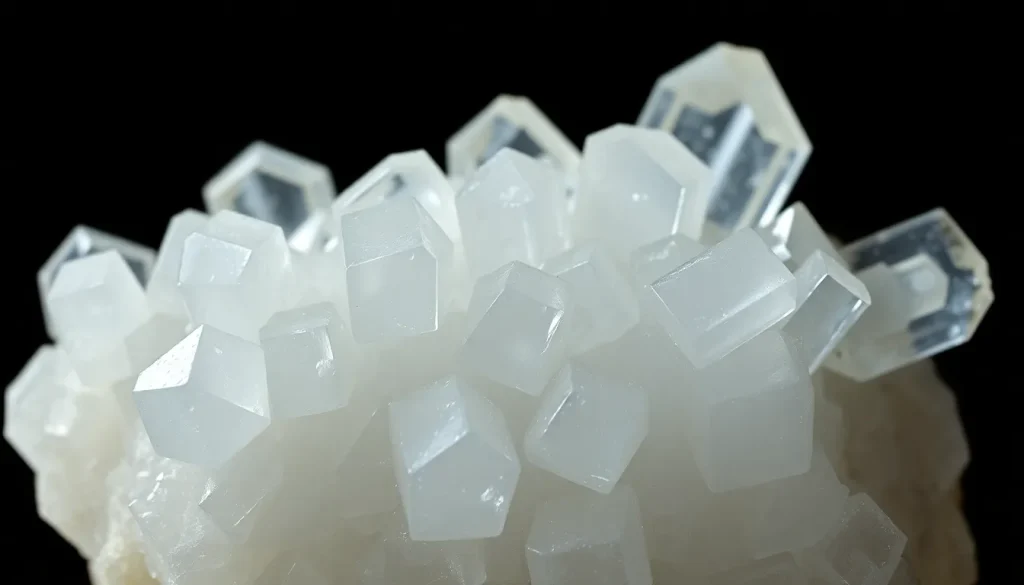
Sellaite is the naturally occurring mineral form of magnesium fluoride (MgF₂). It crystallizes in the tetragonal system and is most commonly found as colorless to white, sometimes slightly gray, transparent to translucent crystals. With a Mohs hardness of 5.5–6 and a vitreous luster, sellaite is durable enough for use in certain jewelry pieces and is of particular interest to mineral collectors.
History and Origin
The name “sellaite” honors the Italian mineralogist Francesco Sella, who first described the mineral in the early 20th century. Natural occurrences are relatively rare, typically forming in fluorine‑rich hydrothermal veins or as a by‑product of volcanic fumaroles. Notable localities include the Ural Mountains of Russia, the Andalusian region of Spain, northern Pakistan, and several sites in the United States (California) and Canada (Ontario).
Meaning and Symbolism
In gemstone lore, sellaite is associated with clarity of thought and emotional purity. Its colorless appearance is said to symbolize honesty, openness, and a clean slate, making it a modest alternative to more well‑known clear stones such as diamond or quartz.
Healing and Metaphysical Properties
Traditional crystal‑healing beliefs attribute the following properties to sellaite:
- Clarity of mind: It is thought to aid concentration and help dispel mental fog.
- Emotional balance: Practitioners claim it promotes calmness and reduces anxiety.
- Physical support: Some believe it assists the skeletal system and helps the body absorb calcium.
These claims are based on cultural tradition and are not supported by scientific evidence. Sellaite should never replace professional medical treatment.
Varieties and Types
Because sellaite is a single‑chemical compound, variations are limited to differences in crystal habit, size, and occasional trace impurities that may impart a faint hue. The most common forms are:
- Prismatic crystals – well‑formed, elongated prisms often used in mineral collections.
- Massive aggregates – compact, opaque masses sometimes cut for ornamental purposes.
- Fluorite‑associated sellaite – specimens where sellaite occurs intergrown with fluorite, creating attractive contrast.
Jewelry Uses and Care
While sellaite is not a mainstream gemstone, it is occasionally set in rings, pendants, and earrings, especially when the crystal exhibits exceptional clarity or an unusual habit. Care recommendations include:
- Clean with a soft, lint‑free cloth; mild soap and warm water are safe.
- Avoid harsh chemicals, ultrasonic cleaners, and steam, which can affect surface luster.
- Store separately from harder stones (e.g., diamonds) to prevent scratching.
- Because sellaite has perfect cleavage on {001}, handle with care to avoid impact that could cause splitting.
Buying Guide
When purchasing sellaite, consider the following factors:
- Clarity and transparency: Look for specimens with minimal inclusions and a clear view through the stone.
- Cut and shape: Well‑cut prismatic pieces display the mineral’s natural symmetry and enhance brilliance.
- Origin documentation: Reputable dealers should provide locality information and, when possible, a gem‑ological report.
- Treatment disclosure: Natural sellaite is rarely treated, but any coating or enhancement must be disclosed.
- Price range: Because it is uncommon, prices vary widely; high‑quality, faceted stones command premium prices, while raw crystals are more affordable.
Always buy from a certified gem‑dealer or a reputable mineral‑trade source to ensure authenticity.
FAQ
What is sellaite good for?
Sellaite is valued for its clear, glass‑like appearance and durability, making it suitable for collectible mineral specimens and occasional jewelry settings. Traditional crystal‑healing beliefs also associate it with mental clarity and emotional balance, though these claims are not scientifically verified.
Is sellaite rare?
Natural sellaite is relatively uncommon compared to more abundant gemstones. High‑quality, well‑formed crystals are especially scarce, while smaller raw material is more readily available from known localities.
How can you tell if sellaite is real?
Real sellaite is a magnesium fluoride crystal with a Mohs hardness of 5.5–6, perfect cleavage on {001}, and a refractive index around 1.376. It feels cool to the touch and displays a vitreous luster. Professional gemological testing, such as refractive index measurement or spectroscopic analysis, provides definitive verification.
What chakra is sellaite associated with?
In crystal‑healing traditions, sellaite is sometimes linked to the Crown Chakra for its clear, uplifting energy, but there is no universally accepted chakra assignment.
How should you clean sellaite?
Clean sellaite with a soft lint‑free cloth and mild warm soapy water. Avoid ultrasonic cleaners, steam, or harsh chemicals. Store it separately from harder gemstones to prevent scratches, and handle it gently because it has perfect cleavage that can cause splitting if struck.
Leave a Reply