
Short Answer
Overview
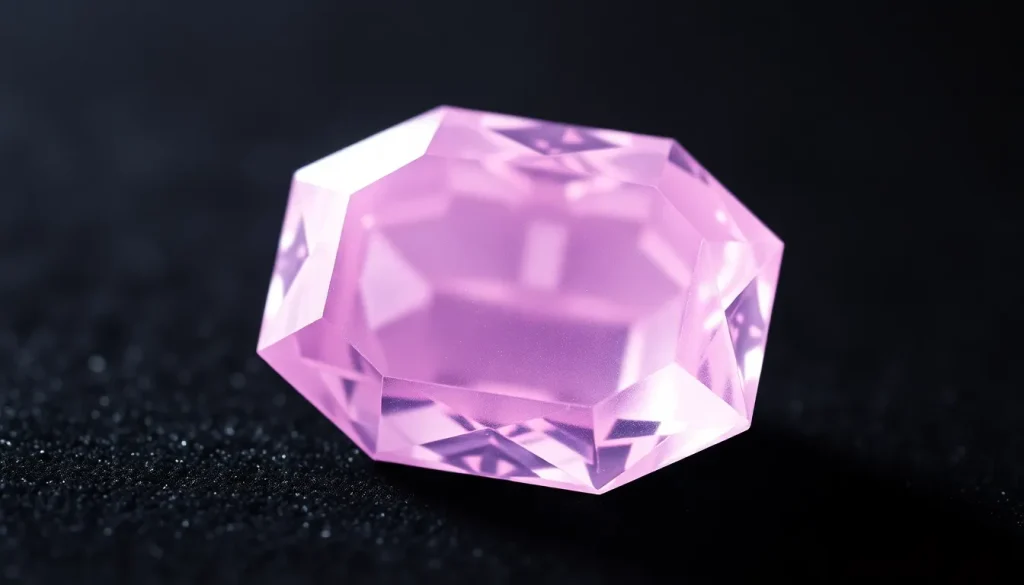
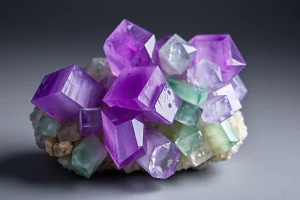
Prismatine is the trade name given to the clear, prismatic crystals of the mineral scapolite. It is most often found in shades of pink, violet, green, yellow, or colourless, and displays a vitreous luster with good transparency. Because of its moderate hardness and attractive colour range, prismatine is occasionally cut for use in rings, pendants, and earrings.
History and Origin
The name “prismatine” dates back to the early 20th century, when mineral collectors began to distinguish the particularly clear, prism‑shaped specimens of scapolite from the more common opaque or milky forms. Early reports described finds from the Lake District in England and from Scandinavian localities. Today, notable occurrences are reported from Canada (Ontario), the United States (California and New Mexico), Finland, Norway, Italy, Brazil and a few other regions where scapolite forms in metamorphic rocks and skarn deposits.
Meaning and Symbolism
In traditional gemstone lore, prismatine is associated with clarity of thought and emotional balance. Its soft pink and violet tones are thought to encourage gentle compassion, while the green and yellow varieties are linked to renewal and optimism. Because the stone often exhibits a subtle internal glow, it is sometimes regarded as a symbol of inner light and quiet confidence.
Healing and Metaphysical Properties
Crystal‑healing practitioners attribute several metaphysical qualities to prismatine. It is believed to aid in emotional healing, promote calm during stressful situations, and support the heart’s ability to give and receive love. Some claim it assists in enhancing intuition and spiritual communication, though these ideas are not supported by scientific evidence and should not replace professional medical advice.
Varieties and Types
Prismatine is essentially a colour‑variant of scapolite. The most common colour varieties include:
- Pink/Violet Prismatine – the classic “prismatine” colour, ranging from pale rose to deep violet.
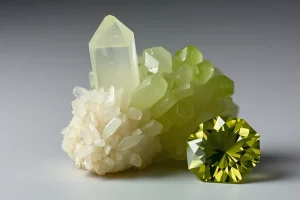
- Green Prismatine – often a pale to medium green, sometimes showing a faint yellowish tint.
- Yellow/Golden Prismatine – less common, exhibiting a warm, sunny hue.
- Colourless Prismatine – transparent with little to no colour, valued for its brilliance when well‑cut.
All varieties share the same basic chemical composition, differing mainly in trace elements that cause colour variations.
Jewelry Uses and Care
Prismatine’s hardness (5.5–6 on the Mohs scale) makes it suitable for earrings, pendants, and occasional rings, though it should be protected from hard impacts. Because the stone can exhibit perfect cleavage in two directions, setting it securely is essential. Cleaning should be done with mild soap, warm water, and a soft brush; ultrasonic cleaners are not recommended for heavily included pieces.
Buying Guide
When purchasing prismatine, consider the following factors:
- Colour and Clarity – vivid, evenly distributed colour and minimal inclusions are most desirable.
- Cut and Symmetry – well‑cut stones display bright luster and a pleasing “prismatic” shape.
- Origin Documentation – reputable dealers will provide provenance, especially for specimens from known localities.
- Treatment Disclosure – natural prismatine is rarely treated, but some stones may be heat‑treated to enhance colour; ask for certification.
- Certification – a gemological report from a recognized lab (e.g., GIA) adds confidence in authenticity.
Because prismatine is less common than many mainstream gemstones, prices can vary widely. High‑quality, vivid pink/violet stones typically command the highest market value.
FAQ
What is prismatine good for?
Prismatine is valued for its attractive pink‑violet colours and vitreous luster, making it suitable for decorative jewelry. Traditionally, it is also associated with emotional balance and gentle compassion in crystal‑healing beliefs.
Is prismatine rare?
Good‑quality prismatine is relatively uncommon because transparent, vividly coloured specimens are limited. Rarity depends on colour, clarity, cut, and whether the stone originates from well‑known localities.
How can you tell if prismatine is real?
Real prismatine exhibits a refractive index of 1.545–1.562, a Mohs hardness of 5.5–6, and perfect cleavage. A professional gemological lab can confirm its identity with spectroscopy and chemical analysis.
What chakra is prismatine associated with?
In crystal‑healing traditions prismatine is sometimes linked to the Heart chakra for emotional harmony, and occasionally to the Crown chakra for spiritual insight. These associations are based on belief, not scientific evidence.
How should you clean prismatine?
Clean prismatine with warm, soapy water and a soft brush. Avoid ultrasonic cleaners and harsh chemicals; dry with a lint‑free cloth. Store separately to prevent scratches from harder gemstones.
Leave a Reply