
Short Answer
Overview
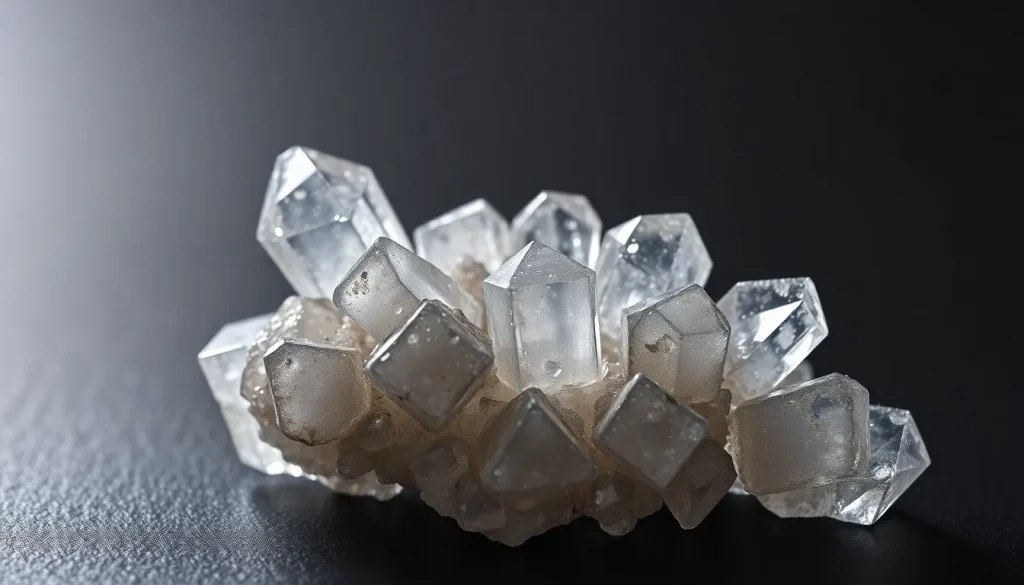
Powellite is the natural mineral form of calcium molybdate (CaMoO4). It belongs to the scheelite group of oxide minerals and crystallises in the tetragonal system. Typically colourless to white, it can also appear gray, pale yellow, or brownish, and exhibits an adamantine luster.
History and Origin
Powellite was first described in 1891 from specimens collected in the Colorado Plateau, United States. The mineral was named in honour of the American geologist William H. Powell, who contributed significantly to the study of Colorado’s mining districts. It forms as a secondary mineral in the oxidised zones of molybdenum‑bearing ore deposits.
Meaning and Symbolism
In traditional gemstone lore, the clear, light‑reflecting quality of Powellite is associated with purity, clarity of thought, and the ability to see beyond illusion. Its subtle colour range is said to symbolize modesty and inner strength, making it a favoured talisman for those seeking personal transformation.
Healing and Metaphysical Properties
Crystal‑healing practitioners attribute Powellite with the following properties:
- Enhances mental clarity and aids decision‑making.
- Supports spiritual growth and connection to higher consciousness, often linked to the Crown Chakra.
- Assists in releasing old patterns and fostering renewal.
These claims are based on traditional beliefs and should not be considered medical advice.
Varieties and Types
Powellite occurs in two principal forms:
- Natural crystals – well‑formed tetragonal prisms or tabular aggregates prized by collectors.
- Synthetic Powellite – produced for industrial molybdenum extraction; visually identical but typically lacks the clarity required for gemstone use.
Powellite is often confused with scheelite (calcium tungstate) because of similar crystal habits, but scheelite is generally heavier and may display a faint fluorescence under UV light.
Jewelry Uses and Care
Because of its modest hardness (3.5–4 on the Mohs scale) and perfect basal cleavage, Powellite is used sparingly in jewelry. When cut as a cabochon or polished bead, it makes an eye‑catching accent in pendants and earrings, especially when set in protective metal settings.
Care recommendations:
- Clean with lukewarm water, mild soap, and a soft brush; avoid ultrasonic cleaners.
- Do not expose to harsh chemicals, acids, or prolonged sunlight.
- Store separately from harder gemstones to prevent scratching.
Buying Guide
When purchasing Powellite, consider the following factors:
- Clarity and Inclusions – Look for a clear, inclusion‑free surface; cloudiness reduces its brilliance.
- Cut and Finish – Well‑polished cabochons showcase the stone’s adamantine luster.
- Origin – Specimens from classic localities such as Colorado (USA) or Quebec (Canada) are often preferred by collectors.
- Certification – Request a gemological report that confirms chemical composition and identifies any treatments.
Powellite is generally affordable, but high‑quality, large, and well‑formed crystals can command higher prices due to their rarity in the gemstone market.
FAQ
What is powellite good for?
Powellite is valued as a source of molybdenum for industrial applications, as a collector's mineral for its crystal habit, and in crystal‑healing circles for promoting mental clarity and spiritual insight.
Is powellite rare?
High‑quality, well‑formed powellite crystals are relatively rare, especially in larger sizes. It is more common as small aggregates or as a secondary mineral in oxidized zones of molybdenum deposits.
How can you tell if powellite is real?
Real powellite exhibits a Mohs hardness of 3.5–4, a specific gravity around 4.0, and an adamantine luster. Professional testing with a refractometer, density measurement, or X‑ray diffraction can confirm its identity.
What chakra is powellite associated with?
Traditional crystal‑healing sources associate powellite with the Crown Chakra, believed to aid spiritual connection and higher‑level insight.
How should you clean powellite?
Clean powellite gently with lukewarm water, a mild soap, and a soft brush. Avoid ultrasonic cleaners, harsh chemicals, and prolonged exposure to strong heat or sunlight.
Leave a Reply