
Short Answer
Overview
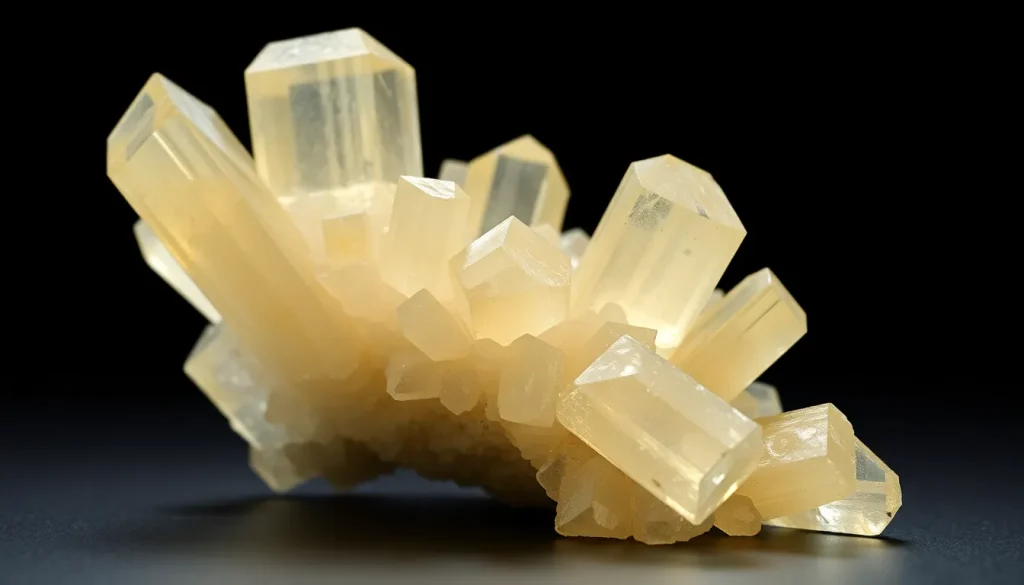
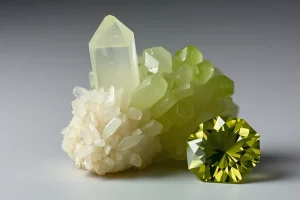
Phosgenite is a scarce mineral composed of lead carbonate chloride (Pb₂CO₃Cl₂). It crystallises in the orthorhombic system and is noted for its high specific gravity, adamantine luster, and typically colourless to very pale yellow appearance. While primarily a collector’s mineral, cut specimens have occasionally been set in jewellery due to their brilliance and unusual chemistry.
History and Origin
The name “phosgenite” derives from the toxic gas phosgene because the mineral contains both carbonyl (CO₃) and chloride (Cl) anions. The first recognized specimens were described in the early 19th century from the lead‑rich mining districts of the Harz Mountains in Germany. Subsequent occurrences have been documented in the Czech Republic’s Jáchymov district, the Ural region of Russia, and isolated localities in the United States (notably Arizona). Because it forms in oxidised zones of lead ore deposits, phosgenite is often found alongside galena, cerussite, and anglesite.
Meaning and Symbolism
In traditional crystal‑healing lore, phosgenite is associated with grounding and protection, reflecting the heavy lead component that is thought to “anchor” energetic vibrations. It is sometimes described as a stone that encourages mental clarity by filtering out distractions, allowing the wearer or holder to focus on inner truths. Because the mineral is rare, some view it as a symbol of uniqueness and inner strength.
Healing and Metaphysical Properties
Crystal‑healing practitioners attribute the following properties to phosgenite, noting that these are based on belief systems rather than scientific evidence:
- Grounding: Supposed to help stabilize emotions and provide a sense of security.
- Protection: Believed to shield the aura from negative influences.
- Clarity: Said to aid mental focus and improve decision‑making.
- Detoxification: Some claim it assists in releasing energetic “toxins,” though no medical claims are made.
These uses are traditional and should not replace professional medical advice.
Varieties and Types
Phosgenite does not have widely recognized varietal names, but specimens can differ in colour, clarity, and crystal habit:
- Colourless specimens – Highly prized for their transparency and brilliance.
- Pale yellow to straw‑colored crystals – Result from trace impurities or slight oxidation.
- Brownish or honey‑tinted material – Typically contains inclusions of other lead minerals.
All varieties share the same chemical composition and crystallographic properties.
Jewelry Uses and Care
Because phosgenite has a Mohs hardness of only 2.5–3, it is considered too soft for everyday wear in rings or bracelets that are subject to abrasion. However, it can be used in pendants, earrings, or brooches where the stone is protected from impact. When setting phosgenite, jewelers often employ protective bezels or backing plates to minimise direct contact.
Care instructions:
- Clean gently with a soft, lint‑free cloth; avoid ultrasonic cleaners.
- Use only mild, pH‑neutral soap and lukewarm water if deeper cleaning is required.
- Avoid exposure to strong acids, bases, or prolonged sunlight, which can alter surface appearance.
- Store separately from harder gemstones to prevent scratching.
Buying Guide
When purchasing phosgenite, consider the following factors:
- Origin: Documented specimens from classic localities (Germany, Czech Republic) often carry higher collector value.
- Clarity and colour: Transparent, colour‑less stones with minimal inclusions command premium prices.
- Cut and setting: Well‑cut cabochons that showcase the stone’s luster are preferred for jewellery.
- Certification: Request a gemological report from a recognised laboratory to confirm chemical composition and to rule out synthetic look‑alikes.
n
Because phosgenite is rare, prices can vary widely. Always purchase from reputable dealers who provide provenance information.
FAQ
What is phosgenite good for?
Phosgenite is valued by collectors for its rarity and high luster, and it is occasionally set in jewellery. In crystal‑healing circles it is believed to aid grounding, protection, and mental clarity, though these uses are traditional and not medically proven.
Is phosgenite rare?
Yes, phosgenite is considered rare. High‑quality, colourless specimens from classic localities such as Germany or the Czech Republic are especially scarce, while lower‑grade material may occur more frequently in lead‑rich mining districts.
How can you tell if phosgenite is real?
Real phosgenite is heavy (high specific gravity), has an adamantine luster, and shows perfect cleavage on {001}. A professional gemological laboratory can confirm its composition with X‑ray diffraction or chemical analysis.
What chakra is phosgenite associated with?
Traditional crystal‑healing sources do not assign phosgenite a single standard chakra, though some practitioners link its grounding qualities to the Root chakra.
How should you clean phosgenite?
Clean gently with a soft, lint‑free cloth and mild soap and lukewarm water. Avoid ultrasonic cleaners, harsh chemicals, and prolonged sunlight. Store separately from harder gemstones to prevent scratching.
Leave a Reply