
Short Answer
Overview
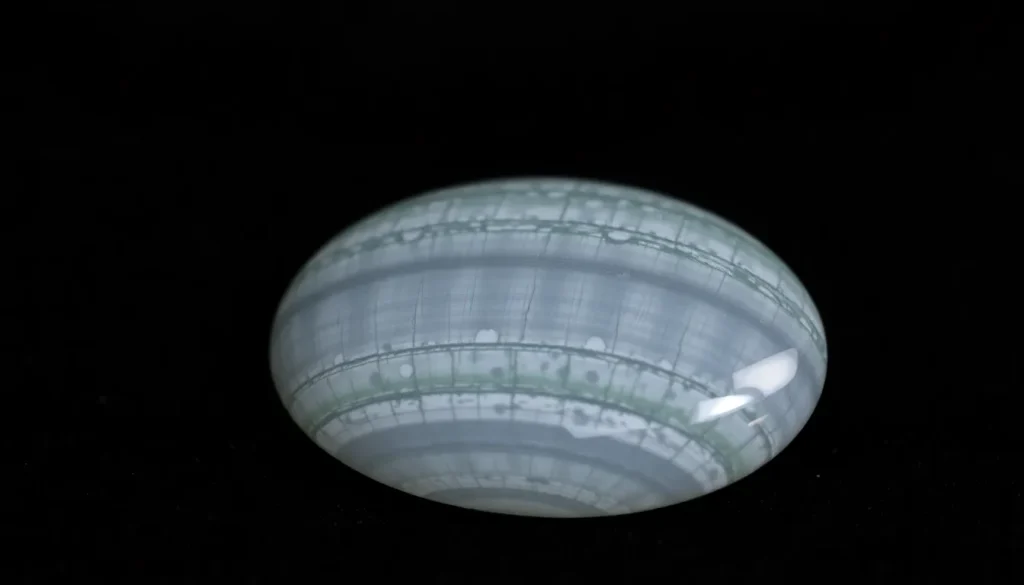
Perthite is a naturally occurring intergrowth of two feldspar minerals—albite (a sodium‑rich plagioclase) and microcline (a potassium‑rich alkali feldspar). The microscopic lamellae of albite and microcline form a mottled pattern that is typically white, gray, or faintly tinted by trace elements such as iron or manganese.
History and Origin
The term “perthite” was introduced in the early 19th century after the discovery of these intergrowths in the Scottish town of Perth, where the phenomenon was first described in local pegmatites. Geologically, perthite forms during the slow cooling of granitic pegmatites, allowing the exsolution of albite from a high‑temperature K‑feldspar host. Specimens have been documented from classic pegmatite localities including Norway, Canada (Ontario), the United States (Idaho and California), Russia, and Finland.
Meaning and Symbolism
In traditional gemstone lore, perthite is said to embody balance and clarity. The juxtaposition of two complementary feldspars is interpreted as a symbol of harmony between opposing forces, encouraging mental focus and emotional stability. Its subtle appearance is often associated with modest elegance and understated beauty.
Healing and Metaphysical Properties
Crystal‑healing practitioners attribute perthite with the following beliefs:
- Mental focus: The intergrowth is thought to aid concentration and clear mental fog.
- Emotional balance: It is believed to help integrate conflicting emotions, fostering inner peace.
- Chakra work: Some traditions link perthite to the Third Eye chakra, supporting intuition, though other sources associate it with the Heart chakra for emotional grounding.
These statements reflect traditional beliefs and are not intended as medical advice.
Varieties and Types
Perthite is classified according to the dominant feldspar component and the orientation of the exsolution lamellae. Common varieties include:
- Albite‑rich perthite: Shows fine, white albite lamellae within a microcline matrix.
- Microcline‑rich perthite: Displays slightly pinkish or greenish hues due to trace iron.
- Cryptoperthite: Very fine intergrowths that are only visible under polarized light.
Jewelry Uses and Care
Because of its moderate hardness (6–6.5 on the Mohs scale) and perfect prismatic cleavage, perthite is used in limited jewelry applications such as cabochons, beads, and ornamental inlays. It is best suited for earrings, pendants, and brooches where impact risk is low.
Care guidelines:
- Clean with warm, soapy water and a soft brush; avoid ultrasonic cleaners that may exacerbate cleavage.
- Dry thoroughly with a lint‑free cloth.
- Store separately from harder gemstones (e.g., quartz, sapphire) to prevent scratching.
- Avoid rapid temperature changes, which can cause micro‑fracturing.
Buying Guide
When selecting perthite, consider the following factors:
- Clarity of lamellae: Well‑defined albite‑microcline intergrowths are prized for their visual interest.
- Color stability: Look for specimens that have not been artificially dyed; natural color is usually white to gray with occasional faint hues.
- Cut and finish: Cabochons that showcase the internal layering are preferred.
- Origin documentation: Reputable dealers provide provenance, especially for classic localities like Norway or Canada.
- Treatment disclosure: Ensure the seller confirms the stone is untreated, as some perthite is heat‑treated to enhance color.
Professional gemological testing (e.g., microscopy or X‑ray diffraction) can verify the intergrowth and confirm authenticity.
FAQ
What is perthite good for?
Perthite is valued for its unique intergrowth pattern in ornamental jewelry and as a collector’s mineral. Traditionally, it is believed to promote mental clarity and emotional balance.
Is perthite rare?
High‑quality perthite with well‑defined lamellae is uncommon, especially from classic localities, but the mineral itself is not considered extremely rare. Rarity depends on clarity, color, and untreated status.
How can you tell if perthite is real?
Real perthite shows visible albite‑microcline lamellae under magnification and a perfect 90° cleavage. Professional testing such as polarized light microscopy or X‑ray diffraction can confirm authenticity.
What chakra is perthite associated with?
In crystal‑healing traditions perthite is sometimes linked to the Third Eye chakra for intuition, though other sources associate it with the Heart chakra. These are belief‑based associations, not scientific facts.
How should you clean perthite?
Clean perthite with warm soapy water and a soft brush, avoid ultrasonic cleaners, and store it separately from harder gemstones. Dry gently with a lint‑free cloth.
Leave a Reply