
Short Answer
Overview
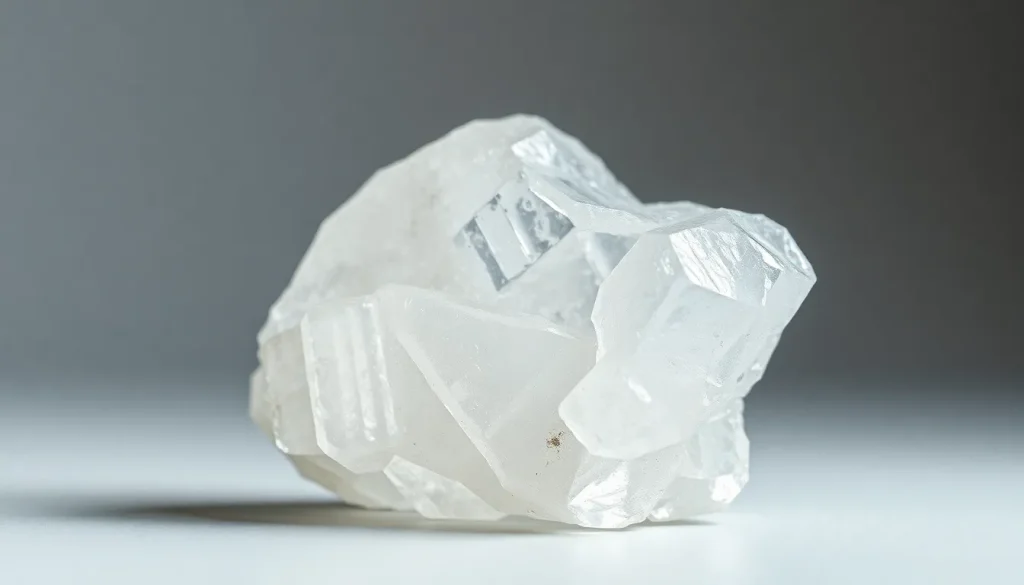
Inderite is a hydrated magnesium‑calcium borate belonging to the borate mineral group. It typically forms as colourless to white, translucent to opaque masses or tabular crystals with a vitreous to silky luster. Because of its low hardness and perfect basal cleavage, Inderite is more often collected by mineral enthusiasts than cut for high‑end jewelry, though it does appear in decorative pieces and low‑cost ornamental objects.
History and Origin
The name “Inderite” derives from the Inder River region in the Sverdlovsk Oblast of Russia, where the mineral was first described in the early 20th century. Early reports noted its occurrence in evaporite deposits associated with other borate minerals such as colemanite and ulexite. Since its discovery, specimens have been reported from a handful of localities worldwide, including the United States (California and Nevada), Germany, and additional sites in Russia.
Meaning and Symbolism
In traditional gemstone lore, Inderite is associated with clarity of thought and emotional balance. Its transparent appearance is thought to symbolize purity and the ability to see situations without distortion. Some crystal‑healing practitioners attribute to Inderite the capacity to aid in communication and to calm mental agitation.
Healing and Metaphysical Properties
According to crystal‑healing beliefs (not scientific fact), Inderite is said to:
- Promote mental clarity and help release old emotional patterns.
- Support the throat chakra, encouraging honest self‑expression.
- Assist in grounding by connecting the wearer to the Earth’s stabilising energies.
These properties are rooted in folklore and should not be used as a substitute for professional medical advice.
Varieties and Types
Inderite does not have widely recognized varieties, but it can occur in several habits:
- Massive Form – granular or compact aggregates, often white or pale gray.
- Tabular Crystals – thin, plate‑like crystals that display perfect basal cleavage.
- Fibrous Aggregates – silky, hair‑like bundles that give a silky luster.
Colour variations are limited to colourless, white, very pale yellow, or grayish tones, depending on trace impurities.
Jewelry Uses and Care
Because Inderite ranks only 2.5–3 on the Mohs scale, it is unsuitable for rings or bracelets that endure frequent impact. It is occasionally set in pendants, earrings, or brooches where the stone is protected by a bezel or resin. When cleaning:
- Use a soft, lint‑free cloth dampened with mild soap and lukewarm water.
- Avoid ultrasonic cleaners, steam, or harsh chemicals, which can damage the crystal structure.
- Store pieces separately from harder gemstones to prevent scratching.
Due to its perfect cleavage, care should be taken to avoid sudden blows that could split the stone.
Buying Guide
When purchasing Inderite, consider the following:
- Clarity and Transparency – High‑quality specimens are clear with minimal inclusions.
- Crystal Habit – Well‑formed tabular crystals are more desirable for collectors.
- Treatment Disclosure – Inderite is rarely treated, but any coating or stabilization should be disclosed by the seller.
- Certification – For larger or museum‑grade pieces, request a mineralogical identification report from a reputable laboratory (e.g., GIA, IGI, or a university department).
Because the market is niche, prices are modest and largely reflect size, crystal quality, and provenance.
FAQ
What is Inderite good for?
Inderite is prized by collectors for its delicate crystal habit and is occasionally used in ornamental jewelry. Traditional crystal‑healing beliefs attribute mental‑clarity and communication‑enhancing properties, though these are not scientifically verified.
Is Inderite rare?
Inderite is uncommon but not extremely rare. High‑quality, well‑formed crystals are less frequent, especially from classic localities such as the Inder region of Russia. Its overall scarcity is modest compared with more popular gemstones.
How can you tell if Inderite is real?
Identify Inderite by its low hardness (2.5–3), perfect basal cleavage, and vitreous to silky luster. It is typically colourless to white and may exhibit a white streak. Professional verification through a gem‑lab or mineralogical analysis (e.g., X‑ray diffraction) provides certainty.
What chakra is Inderite associated with?
In crystal‑healing traditions Inderite is linked to the throat chakra, supporting clear communication, though there is no scientific basis for this association.
How should you clean Inderite?
Clean Inderite gently with a soft cloth dampened in mild soapy water. Avoid ultrasonic cleaners, steam, or harsh chemicals. Store separately from harder stones to prevent scratching, and protect it from impact due to its perfect cleavage.
Leave a Reply