
Short Answer
Overview
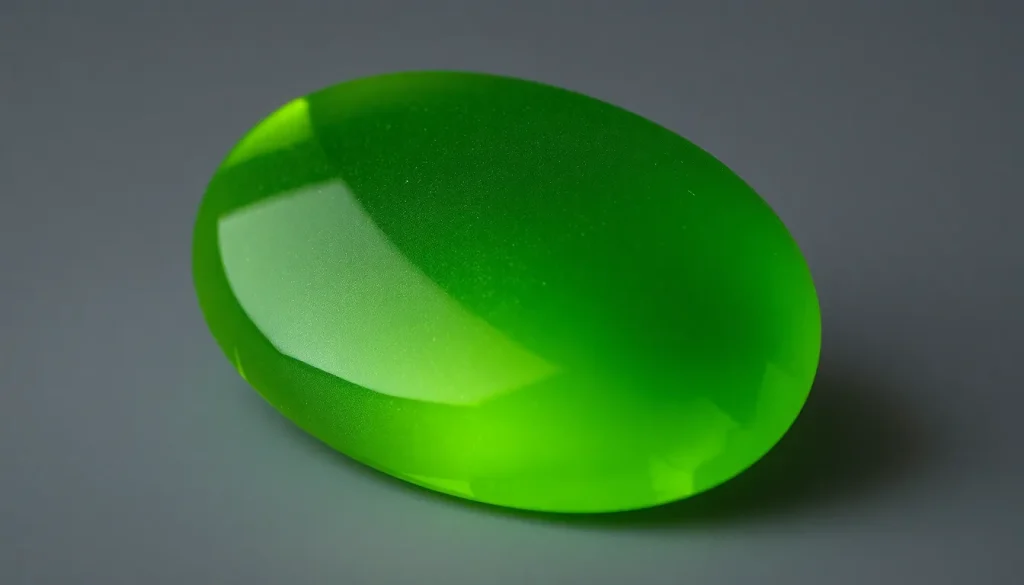
Gaspeite is a nickel carbonate mineral belonging to the calcite group. Its chemical formula is NiCO3 with occasional magnesium substitution, giving it the appearance of a vivid apple‑green to yellow‑green stone. With a Mohs hardness of 4.5–5, it is relatively soft for jewelry but is valued for its striking color and rarity. Specimens are commonly found as massive aggregates or as well‑formed rhombohedral crystals, and they are sometimes cut into cabochons for use in pendants and earrings.
History and Origin
The name “gaspeite” derives from the Gaspé Peninsula in Quebec, Canada, where the mineral was first described in the early 20th century. It occurs in lateritic nickel deposits where groundwater reacts with nickel‑rich sulfides, precipitating the carbonate. Notable localities include Quebec (Canada), New Caledonia, the Ural Mountains of Russia, Western Australia, and Brazil. Historically, gaspeite was mainly a collector’s mineral, but its attractive hue has led to limited use in jewelry.
Meaning and Symbolism
In gemstone lore, the vibrant green of gaspeite is associated with growth, renewal, and the heart’s emotional landscape. It is said to symbolize hope, compassion, and the nurturing of personal relationships. The color’s connection to nature often makes it a talisman for environmental awareness and ecological balance.
Healing and Metaphysical Properties
Traditional crystal‑healing beliefs attribute gaspeite with the ability to open and balance the Heart Chakra, encouraging unconditional love and emotional healing. Practitioners claim it can help release past emotional wounds, promote forgiveness, and support heart‑centered meditation. These properties are considered metaphysical and are not supported by medical science.
Varieties and Types
- Pure Nickel Green: Bright, vivid apple‑green specimens with minimal oxidation.
- Oxidized Gaspeite: Surface oxidation can produce brownish or yellow‑tan tones, often adding character to cabochons.
- Magnesian Gaspeite: Specimens where magnesium substitutes for nickel, slightly altering hue and density.
Gaspeite is seldom treated; most enhancements involve stabilization of surface oxidation to preserve color.
Jewelry Uses and Care
Because of its modest hardness, gaspeite is best suited for pieces that experience minimal abrasion, such as pendants, earrings, and brooches set in protective bezels. It should be protected from harsh chemicals, acids, and prolonged exposure to sunlight, which can accelerate oxidation. Cleaning is best performed with lukewarm water, a mild neutral soap, and a soft brush. After cleaning, dry gently with a lint‑free cloth.
Buying Guide
- Color: Look for a uniform, vivid green without excessive brown oxidation.
- Clarity: Inclusions are common; however, large cracks or heavy staining reduce value.
- Cut: Well‑polished cabochons that showcase the stone’s natural luster are preferred.
- Origin: Provenance from recognized localities (e.g., Quebec, New Caledonia) can add confidence.
- Certification: Request a gemological report confirming the mineral species, especially for high‑value pieces.
When purchasing, compare price per carat with market averages and be wary of stones marketed as “synthetic green gems” that may be glass or dyed quartz.
FAQ
What is gaspeite good for?
Gaspeite is prized by collectors for its vivid green hue and is occasionally set in jewelry such as pendants and earrings. Traditional crystal‑healing beliefs also associate it with emotional balance and heart‑centered meditation.
Is gaspeite rare?
High‑quality, uniformly green gaspeite is relatively rare. While the mineral occurs in several nickel‑rich localities, gem‑grade material with good color and clarity is uncommon and can command premium prices.
How can you tell if gaspeite is real?
Real gaspeite feels heavy for its size (specific gravity ~5), has a Mohs hardness of 4.5–5, and displays a characteristic apple‑green color with a white streak. Professional gemologists can confirm identity with refractive index, X‑ray diffraction, or chemical analysis.
What chakra is gaspeite associated with?
In crystal‑healing traditions, gaspeite is linked to the Heart Chakra, supporting love, compassion, and emotional healing.
How should you clean gaspeite?
Clean gaspeite gently with lukewarm water, a mild neutral soap, and a soft brush. Rinse thoroughly and pat dry with a lint‑free cloth. Avoid ultrasonic cleaners, harsh chemicals, and prolonged exposure to acids or sunlight.
Leave a Reply