
Short Answer
Overview
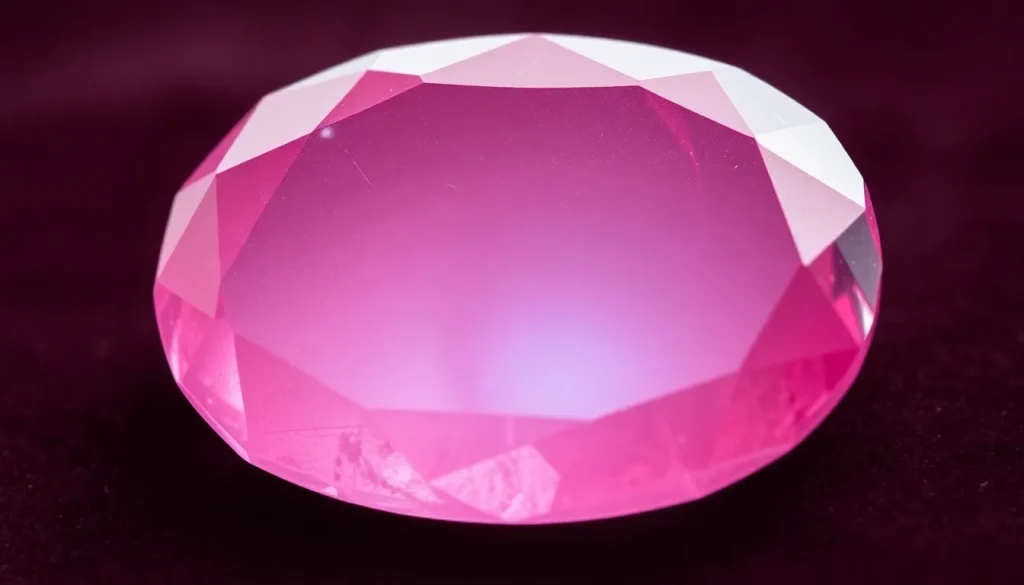
Friedelite, also known as pink beryl or rose beryl, is a pink to rose‑colored variety of the mineral beryl (chemical formula Be3Al2Si6O18). It displays the characteristic hexagonal crystal habit of beryl and possesses a vitreous luster. The pink coloration is attributed primarily to trace amounts of manganese and, in some specimens, iron.
History and Origin
The name “Friedelite” honors French chemist and mineralogist Charles Friedel (1832‑1899), who first described the pink beryl variety in the late 19th century. Significant deposits have been reported from Brazil (particularly Minas Gerais), Madagascar, Mozambique, and the United States (California). Smaller occurrences are known from Pakistan and Afghanistan. Historically, Friedelite was used as a decorative stone in cameo work and as a collector’s specimen rather than as a mainstream gemstone.
Meaning and Symbolism
In traditional gemstone lore, pink beryl is associated with love, compassion, and emotional balance. Its soft rose hue is said to encourage gentle communication and to foster a sense of inner peace. The stone is sometimes chosen for romantic jewelry because of its subtle yet unmistakable pink color.
Healing and Metaphysical Properties
Crystal‑healing practitioners attribute the following properties to Friedelite, based on longstanding beliefs rather than scientific evidence:
- Emotional Healing: Thought to soothe grief and promote self‑acceptance.
- Heart Chakra: Believed to activate and balance the heart chakra, enhancing unconditional love.
- Physical Support: Traditionally claimed to aid the circulatory system and support the endocrine glands, though no medical claims are endorsed.
These attributes are part of metaphysical traditions and should not replace professional medical advice.
Varieties and Types
Friedelite is essentially a color variety of beryl; however, it is sometimes distinguished from other pink beryl specimens by subtle differences in hue intensity:
- Light Pink Friedelite – Very pale, almost colourless with a faint pink tint.
- Medium Pink Friedelite – The most common commercial grade, displaying a clear rose coloration.
- Deep Rose Friedelite – Richer pink, occasionally bordering on salmon; rarer and more valued.
All varieties share the same crystal structure and chemical composition, differing only in trace element concentrations.
Jewelry Uses and Care
Due to its hardness of 7.5–8 on the Mohs scale, Friedelite is suitable for rings, pendants, earrings, and bracelets. It is often cut in traditional shapes such as emerald, oval, and cushion to showcase its colour.
Care Recommendations:
- Clean with warm, soapy water and a soft brush; avoid harsh chemicals.
- Because beryl has perfect basal cleavage, store the stone separately from harder gemstones to prevent chipping.
- Do not expose to prolonged direct sunlight, which can fade delicate pink tones over many years.
Buying Guide
When selecting Friedelite, consider the following factors:
- Color Saturation: Richer, even pink hues are generally more valuable.
- Clarity: Inclusions are common; eye‑clean stones command higher prices.
- Cut Quality: Well‑proportioned cuts that maximize brilliance enhance value.
- Origin: Brazilian and Madagascan stones are most widely available; provenance can affect price.
- Certification: Request a gemological report from a reputable laboratory (e.g., GIA) to confirm authenticity and any treatments.
Friedelite is typically sold untreated, but always verify with the seller. Prices vary widely based on colour, clarity, and carat weight.
FAQ
What is Friedelite good for?
Friedelite is valued for its delicate pink color in fine jewelry and as a collector’s stone. Traditionally, it is believed to promote love and emotional balance, but these are spiritual concepts, not medical facts.
Is Friedelite rare?
High‑quality pink beryl is less common than other beryl varieties such as emerald or aquamarine. Rarity depends on color saturation, clarity, and size; deep rose stones are particularly scarce.
How can you tell if Friedelite is real?
Authentic Friedelite should have a hardness of 7.5–8, a vitreous luster, and a refractive index around 1.58. Simple tests include checking for perfect basal cleavage and using a loupe to examine inclusions. For certainty, obtain a gemological report from a laboratory like GIA.
What chakra is Friedelite associated with?
In crystal‑healing traditions, Friedelite is linked to the Heart (Anahata) chakra, where it is thought to enhance love and compassion.
How should you clean Friedelite?
Clean Friedelite with warm soapy water and a soft brush. Avoid ultrasonic cleaners and harsh chemicals. Store it separately from harder gemstones to protect its perfect basal cleavage.
Leave a Reply