
Short Answer
Overview
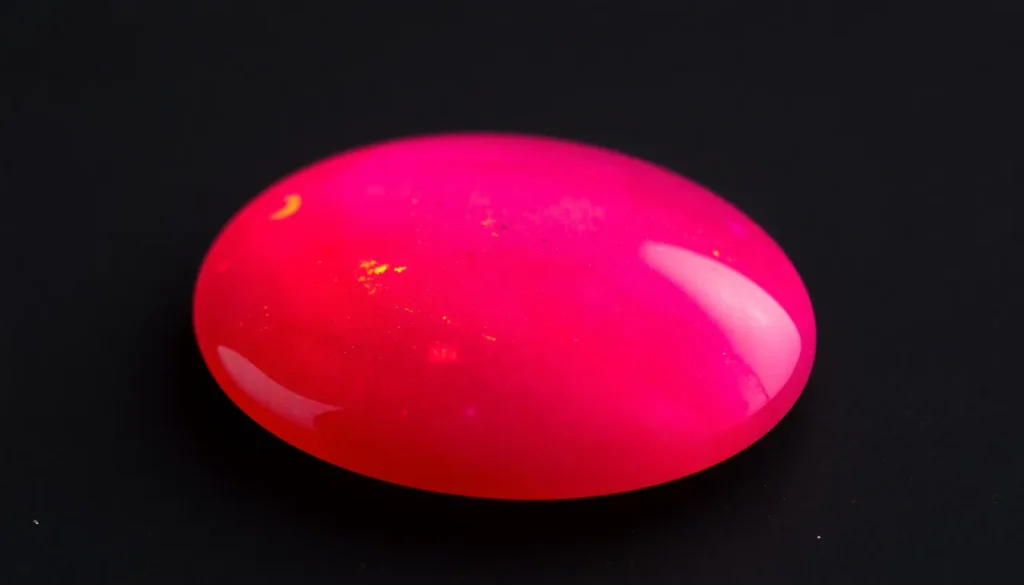
Esperite is a silicate mineral with the chemical formula CaZnSi₂O₆. It belongs to the sorosilicate group and crystallises in the orthorhombic system. The stone is most celebrated for its vivid pink to orange‑red hues, high refractive index, and strong dispersion, which give it a fiery brilliance when cut as a gemstone.
With a Mohs hardness of 5.5–6, esperite is suitable for jewelry that will not be subjected to heavy impact, such as pendants, earrings, and rings set in protective settings. Its rarity and striking colour make it a favorite among collectors and designers seeking an alternative to more common pink gemstones.
History and Origin
The name “esperite” derives from the Esperanza Mine in Namibia, where the mineral was first described in the early 20th century. Since then, notable occurrences have been documented in skarn and contact‑metamorphic environments in Namibia, the United States (particularly Arizona), Canada (Ontario), and Madagascar. Historically, the stone has been used as a decorative material and, more recently, as a gemstone in fine jewellery.
Meaning and Symbolism
In traditional gemstone lore, esperite is associated with passion, creativity, and emotional expression. Its bright pink and orange tones are thought to stimulate the heart, encouraging love and compassion. The stone’s fiery sparkle is also linked to inspiration and the courage to pursue artistic endeavors.
Healing and Metaphysical Properties
Crystal‑healing practitioners attribute a range of metaphysical qualities to esperite. It is believed to balance the heart chakra, promote emotional healing, and enhance self‑esteem. Some claim that carrying esperite can help release past emotional wounds and foster a sense of inner warmth. These beliefs are traditional and not supported by medical science.
Varieties and Types
- Pink to Red Esperite: The most common commercial colour, ranging from soft pastel pink to deep ruby‑red.
- Orange‑Red Esperite: Displays a vivid orange hue with red undertones, prized for its rarity.
- Colourless/White Esperite: Transparent specimens lacking colour; valued mainly by collectors for their clarity.
- Brownish Esperite: Occasionally found with brown or hazel tones, usually less sought after for jewellery.
All varieties share the same chemical composition; colour differences arise from trace impurities, chiefly manganese and iron.
Jewelry Uses and Care
Because of its moderate hardness, esperite is best suited to jewellery that experiences minimal abrasion. Cabochon settings protect the surface, while faceted pieces should be set with low‑profile prongs or bezel settings to reduce the risk of chipping.
Cleaning: Clean with warm, soapy water and a soft brush. Avoid ultrasonic cleaners and harsh chemicals, which can affect any surface treatments applied to enhance colour.
Storage: Store separately from harder gemstones (e.g., quartz, sapphire) to prevent scratches. A soft fabric pouch or a dedicated compartment in a jewellery box is recommended.
Buying Guide
When purchasing esperite, consider the following factors:
- Colour Saturation: Deep, evenly distributed pink or orange‑red colour is most desirable.
- Clarity: Look for stones with minimal inclusions; internal fractures can weaken the piece.
- Cut: Well‑cut cabochons showcase the stone’s fire, while precision faceting highlights its high dispersion.
- Treatments: Some specimens are heat‑treated to enhance colour. Request disclosure of any treatments.
- Certification: Reputable dealers will provide a gem‑ological report confirming identity and any treatments.
Because esperite is relatively scarce, prices can vary widely. Expect higher costs for vivid, untreated stones from well‑known localities such as Namibia.
FAQ
What is esperite good for?
Esperite is valued for its vibrant pink to orange‑red colour and high fire, making it popular in jewellery and decorative pieces. Traditional crystal‑healing beliefs also associate it with emotional balance and heart‑centered love.
Is esperite rare?
High‑quality, vividly coloured esperite is relatively rare. While the mineral occurs in several countries, gem‑grade stones with good clarity and colour are limited, especially untreated specimens.
How can you tell if esperite is real?
Real esperite exhibits a high refractive index (≈1.72) and strong dispersion. Under magnification, it shows a vitreous luster and may have characteristic crystal inclusions. Professional gemological testing, such as refractometry or spectrometry, confirms authenticity.
What chakra is esperite associated with?
In crystal‑healing traditions, esperite is linked to the Heart (Anahata) chakra, where it is believed to promote love, compassion, and emotional healing.
How should you clean esperite?
Clean esperite with warm soapy water and a soft brush. Avoid ultrasonic cleaners, steam, or harsh chemicals, as they can damage surface treatments and the stone’s relatively soft surface.
Leave a Reply