
Short Answer
Overview
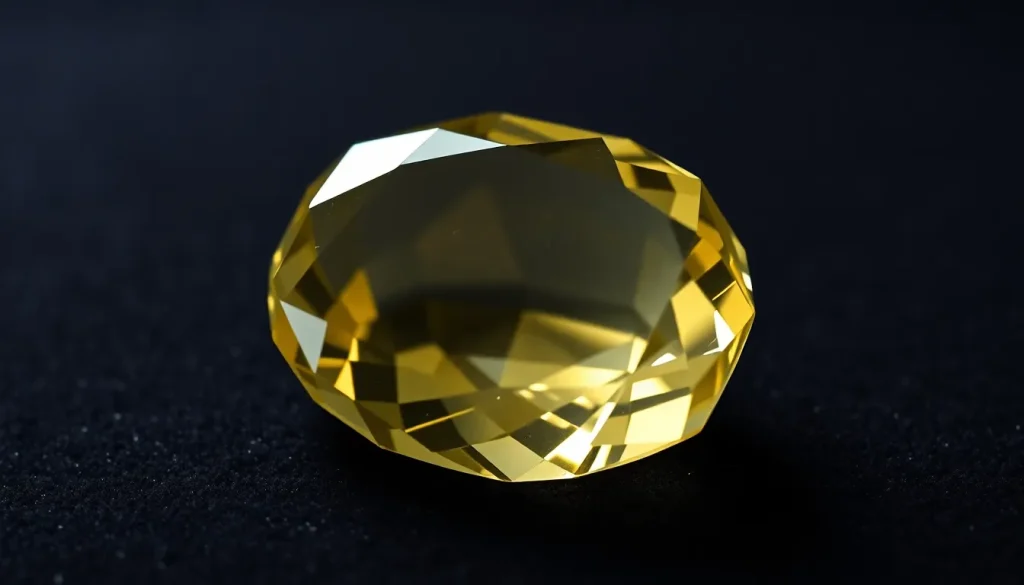
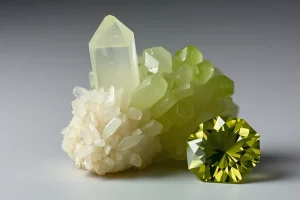
Danburite is a calcium borosilicate mineral with the chemical formula CaB₂(SiO₄)₂. It crystallises in the orthorhombic system and belongs to the sorosilicate (disilicate) family. In its gem‑quality form the stone is prized for its high refractive index (≈1.734–1.743), vitreous luster, and brilliance that rivals that of quartz. Gem‑cut Danburite is typically colourless, but pale shades of yellow, brown, or pink also occur. With a Mohs hardness of 7–7.5, it is suitable for most types of jewellery.
History and Origin
The mineral was first described in 1839 from an occurrence near Danbury, Connecticut, USA, and consequently bears the name “Danburite”. Early specimens were collected by mineralogists exploring the western United States, and the stone quickly attracted attention for its clarity and sparkle. Today Danburite is mined in several locales worldwide, most notably in the United States (California, Arizona, New Mexico, Wyoming), Canada (Ontario), Brazil, the Ural region of Russia, and Italy (Sicily). It forms in metamorphic environments where calcium‑rich rocks interact with boron‑bearing fluids.
Meaning and Symbolism
In traditional gemstone lore Danburite is associated with purity, divine love, and spiritual illumination. It is said to encourage honesty, calm the mind, and promote a sense of inner peace. Because of its clear, luminous appearance, Danburite is often regarded as a “stone of higher consciousness” that helps the wearer connect with higher realms of thought.
Healing and Metaphysical Properties
Crystal‑healing practitioners attribute a range of energetic qualities to Danburite. Common beliefs include:
- Facilitating meditation and deepening spiritual insight.
- Balancing the Crown chakra, thereby enhancing intuition and psychic abilities.
- Promoting emotional clarity and reducing anxiety.
- Assisting in the release of old patterns and encouraging personal growth.
These claims are based on traditional beliefs and are not intended as medical advice.
Varieties and Types
While the majority of gem‑quality Danburite is colourless, several colour varieties are recognised:
- Colourless (Clear) – The most common and highly valued for its diamond‑like sparkle.
- Pale Yellow – Often described as “sun‑kissed”, resulting from trace iron.
- Brown – Ranges from light amber to deep chocolate, caused by higher iron content.
- Pink – Very rare; the hue is due to trace manganese.
Danburite is typically found as well‑formed crystals, massive aggregates, or as part of metamorphic rock. Heat treatment is occasionally applied to enhance colour, but untreated, clear Danburite is most prized.
Jewelry Uses and Care
Because of its durability and brilliance, Danburite is cut into a variety of shapes, including round brilliant, oval, cushion, and emerald cuts. It is used in rings, pendants, earrings, and high‑end watches. Care recommendations:
- Clean with warm, soapy water and a soft brush; rinse thoroughly.
- Avoid ultrasonic cleaners if the stone has visible fractures.
- Store separately from softer gems such as opal or amber to prevent scratching.
- Remove jewelry before exposure to harsh chemicals, chlorine, or prolonged sunlight.
Buying Guide
When selecting Danburite, consider the following factors:
- Clarity – Look for stones free of inclusions that interrupt light transmission.
- Colour – Colourless stones command the highest price; subtle yellow or pink may be desirable for personal taste.
- Cut – Well‑proportioned faceting maximises brilliance.
- Origin & Treatment Disclosure – Reputable dealers will state the source and whether any heat treatment was applied.
- Certification – For larger or high‑value pieces, obtain a gem‑ological report from a recognised laboratory (e.g., GIA, IGI).
n
Beware of glass or synthetic substitutes that mimic Danburite’s appearance; a professional appraisal is the safest way to confirm authenticity.
FAQ
What is Danburite good for?
Danburite is valued for its high brilliance, durability (Mohs 7–7.5), and clear appearance, making it suitable for rings, pendants, and earrings. Traditionally, it is believed to promote spiritual clarity and calm, but these are not medical claims.
Is Danburite rare?
High‑quality, colourless Danburite is less common than many quartz varieties, especially in larger sizes. Rarity depends on clarity, colour, and whether the stone is untreated. It is more abundant than rare gems like alexandrite but less so than common quartz.
How can you tell if Danburite is real?
Real Danburite exhibits a high refractive index (≈1.74), a vitreous luster, and distinct one‑direction cleavage. It feels heavier than glass of the same size due to its specific gravity (~3.0). A professional gem‑lab test (e.g., GIA report) provides definitive verification.
What chakra is Danburite associated with?
In crystal‑healing traditions Danburite is most commonly linked to the Crown Chakra, supporting higher‑mind awareness and spiritual connection.
How should you clean Danburite?
Clean Danburite with warm, mild soapy water and a soft brush. Rinse well and pat dry with a lint‑free cloth. Avoid harsh chemicals, ultrasonic cleaners (if the stone has fractures), and prolonged exposure to extreme heat.
Leave a Reply