
Short Answer
Overview
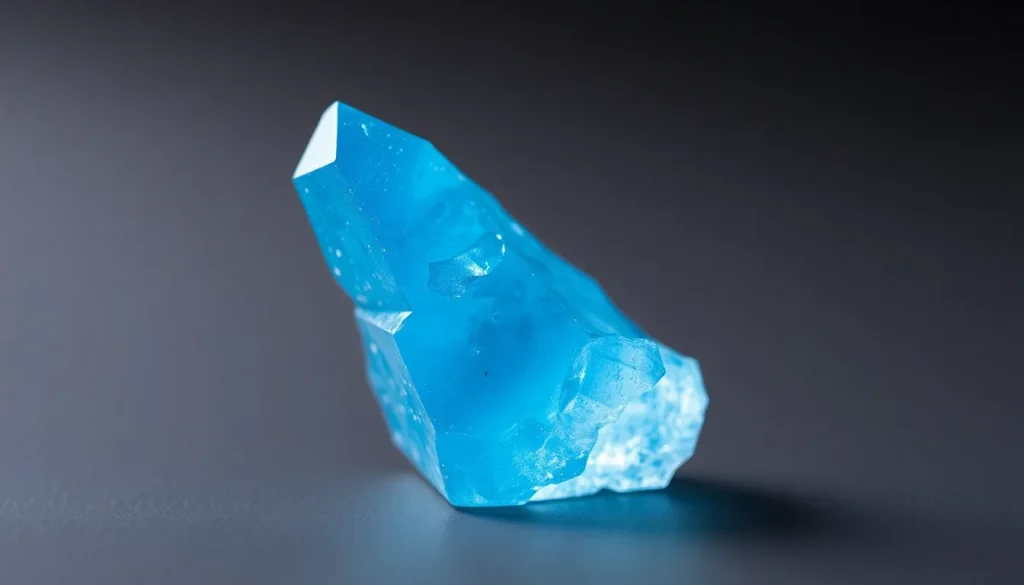
Caledonite is a secondary lead‑copper carbonate mineral with the formula PbCu(CO3)2(OH)2. It forms bright azure to deep blue crystals that can be tabular, prismatic, or massive. Although primarily a collector’s mineral, caledonite is occasionally cut for use in specialty jewelry due to its vivid hue and rarity.
History and Origin
The name “caledonite” derives from the Latin Caledonia, the ancient name for Scotland, where the mineral was first described in the 19th century. It occurs as a supergene alteration product of primary copper and lead ores, forming in the oxidized zones of ore deposits. Notable localities include Cornwall (UK), the Bisbee district of Arizona (USA), the Czech Republic’s Ore Mountains, and the Otjozondjupa region of Namibia.
Meaning and Symbolism
In traditional gemstone lore, caledonite is associated with clear communication and the expression of inner truth. Its striking blue is thought to represent the sky and the infinite, encouraging openness and honesty in relationships. Collectors often view the stone as a symbol of rarity and the hidden beauty that emerges from mineral transformation.
Healing and Metaphysical Properties
Crystal‑healing practitioners attribute caledonite with the ability to aid throat‑centered communication, helping users articulate thoughts with confidence. It is believed to calm emotional turbulence, promote mental clarity, and support the release of old patterns. These claims are based on traditional beliefs and are not a substitute for professional medical advice.
Varieties and Types
- Classic Azure Caledonite – the most common deep blue hue.
- Green‑Blue Caledonite – displays a subtle turquoise tint when trace amounts of iron are present.
- Massive Caledonite – occurs in botryoidal or granular aggregates rather than well‑formed crystals.
Jewelry Uses and Care
Because caledonite ranks only 3.5–4 on the Mohs scale, it is best suited for pendants, earrings, and jewelry that experiences low impact. The stone is brittle along its perfect {010} cleavage, so settings should protect it from knocks. Cleaning should be done with a soft, lint‑free cloth and mild warm soapy water; ultrasonic cleaners and harsh chemicals can damage the surface or promote discoloration.
Buying Guide
When purchasing caledonite, consider the following:
- Color Saturation: Deep, uniform blue indicates good quality.
- Clarity: Look for specimens free of heavy inclusions or surface cracks.
- Cut and Setting: Choose protective settings that minimize stress on the cleavage plane.
- Origin Disclosure: Reputable dealers will provide locality information and, if available, a certification of authenticity.
n
Because treatments are uncommon for caledonite, a natural stone will retain its original appearance. Always request a return policy and, if possible, a gemological report from a recognized laboratory.
FAQ
What is caledonite good for?
Caledonite is prized by collectors for its vivid blue color and occasional use in low‑impact jewelry. Traditionally, it is believed to support clear communication and emotional balance, though these are metaphysical claims, not medical facts.
Is caledonite rare?
High‑quality, deep‑blue caledonite is relatively rare. Good specimens are limited to a few historic localities, and the stone’s softness and cleavage make large, flawless crystals uncommon.
How can you tell if caledonite is real?
Real caledonite exhibits a distinctive azure hue, perfect cleavage, and a white streak. It is softer than quartz and has a higher specific gravity. Professional gemological testing, such as X‑ray diffraction or refractive index measurement, confirms authenticity.
What chakra is caledonite associated with?
In crystal‑healing traditions, caledonite is linked to the Throat (Vishuddhi) chakra, supporting expression and truthful communication.
How should you clean caledonite?
Clean caledonite with a soft cloth and lukewarm soapy water. Avoid ultrasonic cleaners, harsh chemicals, or high‑pressure streams, as the stone’s low hardness and perfect cleavage make it vulnerable to damage.
Leave a Reply