
Short Answer
Overview
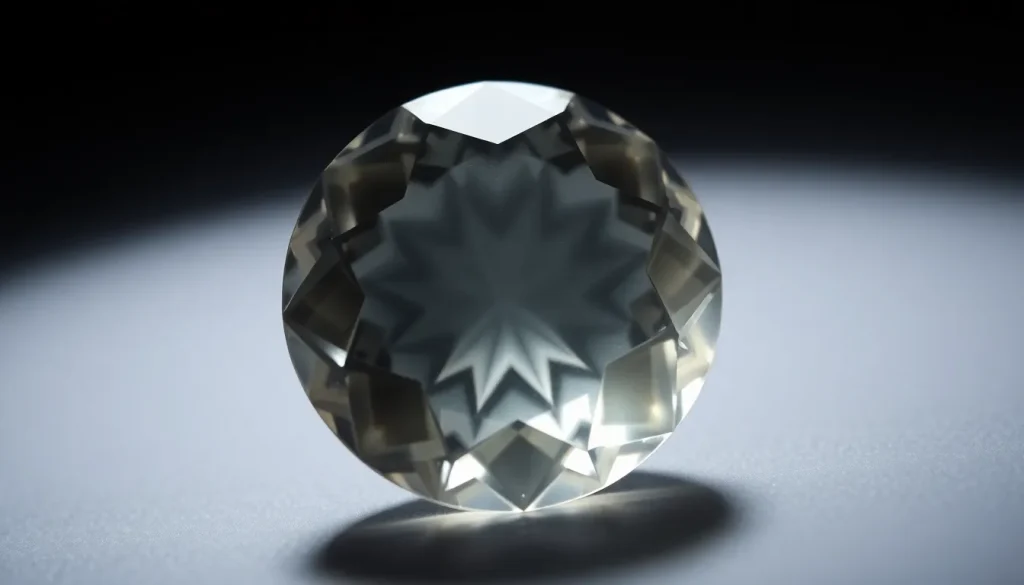
Bytownite is a calcium‑rich variety of plagioclase feldspar belonging to the silicate mineral family. Chemically it is expressed as (Na,Ca)(Si,Al)₄O₈, with an anorthite (Ca‑rich) component typically ranging from 70 % to 90 %. The stone crystallises in the triclinic system and displays the characteristic two‑directional, near‑perfect cleavage of feldspars. In gem‑quality form it is transparent to translucent, most often appearing in colourless, white, gray, or very pale green tones. Its vitreous luster and relatively high refractive index give it a modest sparkle, making it suitable for a range of jewellery applications.
History and Origin
The name “bytownite” originates from Bytown, the early name for Ottawa, Canada, where the mineral was first identified in the late 19th century. Early mineralogists recognised it as a distinct member of the plagioclase series because of its high calcium content. Bytownite occurs in a variety of geological settings, most notably in mafic and intermediate igneous rocks such as gabbro, norite and anorthosite, as well as in metamorphic environments where plagioclase is recrystallised. Notable localities include the Canadian Shield (Ontario and Quebec), the Kola Peninsula in Russia, northern Norway, Finland, Sweden, and parts of the United States such as Alaska.
Meaning and Symbolism
In traditional gemstone lore, bytownite is associated with clarity of thought and the ability to see situations from multiple perspectives. Its subtle colour and understated sparkle are said to encourage modesty, inner balance, and honest communication. Because it is a member of the feldspar group—often linked to the earth’s crust—bytownite is sometimes viewed as a grounding stone that connects the wearer to the natural world.
Healing and Metaphysical Properties
Crystal‑healing practitioners attribute several metaphysical qualities to bytownite. It is believed to aid in mental focus, helping to organise scattered thoughts and promote rational decision‑making. Some traditions claim it assists in the release of old emotional patterns, fostering personal growth and resilience. Bytownite is also thought to support the throat chakra, encouraging clear self‑expression, though these beliefs are not scientifically validated and should not replace professional medical advice.
Varieties and Types
Bytownite belongs to the plagioclase solid‑solution series, which ranges from albite (Na‑rich) to anorthite (Ca‑rich). Within the series, bytownite occupies the high‑calcium segment (An₇₀–An₉₀). While most bytownite specimens are opaque or translucent, a small subset can be cut as gemstones when they exhibit high clarity and a uniform, colourless appearance. These gem‑quality pieces are occasionally marketed under the trade name “bytownite feldspar.”
- Bytownite vs. Labradorite: Both are calcium‑rich plagioclases, but labradorite (An₅₀–An₇₀) displays pronounced labradorescence, a metallic‑blue sheen absent in bytownite.
- Bytownite vs. Anorthite: Anorthite (An₁₀₀) is the end‑member of the series and typically more opaque; bytownite retains better transparency for gemstone use.
- Heat‑treated Bytownite: Heat treatment can improve colour uniformity but may also induce internal stress; untreated specimens are preferred by collectors.
Jewelry Uses and Care
Because of its Mohs hardness of 6–6.5, bytownite is suitable for many types of jewellery, especially pieces that are not subjected to heavy wear. Common cuts include round brilliant, oval, pear, and cushion, which maximise the stone’s brilliance. Bytownite is often set in silver, white gold, or platinum to highlight its cool colour palette.
Care Recommendations:
- Clean with warm, soapy water and a soft brush; avoid ultrasonic cleaners if the stone is untreated, as micro‑fractures can develop.
- Dry with a lint‑free cloth; avoid prolonged exposure to chemicals such as bleach or acids.
- Store separately from harder gemstones (e.g., quartz, sapphire) to prevent scratching.
- Because of its perfect cleavage, avoid hard impacts; a sudden blow can cause the stone to split along its cleavage planes.
Buying Guide
When purchasing bytownite, consider the following factors:
- Clarity: Look for specimens with minimal inclusions and no visible cloudiness; high‑clarity stones are rarer.
- Colour: The most prized colour is a clean, colourless to faintly white‑gray hue. Any noticeable yellow, brown, or green tint reduces value.
- Cut: Well‑proportioned cuts that showcase the stone’s natural brilliance are preferred. Poorly cut stones will appear dull.
- Origin Documentation: Reputable dealers often provide a source statement; Canadian and Scandinavian origins are typical for high‑quality material.
- Treatment Disclosure: Ensure the seller discloses any heat or irradiation treatments. Untreated, natural bytownite commands a premium.
For assurance, request a gemological report from a recognised laboratory such as GIA or IGI. This report will confirm the stone’s identity, any treatments, and its basic physical properties.
FAQ
What is bytownite good for?
Bytownite is used in jewelry for its subtle sparkle and durability, and collectors value it for its clear to milky appearance. Traditional crystal‑healing beliefs attribute mental clarity and communication support, but these are not medical facts.
Is bytownite rare?
High‑quality, gem‑grade bytownite is relatively uncommon because it requires excellent clarity and colourlessness. The mineral itself is abundant in many igneous rocks, but transparent specimens suitable for jewellery are less frequently found.
How can you tell if bytownite is real?
Real bytownite shows perfect two‑directional cleavage, a vitreous luster, and a refractive index around 1.58. A professional gemological lab can confirm its identity and detect any treatments. Simple tests include checking for hardness (6–6.5) and observing its characteristic cleavage under a microscope.
What chakra is bytownite associated with?
In crystal‑healing traditions, bytownite is sometimes linked to the throat chakra, supporting clear communication, though this association is not universally accepted.
How should you clean bytownite?
Clean bytownite with warm, mildly soapy water and a soft brush. Avoid ultrasonic cleaners and harsh chemicals. After cleaning, dry with a lint‑free cloth and store separately from harder gemstones to prevent scratches.
Leave a Reply