
Short Answer
Overview
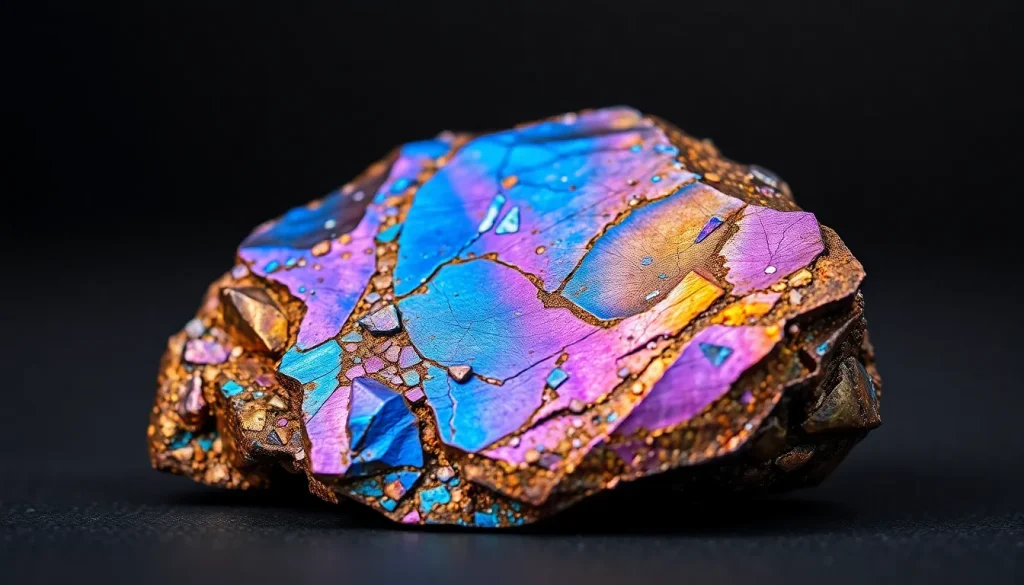
Bornite (Cu5FeS4) is a native copper‑iron sulfide mineral that forms massive, granular, or tabular aggregates. Its most distinctive feature is a metallic luster that, when freshly cut or polished, displays a vivid iridescent play of colors—most often blue, purple, and copper‑gold—earning it the nickname “peacock ore.” The mineral ranks 3–3.5 on the Mohs scale and is opaque with a black streak.
History and Origin
The name “bornite” honors the Austrian mineralogist Ignaz von Born (1742‑1791). First described in 1860 from specimens collected in the Upper Silesian region (now Poland), bornite quickly attracted attention for its striking colors. Historically it was mined as an ore of copper and iron, particularly in the copper districts of Michigan’s Upper Peninsula, the Canadian province of British Columbia, and the Ural Mountains of Russia. Today most gem‑quality material is sourced from polished specimens cut from larger masses rather than from active ore mines.
Meaning and Symbolism
In traditional gemstone lore, bornite is associated with creativity, confidence, and personal transformation. Its ever‑changing surface colors are said to symbolize adaptability and the ability to see multiple perspectives. Because the stone reflects light in a dazzling display, it is also linked to the concept of “inner light” and is sometimes given as a gift to encourage self‑expression.
Healing and Metaphysical Properties
Crystal‑healing practitioners attribute a range of energetic qualities to bornite. It is believed to stimulate the heart chakra, fostering emotional balance, compassion, and a deeper connection to one’s personal truth. Some claim it can help release old emotional patterns, promote optimism, and support the immune system. These claims are based on tradition and should not replace professional medical advice.
Varieties and Types
Bornite occurs in several textural forms:
- Massive bornite: Dense, granular aggregates often used for ornamental carvings.
- Crystalline bornite: Well‑formed orthorhombic crystals, rarer and prized by collectors.
- Polished peacock ore: Specimens that have been cut and polished to maximize the iridescent effect.
The intensity of the iridescence depends on surface condition, light angle, and the presence of oxidation layers. Freshly polished surfaces show the brightest colors, while weathered specimens may appear duller.
Jewelry Uses and Care
Because bornite is relatively soft (Mohs 3–3.5) and has perfect cleavage in one direction, it is best suited for earrings, pendants, brooches, and other pieces that experience limited abrasion. Settings that protect the stone—such as bezel or protective backings—help preserve its surface. Care guidelines include:
- Avoid harsh chemicals, ultrasonic cleaners, and steam.
- Wipe gently with a soft, lint‑free cloth after wearing.
- Store separate from harder gemstones (e.g., quartz, diamond) to prevent scratching.
- If the iridescence fades, a professional lapidary can re‑polish the surface.
Buying Guide
When selecting bornite, consider the following factors:
- Color play: Look for a vivid, multi‑hued surface that shifts between blue‑purple, copper, and gold.
- Cut and polish: High‑quality polish enhances iridescence; uneven or matte finishes reduce visual impact.
- Origin: Reputable sources often disclose the mining locality; well‑known regions include British Columbia, Michigan, and the Urals.
- Treatment disclosure: Some stones are artificially enhanced with heat or coating to intensify color. Ask the seller for treatment information.
- Certification: For larger pieces, a gemological report from a recognized lab (e.g., GIA) provides assurance of authenticity.
Remember that bornite’s value is driven primarily by its visual appeal rather than rarity; high‑quality specimens can be affordable, while exceptionally large, well‑polished pieces may command higher prices.
FAQ
What is bornite good for?
Bornite is valued for its striking iridescent colors in ornamental jewelry and collector pieces. Traditionally it is believed to support emotional balance and creativity, especially through its association with the heart chakra.
Is bornite rare?
High‑quality, well‑polished bornite is less common than lower‑grade material, but the mineral itself is not extremely rare. Rarity depends on factors such as size, clarity of iridescence, and whether the specimen is untreated.
How can you tell if bornite is real?
Real bornite displays a metallic luster with a distinctive blue‑purple to copper‑gold iridescence and a black streak. It is opaque and relatively soft (Mohs 3–3.5). Professional testing, such as a gemological microscope examination or a specific gravity test, confirms authenticity.
What chakra is bornite associated with?
In crystal‑healing traditions, bornite is linked to the Heart (Anahata) chakra, where it is said to promote love, compassion, and emotional balance.
How should you clean bornite?
Clean bornite gently with a soft, lint‑free cloth. Avoid ultrasonic cleaners, steam, and harsh chemicals. Store it separately from harder gemstones to prevent scratches, and consider professional re‑polishing if the iridescent surface becomes dulled.
Leave a Reply