
Short Answer
Overview
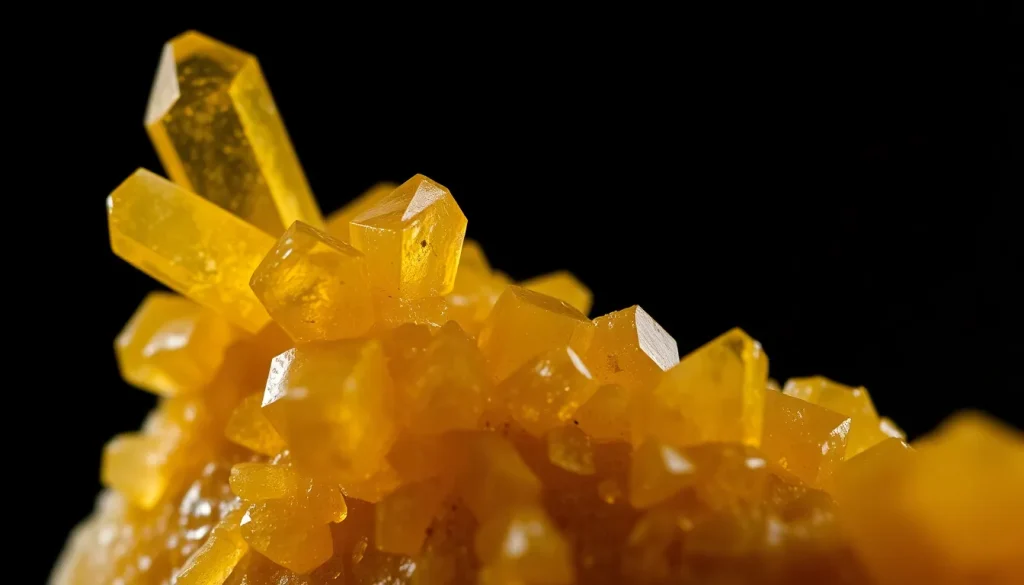
Mellite, commonly called honey stone, is an organic mineral belonging to the oxalate group. Its striking golden‑yellow to honey‑brown hue makes it a distinctive, though delicate, ornamental stone. Chemically it is an iron(II) oxalate nonahydrate, typically forming as small, tabular crystals or massive aggregates in fissures of sulphide‑rich ore bodies.
History and Origin
The name “mellite” derives from the Greek word meli meaning “honey,” a reference to its characteristic color. The mineral was first described in the early 19th century from specimens collected in the Black Forest of Germany. Historically, it was used as a decorative inlay in European jewelry and as a pigment in miniature painting. Modern collectors prize it for its rarity and its status as one of the few naturally occurring organic gemstones.
Meaning and Symbolism
Traditional folklore associates mellite with sweetness, abundance, and the nurturing aspects of the sun. Its warm color is thought to inspire optimism, encourage generosity, and remind the wearer of the simple pleasures of life. In cultural contexts, the stone is sometimes presented as a token of gratitude or a symbol of heartfelt affection.
Healing and Metaphysical Properties
Within crystal‑healing circles, mellite is believed to support the Solar Plexus chakra, promoting confidence, personal power, and clear decision‑making. Practitioners claim it can soothe digestive discomfort, aid detoxification, and balance emotional excesses by grounding intense feelings. These properties are considered traditional beliefs and are not a substitute for professional medical advice.
Varieties and Types
Pure mellite is uniformly honey‑yellow, but variations in trace impurities can produce lighter straw tones or deeper amber shades. Occasionally, specimens exhibit a faint iridescent sheen when cut as cabochons. No widely recognized commercial varieties exist beyond the natural colour range.
Jewelry Uses and Care
Because of its low hardness (2.5–3.5 on the Mohs scale) and perfect cleavage, mellite is best used in jewelry where it is protected from impact, such as pendants, lock‑sets, or bezel‑set earrings. It is often set in gold or silver settings that shield the stone from abrasion. Care instructions include:
- Clean gently with warm, soapy water and a soft brush; avoid ultrasonic cleaners.
- Never expose to harsh chemicals, acids, or high‑temperature heat.
- Store separately in a soft pouch to prevent scratching by harder gemstones.
- Handle with clean, dry hands to avoid oil or moisture infiltration.
Buying Guide
When selecting mellite, consider the following criteria:
- Colour uniformity: Look for a consistent honey‑yellow tone without brown or gray mottling.
- Clarity: The stone should be free of visible cracks, inclusions, or surface exfoliation.
- Cut and setting: Because the stone is soft, a protective bezel or recessed setting is advisable.
- Origin documentation: Reputable dealers will provide provenance, especially for specimens from classic localities such as the Black Forest (Germany) or the French Alps.
- Treatment disclosure: Genuine mellite is rarely treated; any artificial enhancement (e.g., dye) should be fully disclosed.
Always request a gemological report from a certified laboratory if you are purchasing a high‑value piece. Buying from established jewelers or mineral dealers reduces the risk of synthetic imitations.
FAQ
What is mellite good for?
Mellite is valued for its warm honey‑yellow colour in jewelry and decorative pieces; traditionally it is believed to promote confidence, emotional balance, and digestive wellness, though these claims are not medically verified.
Is mellite rare?
High‑quality mellite is relatively rare because it forms only in specific low‑temperature, oxalate‑rich environments, and the soft nature of the stone limits its use in mainstream jewelry.
How can you tell if mellite is real?
Authentic mellite feels soft (Mohs 2.5–3.5), shows a honey‑yellow hue, and lacks the glassy sparkle of synthetic substitutes. Professional gemologists can confirm its composition with X‑ray diffraction or spectroscopic analysis.
What chakra is mellite associated with?
In crystal‑healing traditions, mellite is linked to the Solar Plexus (Manipur) chakra, which governs personal power and confidence.
How should you clean mellite?
Clean gently with warm soapy water and a soft brush; avoid ultrasonic cleaners, harsh chemicals, and high heat. Store separately in a soft pouch to prevent scratches.
Leave a Reply