Short Answer
Overview
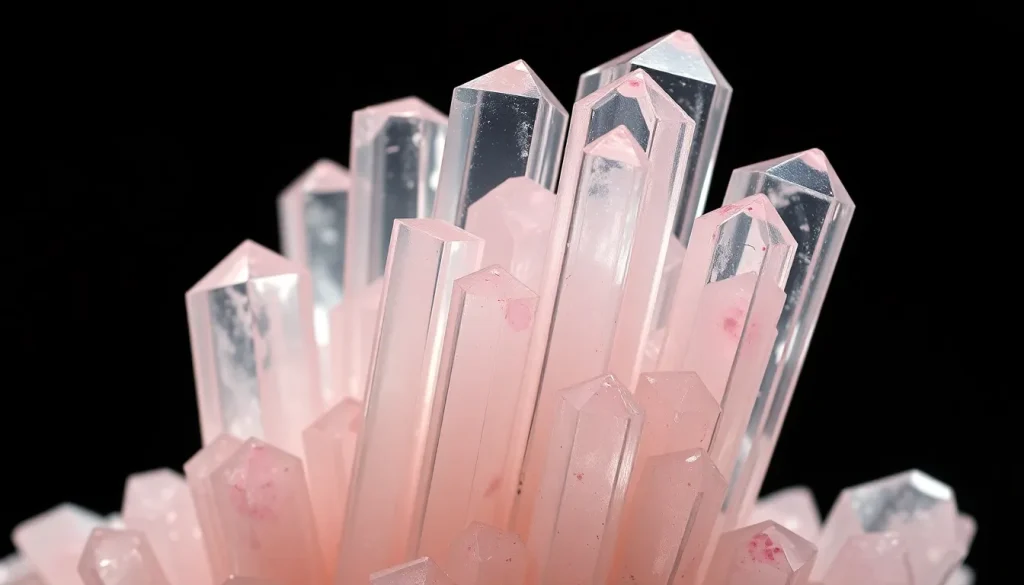
Hanksite is a hydrated sodium‑potassium sulfate‑chloride mineral with the chemical formula Na22K(SO4)9Cl·6H2O. It crystallises in the hexagonal system, typically forming slender prisms terminated by pyramids. The mineral is relatively soft (Mohs 2–2.5) and displays a vitreous luster. Colourless or white specimens are most common, though iron‑oxide impurities can produce pink, orange, or reddish hues.
History and Origin
Hanksite was first described in 1883 from deposits at Searles Lake in California, United States. The name honours an American geologist and mineralogist with the surname Hank, who contributed to the early study of the evaporite minerals of the region. Since its discovery, notable occurrences have been documented in other evaporite basins of the western United States, as well as in Xinjiang (China) and Sicily (Italy).
Meaning and Symbolism
In traditional crystal lore, hanksite is associated with clarity of thought and the ability to see beyond ordinary perception. Its transparent nature is said to symbolize purity and openness, while the occasional pink tones are linked to gentle emotional healing. Collectors often value hanksite for its rarity as a naturally occurring, unenhanced mineral that reflects the processes of ancient inland seas.
Healing and Metaphysical Properties
Crystal‑healing practitioners attribute several properties to hanksite:
- Emotional balance: Believed to soothe emotional turbulence and promote calm communication.
- Mental clarity: Said to aid in focusing the mind, enhancing meditation, and increasing intuitive insight.
- Physical support: Traditional beliefs suggest it can assist the respiratory system and help the body release toxins, though these claims are not medically verified.
These attributes are considered part of folk tradition and should not replace professional medical advice.
Varieties and Types
Hanksite does not have widely recognised commercial varieties, but specimens can be classified by colour and crystal habit:
- Colourless/white hanksite – the most common form, prized for its clean, glassy appearance.
- Pink or orange hanksite – colour caused by trace iron or manganese; valued for its subtle hue.
- Twin‑crystal aggregates – intergrown crystals that create striking geometric patterns.
Jewelry Uses and Care
Because of its low hardness, hanksite is unsuitable for rings or bracelets that endure daily wear. It is most often used as a cabochon or pendant in pieces that are handled gently. When caring for hanksite jewelry:
- Clean with lukewarm water and a soft brush; avoid harsh chemicals.
- Do not expose to ultrasonic cleaners or steam, which can cause cleavage.
- Store separately from harder gemstones to prevent scratching.
- Avoid prolonged exposure to direct sunlight, which may fade delicate pink tones.
Buying Guide
When purchasing hanksite, consider the following criteria:
- Crystal quality: Look for well‑formed, unbroken prisms with clear faces. Fractures and heavy surface weathering reduce value.
- Colour: Pure colourless specimens are most common; pink or orange stones are rarer and may command higher prices.
- Size and weight: Larger, intact crystals are prized by collectors.
- Origin: Specimens from classic localities such as Searles Lake are generally more desirable.
- Authenticity: Request a provenance statement or a gem‑lab report, especially for high‑value pieces.
n
Because hanksite is a soft mineral, it is best suited for display, study, or occasional ornamental wear rather than everyday jewelry.
FAQ
What is hanksite good for?
Hanksite is valued by collectors for its distinctive hexagonal crystals and occasional pink hues. In crystal‑healing traditions it is believed to promote mental clarity and emotional balance, but these uses are not scientifically proven.
Is hanksite rare?
High‑quality, well‑formed hanksite crystals are relatively uncommon, especially in pink or orange varieties. The mineral itself occurs in several evaporite basins, but large, clear specimens are prized and can be scarce on the market.
How can you tell if hanksite is real?
Real hanksite is soft (Mohs 2–2.5), has a vitreous luster, and shows perfect basal cleavage. A professional gem‑lab can confirm its chemical composition and crystal structure. Beware of simulated stones that may be harder or lack the characteristic hexagonal habit.
What chakra is hanksite associated with?
Traditional crystal lore links hanksite primarily with the Throat (Vishuddhi) chakra, supporting clear communication, and sometimes with the Third Eye chakra for enhanced intuition.
How should you clean hanksite?
Clean hanksite gently with lukewarm water and a soft brush or cloth. Avoid ultrasonic cleaners, steam, or harsh chemicals, as the mineral is soft and can fracture along its perfect basal cleavage.
Leave a Reply