
Short Answer
Overview
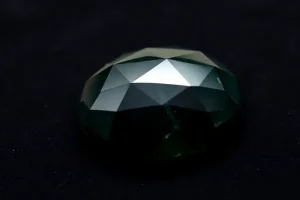
Tsavorite is a naturally occurring green gemstone belonging to the grossular series of the garnet group. Chemically it is a calcium‑aluminum silicate (Ca3Al2(SiO4)3) whose color is caused primarily by trace amounts of vanadium or chromium. With a Mohs hardness of 7–7.5 and a refractive index around 1.74–1.76, tsavorite displays a brilliant fire comparable to that of emerald, yet it is generally more durable.
History and Origin
The gemstone was first discovered in 1967 in the Merelani Hills of northern Tanzania by Canadian geologist Campbell R. Bridges. He named the stone after his wife, Tsavory (Tsav). Commercial mining soon followed in Tanzania, and later deposits were found in Kenya, Madagascar, Pakistan, South Africa, and Canada. Unlike many green gems, tsavorite is typically found in its natural green hue and does not require heat treatment to enhance its color.
Meaning and Symbolism
In traditional gemstone lore, tsavorite is associated with renewal, growth, and prosperity. Its vibrant green is said to symbolize the heart’s openness, encouraging compassion and emotional balance. Because of its rarity, tsavorite is also considered a stone of distinction and personal achievement.
Healing and Metaphysical Properties
Crystal‑healing practitioners attribute tsavorite with the ability to promote physical stamina, support the immune system, and aid in detoxification. Emotionally, it is believed to calm anxiety, foster forgiveness, and strengthen the heart‑center chakra. These claims are based on traditional beliefs and are not medical advice.
Varieties and Types
- Natural Green Tsavorite – the most common and valued form, ranging from light spring‑green to deep emerald.
- Cabochon Tsavorite – polished but unfaceted stones, often used in pendants or rings where a smooth surface is desired.
- Heat‑treated Tsavorite – rare; most tsavorite is found in its natural color, but occasional heat treatment can enhance hue intensity.
Jewelry Uses and Care
Thanks to its hardness and brilliance, tsavorite is suited for all types of fine jewelry, including rings, earrings, pendants, and brooches. When set in protective settings such as bezel or prong, it resists scratching and chipping. Care recommendations:
- Clean with warm, soapy water and a soft brush or a microfiber cloth.
- Avoid ultrasonic cleaners if the stone is heavily included or set in a delicate metal.
- Store separately from softer gems like pearls or opal to prevent abrasion.
Buying Guide
When purchasing tsavorite, consider the following factors:
- Color Saturation: Deep, vivid green without gray or brown overtones commands the highest value.
- Clarity: Inclusions are common; however, stones with high clarity and good light performance are preferred.
- Cut: Well‑cut facets maximize brilliance; common cuts include round brilliant, oval, and cushion.
- Carat Weight: Larger stones are rare; price increases sharply above 2 carats for high‑quality color.
- Certification: Request a grading report from a reputable laboratory (e.g., GIA, IGI) to verify authenticity and origin.
Buy from reputable dealers who can provide provenance documentation, especially for stones sourced from Tanzania, which is the historic primary locality.
FAQ
What is tsavorite good for?
Tsavorite is prized for its vivid green color and high brilliance, making it ideal for fine jewelry such as rings and pendants. Traditionally, it is also believed to promote emotional balance and prosperity, though these are spiritual associations rather than medical facts.
Is tsavorite rare?
High‑quality tsavorite is considered rare, especially in larger carat sizes with deep, saturated green and minimal inclusions. While deposits exist in several countries, significant gem‑quality material is limited, which drives its market value.
How can you tell if tsavorite is real?
Real tsavorite exhibits a high refractive index (≈1.74–1.76) and strong fire under proper lighting. It should feel heavy for its size and show no glassy surface sheen typical of synthetics. Professional testing with a gemological microscope and spectroscope, or certification from a lab like GIA, provides certainty.
What chakra is tsavorite associated with?
In crystal‑healing traditions, tsavorite is linked to the Heart (Anahata) chakra, where it is thought to support love, compassion, and emotional healing.
How should you clean tsavorite?
Clean tsavorite with warm, mildly soapy water and a soft brush or a microfiber cloth. Avoid harsh chemicals, ultrasonic cleaners if the stone is heavily included, and store it separately from softer gems to prevent scratches.
Leave a Reply