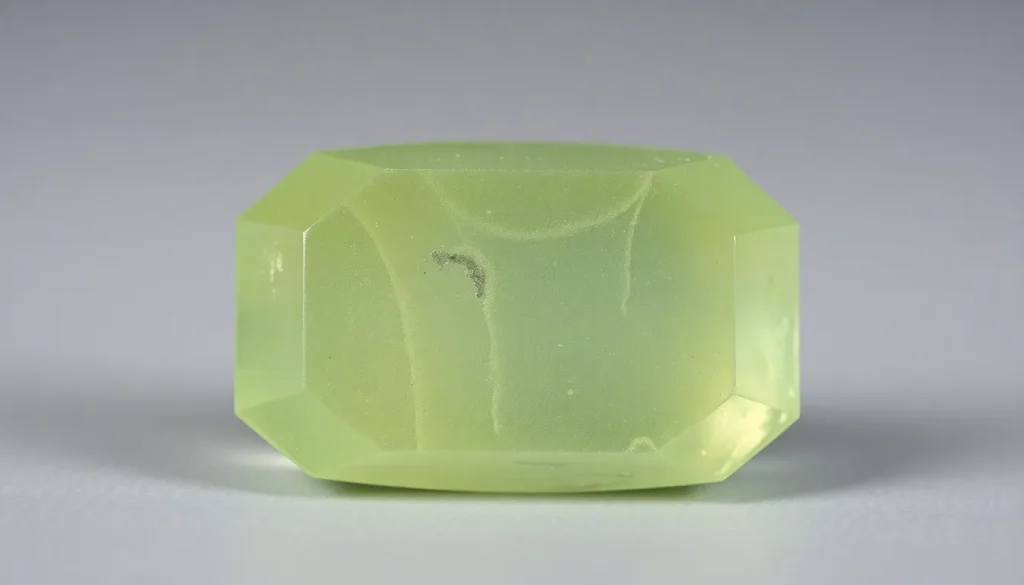
Short Answer
Overview
Hydrogrossular is a member of the garnet group in which hydroxyl (OH) groups substitute for a portion of the silicate (SiO4) tetrahedra. This hydrosubstitution gives the stone a softer, often pastel green to yellow‑green coloration compared with its parent mineral, grossular. Like other garnets, hydrogrossular crystallizes in the cubic (isometric) system and is valued for its vitreous luster and durability, making it suitable for a range of jewelry applications.
History and Origin
The name “hydrogrossular” was introduced by mineralogists to describe grossular that has undergone hydrothermal alteration, typically in low‑temperature, water‑rich environments such as skarn deposits. Notable localities include the United States (California, Arizona), Pakistan’s Khyber Pakhtunkhwa region, Italy’s Alps, and several Chinese provinces. Historically, the stone was sometimes marketed as “hydrogarnet” or “chrome‑grossular” when trace chromium contributed to a greener hue. Its use in jewelry dates back to the early 20th century, when designers appreciated its subtle color and relative affordability compared with classic red garnets.
Meaning and Symbolism
In traditional gemstone lore, hydrogrossular is associated with renewal, emotional balance, and the heart’s capacity to give and receive love. Its gentle green tones are thought to echo the growth of new beginnings, while the stone’s durability symbolizes steadfastness. Some cultures view it as a “stone of compassion,” encouraging empathy and harmonious relationships.
Healing and Metaphysical Properties
Crystal‑healing practitioners claim that hydrogrossular can aid emotional healing by soothing anxiety and encouraging forgiveness. It is believed to support the heart chakra, promoting self‑acceptance and the release of past hurts. These properties are considered metaphysical beliefs and are not intended as medical advice. Individuals seeking health treatment should consult qualified healthcare professionals.
Varieties and Types
Hydrogrossular occurs in several color varieties, the most common being:
- Pastel Green – light, minty tones often favoured for everyday wear.
- Yellow‑Green – a brighter, chartreuse hue that can appear almost fluorescent under strong light.
- Brownish‑Green – earthy tones sometimes called “olive” hydrogrossular.
- Pink‑ish – rare, resulting from trace manganese; often marketed as “hydro‑tsavorite.”
All varieties share the same basic chemistry; color differences arise from trace elements (chromium, iron, manganese) and the degree of hydroxyl substitution.
Jewelry Uses and Care
With a Mohs hardness of 7–7.5, hydrogrossular is suitable for rings, earrings, pendants, and bracelets. Its cubic crystal habit allows faceting that maximizes sparkle, and its relatively low cleavage risk makes it resistant to chipping when set properly. Care recommendations include:
- Clean with warm, soapy water and a soft brush; avoid harsh chemicals.
- Use a microfiber cloth for polishing; ultrasonic cleaners are safe if the stone is untreated.
- Avoid prolonged exposure to high heat, which could affect hydroxyl content.
- Store separately from softer gems (e.g., pearls, opal) to prevent scratching.
Buying Guide
When selecting hydrogrossular, consider the following factors:
- Color Saturation – Deeper, evenly distributed hues are generally more valuable.
- Clarity – Inclusions are common; eye‑clean stones command higher prices.
- Cut Quality – Well‑cut stones exhibit strong brilliance and even color distribution.
- Treatment Disclosure – Some specimens are heat‑treated to enhance color; reputable dealers should disclose any treatments.
- Certification – Gem‑identification reports from GIA, IGI, or a qualified gemological laboratory provide assurance of authenticity.
Prices vary widely based on color, clarity, carat weight, and origin. Comparing multiple sources and requesting detailed photographs or videos can help ensure a satisfactory purchase.
FAQ
What is hydrogrossular good for?
Hydrogrossular is prized for its gentle green hues in jewelry and is traditionally believed to promote emotional balance and heart‑centered compassion. It is also used by collectors for its distinct hydroaltered chemistry.
Is hydrogrossular rare?
Quality hydrogrossular is less common than standard grossular, especially in deep, saturated colors. However, modest specimens are relatively abundant from several key localities, making the stone moderately available.
How can you tell if hydrogrossular is real?
Real hydrogrossular displays a cubic crystal habit, a refractive index around 1.74‑1.75, and a hardness of 7+. Look for consistent green coloration without artificial fluorescence. Professional testing, such as a gemological laboratory report, provides definitive verification.
What chakra is hydrogrossular associated with?
In crystal‑healing traditions, hydrogrossular is linked to the Heart (Anahata) chakra, supporting love, compassion, and emotional healing.
How should you clean hydrogrossular?
Clean hydrogrossular with warm, mild soap and a soft brush. Avoid harsh chemicals and prolonged heat. Ultrasonic cleaners are safe if the stone is untreated; always store separately from softer gemstones to prevent scratching.
Leave a Reply