
Short Answer
Overview
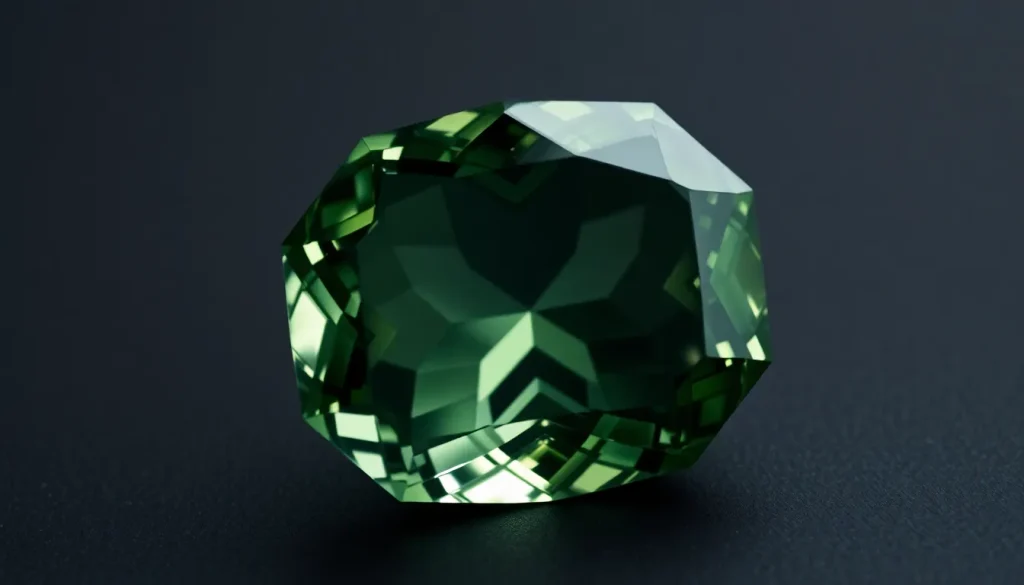
Enstatite is a magnesium silicate mineral belonging to the pyroxene group. Its chemical formula is MgSiO₃, and it crystallises in the orthorhombic system. In gem form, enstatite is prized for its transparent to translucent nature and its range of subtle green, gray, and brown hues. While not as widely marketed as some traditional gemstones, enstatite is occasionally cut into faceted stones for high‑end jewellery and collectors’ pieces.
History and Origin
Enstatite forms in metamorphic and igneous rocks under medium to high temperature conditions. It is a common component of peridotite and other ultramafic rocks, and it can also occur in skarn deposits where silica‑rich fluids interact with magnesium‑rich host rocks. Historically, enstatite was recognised by mineralogists in the 19th century, and its iron‑rich variety, hypersthene, was often confused with other dark pyroxenes. Modern gem cutting began in the early 20th century when clear, colourless specimens were discovered in California and the Ural Mountains.
Meaning and Symbolism
In traditional gemstone lore, enstatite is associated with grounding, clarity of thought, and personal transformation. Its earthy green tones are said to connect the wearer to nature and promote a steady, pragmatic outlook. Some cultures view the stone as a talisman for safe travel and protection during journeys.
Healing and Metaphysical Properties
Crystal‑healing practitioners attribute the following non‑medical properties to enstatite:
- Grounding: Helps anchor scattered energy and encourages a sense of stability.
- Emotional balance: Supports the release of old emotional patterns and promotes calm.
- Physical vitality: Believed to stimulate the musculoskeletal system and aid recovery after injury.
These claims are based on traditional beliefs and are not intended as medical advice.
Varieties and Types
Enstatite occurs in several varieties, distinguished mainly by iron content and colour:
- Pure Enstatite: Low iron, typically colourless to pale green.
- Hypersthene: Iron‑rich enstatite, displaying brown, gray, or dark green colours.
- Chondrodite‑enstatite assemblages: Occur in metamorphic skarns and may show speckled appearances.
All varieties share the same crystal structure and similar physical properties, though colour intensity can vary widely.
Jewelry Uses and Care
Because enstatite ranks 5.5–6.5 on the Mohs scale, it is suitable for earrings, pendants, and rings that are not subject to heavy impact. The stone is often cut as a brilliant, oval, or cushion shape to maximise its light performance. Care recommendations include:
- Avoid exposure to harsh chemicals or prolonged ultrasonic cleaning.
- Clean gently with warm, soapy water and a soft brush.
- Store separately from harder gemstones such as quartz or diamonds to prevent scratching.
Enstatite is generally untreated, but some stones may be heat‑enhanced to improve colour saturation; always request certification when purchasing.
Buying Guide
When selecting an enstatite gemstone, consider the following factors:
- Colour: Look for uniform, vivid green or gray tones without cloudy inclusions.
- Clarity: Minor surface scratches are acceptable, but internal fractures diminish value.
- Cut: Well‑proportioned cuts enhance brilliance; avoid shallow or overly deep proportions.
- Origin: Reputable sources include the United States (California), Russia (Ural), Italy, Norway, and Brazil.
- Certification: Request a gemological report from a recognized laboratory to confirm authenticity and any treatments.
High‑quality enstatite stones are relatively rare, especially those that are colourless or display a vivid, even hue.
FAQ
What is enstatite good for?
Enstatite is used in fine jewellery for its subtle green‑gray hues and is collected for its crystal habit. Traditionally, it is believed to provide grounding and emotional balance, though these are not medically proven.
Is enstatite rare?
High‑quality, clear enstatite is relatively uncommon. While the mineral itself is abundant in the Earth's mantle, gem‑grade specimens with vivid colour and good clarity are limited, especially from well‑known localities.
How can you tell if enstatite is real?
Real enstatite exhibits a vitreous luster, orthorhombic crystal habit, and a Mohs hardness of 5.5–6.5. Professional testing such as refractive index measurement, specific gravity, and spectroscopy can confirm authenticity.
What chakra is enstatite associated with?
In crystal‑healing traditions, enstatite is often linked to the Root chakra for grounding, though no single standard chakra association exists.
How should you clean enstatite?
Clean enstatite with warm, mildly soapy water and a soft brush. Avoid ultrasonic cleaners, harsh chemicals, or high‑temperature steam, as the stone can be sensitive to sudden temperature changes and surface damage.
Leave a Reply