
Short Answer
Overview
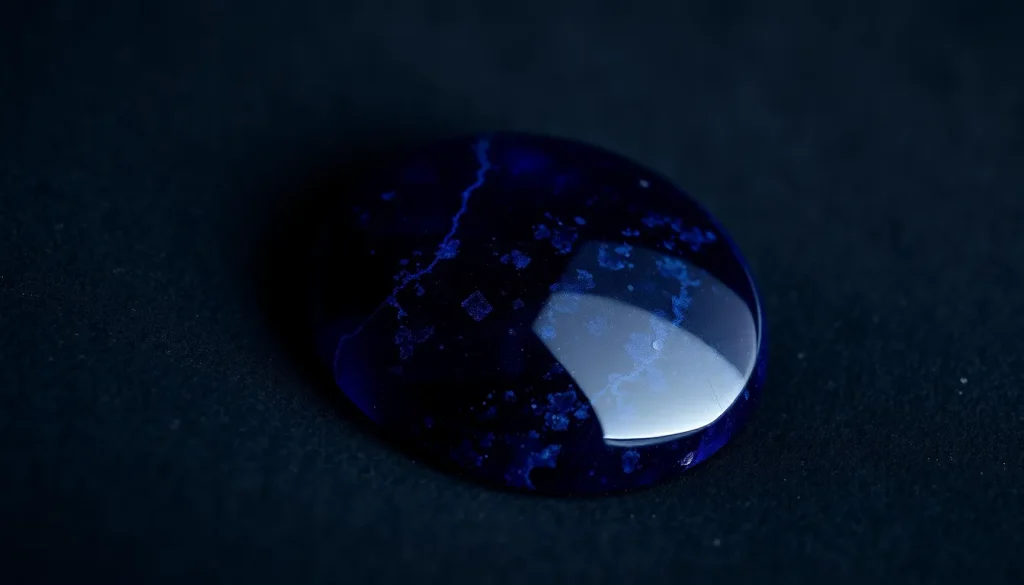
Dumortierite is a silicate mineral best known for its intense blue‑violet hue, which ranges from deep indigo to a lighter sky‑blue. It belongs to the sorosilicate group and crystallises in the orthorhombic system. With a Mohs hardness of 7–7.5, it is sufficiently durable for most jewelry applications, especially when cut as cabochons or beads. The stone is often found in massive, granular aggregates rather than well‑formed crystals, giving it a distinctive, polished appearance when faceted.
History and Origin
The mineral was first described in 1881 and named after the Belgian chemist Eugène Dumortier (1812–1876), who contributed to the study of aluminum minerals. Early deposits were identified in the western United States (California) and later in Brazil, Madagascar, Namibia, and Pakistan. Today, the most prolific commercial sources are Brazil (Bahia), Madagascar, and Namibia, where large, vivid specimens are mined from pegmatitic and metamorphic host rocks.
Meaning and Symbolism
In traditional gemstone lore, dumortierite is associated with inner wisdom, calm communication, and the ability to see beyond ordinary perception. Its deep blue colour is thought to represent truth, loyalty, and the pursuit of knowledge. When set in jewelry, it is believed to inspire confidence in one’s ideas and encourage clear, articulate self‑expression.
Healing and Metaphysical Properties
Crystal‑healing practitioners attribute the following properties to dumortierite, based on longstanding belief rather than scientific evidence:
- Communication: Enhances verbal expression, aiding those who need to speak their truth.
- Mental Clarity: Supposed to clear mental fog and improve focus during study or meditation.
- Emotional Balance: Believed to calm anxiety and promote a sense of inner peace.
- Chakra Alignment: Traditionally linked to the Throat Chakra, supporting honest communication.
These claims are part of cultural and metaphysical traditions and should not replace professional medical advice.
Varieties and Types
Dumortierite occurs in several visual varieties, each reflecting subtle differences in trace elements and formation conditions:
- Blue/Indigo Dumortierite: The most common and sought‑after colour, ranging from deep navy to bright sky blue.
- Greenish Dumortierite: Occasionally displays a faint green tint due to iron content.
- Brown or Grey Dumortierite: Darker specimens with higher impurity levels; less popular in jewelry.
- Dumortierite‑in‑Quartz: Inclusions of dumortierite within clear quartz create striking “veined” patterns prized by collectors.
- Heated or Dyed Dumortierite: Some commercial stones are heat‑treated to intensify colour; natural deep blues are rarer and more valuable.
Jewelry Uses and Care
Because of its hardness and attractive colour, dumortierite is frequently used for:
- Cabochon pendants and earrings.
- Beaded necklaces and bracelets.
- Inlays in rings and watch dials.
Care recommendations:
- Clean with warm, soapy water and a soft brush; avoid harsh chemicals.
- Dry with a lint‑free cloth; do not expose to prolonged ultrasonic cleaning, which may affect any surface treatments.
- Store separately from softer gems (e.g., opal, pearl) to prevent scratching.
Buying Guide
When purchasing dumortierite, consider the following factors:
- Colour Saturation: Deep, uniform blue‑violet is most desirable; uneven or washed‑out colour reduces value.
- Clarity: While dumortierite is typically opaque, inclusions that disrupt the surface polish can affect appearance.
- Cut and Finish: Well‑polished cabochons display the stone’s characteristic luster; poorly finished pieces look dull.
- Treatment Disclosure: Ask if the stone has been heat‑treated or dyed; untreated natural colour commands a premium.
- Certification: For high‑value pieces, request a gemological report from a reputable laboratory (e.g., GIA, IGI).
Reputable dealers will provide provenance, especially for stones sourced from Brazil, Madagascar, or Namibia, where the finest colours are mined.
FAQ
What is dumortierite good for?
Dumortierite is valued for its striking blue‑violet colour in jewelry, its durability for everyday wear, and traditionally for its purported ability to enhance communication and mental clarity.
Is dumortierite rare?
High‑quality, deep‑blue dumortierite is relatively uncommon, especially untreated material. It is more abundant than rare gemstones like alexandrite, but large, vivid specimens are limited to certain localities.
How can you tell if dumortierite is real?
Real dumortierite feels heavy for its size, shows a vitreous luster, and has a white streak. Professional testing—such as refractive index measurement or spectroscopic analysis—confirms authenticity, especially for treated stones.
What chakra is dumortierite associated with?
In crystal‑healing traditions, dumortierite is most commonly linked to the Throat Chakra, supporting clear and truthful expression.
How should you clean dumortierite?
Use warm, mildly soapy water and a soft brush, then rinse and dry with a lint‑free cloth. Avoid harsh chemicals, ultrasonic cleaners, and prolonged exposure to high heat, especially on treated pieces.
Leave a Reply