
Short Answer
Overview
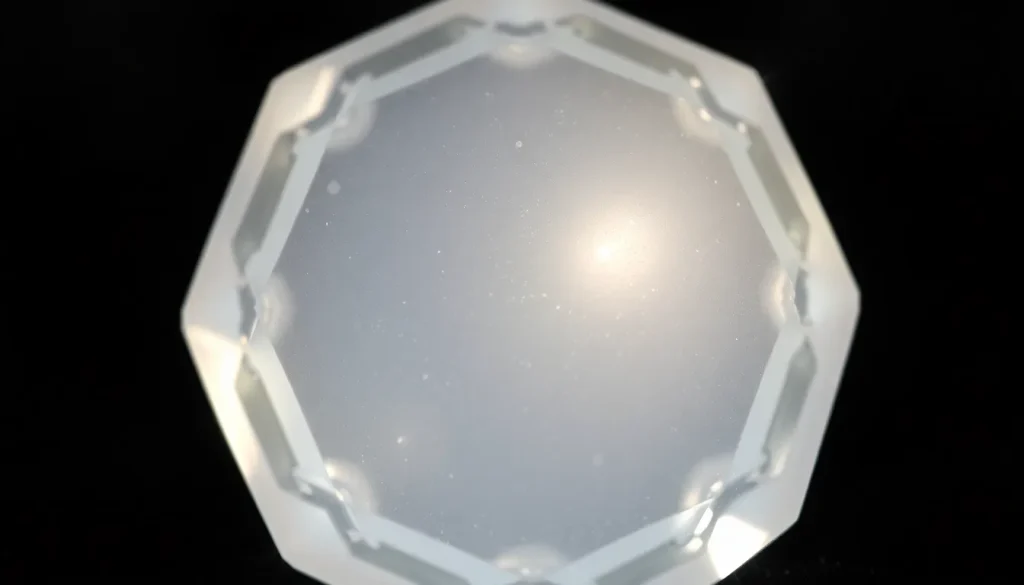
Nepheline is a silicate mineral belonging to the feldspathoid group. Its chemical composition is expressed as (Na,K)AlSiO4, reflecting a solid‑solution series between sodium and potassium end‑members. Typically forming hexagonal crystals, nepheline occurs in alkaline igneous rocks such as nepheline syenite and phonolite. When cut and polished, it displays a vitreous to pearly luster and can appear colourless, white, gray, yellow, green, or even pale pink, making it a modest yet attractive gemstone.
History and Origin
The name “nepheline” derives from the Greek word *nephele* meaning “cloud,” a reference to its often cloudy appearance in thin sections. First described in the early 19th century from deposits in Norway, the mineral quickly attracted the interest of mineralogists for its role in alkaline magmatic systems. Throughout the 20th century, commercial interest grew as cutting technologies allowed the production of faceted stones for ornamental use, especially in Europe and North America.
Meaning and Symbolism
In traditional gemstone lore, nepheline is associated with clarity of thought and the ability to see beyond illusion. Its subtle hues are said to embody modesty and inner strength, encouraging wearers to remain grounded while pursuing personal growth. Because the stone forms in rare, silica‑rich environments, it is sometimes viewed as a symbol of uniqueness and resilience.
Healing and Metaphysical Properties
Crystal‑healing practitioners attribute several metaphysical qualities to nepheline. It is believed to aid mental focus, improve decision‑making, and support the integration of intuition with rational analysis. Some traditions link nepheline to the Crown Chakra, suggesting it can help open channels to higher consciousness, while others consider it a “no single standard chakra” stone, usable for any intention that requires clarity. These claims are based on folklore and should not be taken as medical advice.
Varieties and Types
Nepheline occurs in a range of colors, each sometimes marketed under a descriptive name:
- White Nepheline – colourless to milky white, most common for faceting.
- Gray Nepheline – light to medium gray, often displaying a subtle sheen.
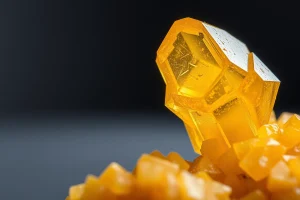
- Yellow Nepheline – pale lemon to amber tones, valued for warm appearance.
- Green Nepheline – faint green shades caused by trace iron.
- Blue Nepheline – rare, displaying a soft blue hue.
- Pink Nepheline – very rare, a delicate pink caused by manganese.
In addition to individual crystals, nepheline is a major component of the rock type “nepheline syenite,” which is sometimes cut into ornamental slabs or used as a source of raw material for glass production.
Jewelry Uses and Care
Because nepheline’s hardness ranges from 5.5 to 6 on the Mohs scale, it is suitable for earrings, pendants, brooches, and occasional‑wear rings. Its perfect basal cleavage requires careful setting to avoid fracture. When caring for nepheline jewelry:
- Clean with warm, soapy water and a soft brush; avoid ultrasonic cleaners that may exacerbate cleavage.
- Dry gently with a lint‑free cloth; do not expose to sudden temperature changes.
- Store separately from harder gemstones (e.g., quartz, sapphire) to prevent scratching.
- Inspect settings regularly, especially for pieces that receive frequent impact.
Polished nepheline retains its brilliance when protected from harsh chemicals and prolonged sunlight, which can cause slight fading in the more intensely colored varieties.
Buying Guide
When purchasing nepheline, consider the following factors:
- Color and Clarity – Uniform, vivid color and minimal inclusions increase value.
- Cut Quality – Well‑proportioned facets enhance brilliance; avoid stones with visible chip marks.
- Origin – Specimens from Norway, Canada, and the Ural region are historically prized, though quality varies more by crystal than locality.
- Treatment Disclosure – Some stones are heat‑treated to improve color; reputable dealers will disclose any enhancement.
- Certification – For larger or high‑value pieces, request a gemological report from a recognized laboratory (e.g., GIA, IGI).
Because nepheline is less common than quartz or feldspar, prices are modest, typically ranging from $10 to $80 per carat for faceted stones, depending on color intensity and cut.
FAQ
What is nepheline good for?
Practically, nepheline is used in jewelry, ornamental carvings, and as a raw material for certain glasses. Traditionally, it is believed to promote mental clarity, decision‑making, and inner strength.
Is nepheline rare?
High‑quality, vividly colored nepheline is less common than quartz, but the mineral itself is relatively abundant in alkaline igneous complexes. Rarity is linked to crystal size, color intensity, and lack of fractures.
How can you tell if nepheline is real?
Check hardness (5.5‑6 on Mohs), observe its perfect basal cleavage, and note its refractive index (≈1.53). A professional gemological lab can confirm identity with spectroscopy or X‑ray diffraction.
What chakra is nepheline associated with?
Crystal‑healing sources often link nepheline to the Crown Chakra for its perceived ability to enhance insight, though many also list it under ‘No single standard chakra’.
How should you clean nepheline?
Use warm soapy water and a soft brush, avoid ultrasonic cleaners, and store separately from harder stones. Dry gently and keep away from harsh chemicals or sudden temperature changes.
Leave a Reply