Short Answer
Overview
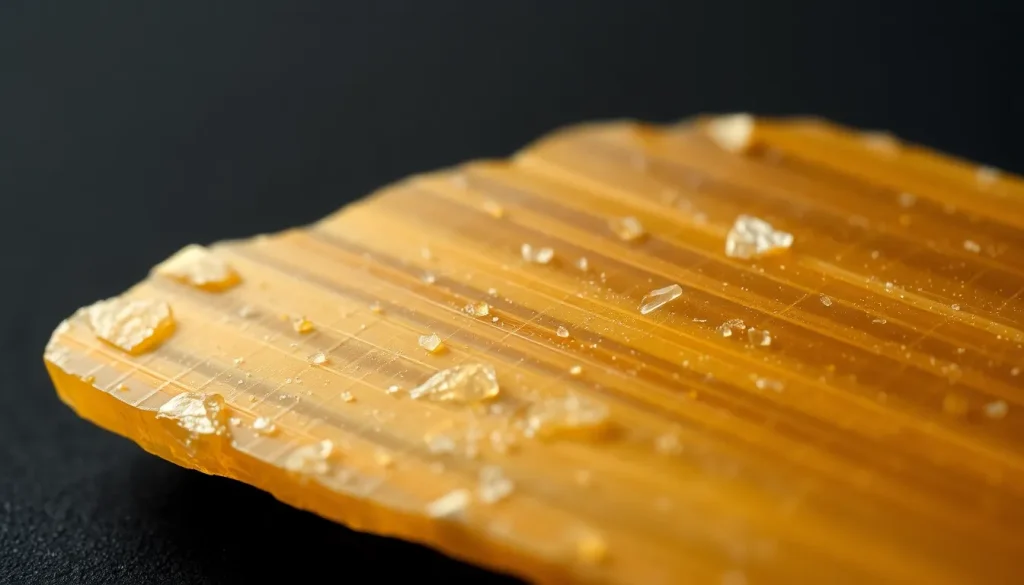
Phlogopite is a member of the mica group, belonging to the phyllosilicate family. It is a potassium‑magnesium aluminum silicate that typically appears in golden‑brown, yellow, or honey‑colored sheets. The mineral exhibits perfect basal cleavage, a pearly to vitreous luster, and a Mohs hardness of 2.5‑3, making it relatively soft but highly flexible. While not a traditional gemstone in mainstream jewelry, phlogopite is sometimes cut into cabochons or used as an accent stone for its warm hue and unique optical properties.
History and Origin
The name “phlogopite” derives from the Greek word phlogopos, meaning “flame‑colored,” a reference to its characteristic golden tones. Historically, phlogopite was recognized by ancient miners for its heat‑resistant properties and its use as a fire‑proofing material. Significant natural occurrences have been documented in the Kola Peninsula of Russia, the Appalachian region of the United States, the Canadian Shield, and several European localities such as Finland and Sweden. Modern industrial extraction focuses on both gem‑grade sheets and bulk material for electrical insulators.
Meaning and Symbolism
In cultural traditions, phlogopite’s warm color is associated with the sun, vitality, and prosperity. It is often regarded as a stone that encourages confidence, personal power, and the ability to “shine” in challenging situations. Symbolically, the mineral’s perfect basal cleavage is sometimes interpreted as a reminder of flexibility and adaptability.
Healing and Metaphysical Properties
Crystal‑healing practitioners attribute phlogopite with the following traditional beliefs:
- Energy amplification: The stone is thought to amplify the wearer’s personal energy and intentions.
- Grounding: Its golden hue is linked to the Root Chakra, supporting stability and security.
- Emotional balance: Some claim it can soothe anxiety, promote optimism, and assist in overcoming fear of failure.
These claims are based on longstanding metaphysical traditions and should not be considered medical advice.
Varieties and Types
Phlogopite occurs in several visual varieties, often distinguished by subtle color differences or trace element content:
- Golden Phlogopite: The most common form, exhibiting a honey‑yellow to golden‑brown color.
- Greenish Phlogopite: Contains minor amounts of iron or chromium, giving a faint olive tint.
- Colorless/Transparent Phlogopite: Rare, with minimal iron, appearing nearly clear.
All varieties share the same crystal structure and cleavage characteristics.
Jewelry Uses and Care
Because of its softness, phlogopite is best used in pieces that are not subject to heavy wear, such as pendants, earrings, and brooches. It can be set in bezel, channel, or tension settings that protect the flat sheets from abrasion. When caring for phlogopite jewelry:
- Avoid harsh chemicals, ultrasonic cleaners, and steam.
- Clean gently with a soft, lint‑free cloth and lukewarm soapy water.
- Store separately from harder gemstones to prevent scratching.
Because the mineral can split along its basal plane, handling should be careful, especially for cabochons with thin edges.
Buying Guide
When selecting phlogopite, consider the following factors:
- Color consistency: High‑quality stones display a uniform golden hue without mottled brown or gray patches.
- Clarity: Look for minimal inclusions; because the material is naturally layered, internal lamination is expected but should not obscure the surface.
- Cut and setting: Ensure the setting protects the flat surfaces and does not expose the stone to excessive pressure.
- Origin and certification: Reputable dealers will provide provenance and may offer gem‑ological reports confirming that the material is natural phlogopite and not a synthetic mica.
Because phlogopite is not widely traded as a high‑value gemstone, price variations are modest. Expect prices to reflect size, color intensity, and any special cutting work.
FAQ
What is phlogopite good for?
Phlogopite is valued for its warm color and flexibility in jewelry, as well as for traditional beliefs that it amplifies personal energy and provides grounding. Industrially, it is used as an electrical insulator and heat‑resistant material.
Is phlogopite rare?
High‑quality, gem‑grade phlogopite with uniform golden color is less common than bulk mica, but the mineral itself is relatively abundant in several regions worldwide.
How can you tell if phlogopite is real?
Real phlogopite shows perfect basal cleavage, a pearly luster, and a characteristic honey‑brown color. It is soft (Mohs 2.5‑3) and will feel cool to the touch. Professional gemologists can confirm authenticity with refractive index, specific gravity, and microscopy.
What chakra is phlogopite associated with?
Traditionally, phlogopite is linked to the Root Chakra, reflecting beliefs in grounding, stability, and personal power.
How should you clean phlogopite?
Clean gently with a soft cloth and lukewarm soapy water. Avoid ultrasonic cleaners, steam, and harsh chemicals. Store separately from harder gemstones to prevent scratching.
Leave a Reply