
Short Answer
Overview
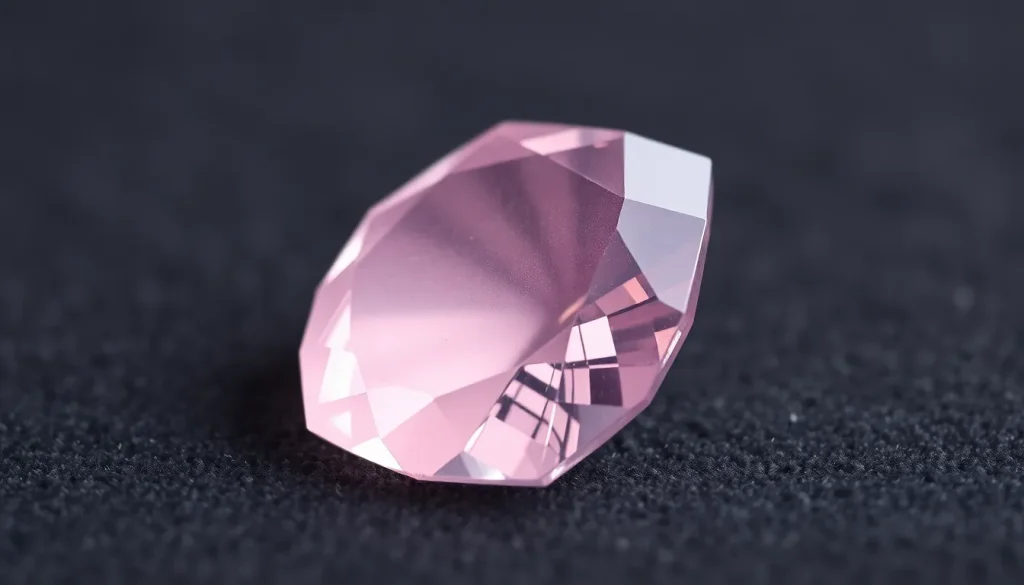
Pollucite is a rare, naturally occurring cesium aluminosilicate mineral with the chemical formula CsAlSi2O6·H₂O. It belongs to the tectosilicate (zeolite) group and crystallises in the tetragonal system. In its gem‑grade form the stone is usually colourless to white, occasionally displaying very pale pink, yellow or brown hues. Because of its relative hardness (Mohs 5‑6) and vitreous luster, pollucite can be cut into faceted gems, though it is more commonly found as mineral specimens for collectors.
Commercially, pollucite is the primary source of the element cesium, which is extracted for use in oil‑well drilling fluids, atomic clocks, and specialized glass. Gem‑quality material is uncommon, and most polished pieces are produced from specimens recovered in granitic pegmatites where the mineral occurs as well‑formed crystals.
History and Origin
The mineral was first described in 1868 from an occurrence in the Kola Peninsula of Russia. Its name derives from the Latin word pollucium, the historic name for cesium, reflecting the stone’s high cesium content. Subsequent important localities were identified in the early 20th century, most notably the Bernic Lake pegmatite complex in Manitoba, Canada, which remains one of the world’s largest pollucite deposits.
During the mid‑20th century, pollucite attracted scientific interest as a natural analogue for synthetic zeolites, aiding the development of ion‑exchange technologies. In the gemstone market, pollucite has never achieved mainstream popularity, but a small niche of collectors values its rarity and the novelty of owning a natural cesium‑bearing gem.
Meaning and Symbolism
Traditional gemstone lore attributes pollucite with themes of clarity, precision, and transformation. Its clear, often colourless appearance is said to symbolize mental focus and the ability to see truth without distortion. In cultures that value rare minerals, pollucite is sometimes regarded as a “stone of discovery,” encouraging curiosity and the pursuit of knowledge.
Healing and Metaphysical Properties
Within crystal‑healing circles, pollucite is believed to support the following:
- Intellectual clarity: Enhances concentration, memory, and logical thinking.
- Emotional balance: Helps release stagnant feelings and promotes calm decision‑making.
- Energy alignment: Said to assist in aligning the subtle energy bodies, especially for those working with high‑frequency technologies.
These properties are based on traditional beliefs and are not supported by scientific evidence. Pollucite should never replace professional medical treatment.
Varieties and Types
Although the mineral itself has a single chemical composition, visual variations arise from trace impurities and structural defects. The most common visual types are:
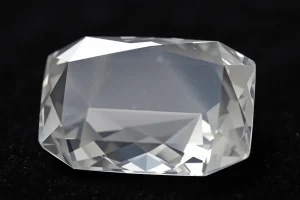
- Colourless (pure) pollucite: Transparent to translucent, high brilliance when faceted.
- Pale pink or salmon: Result of minute iron or manganese inclusions.
- Yellowish or brownish tint: Caused by organic inclusions or surface oxidation.
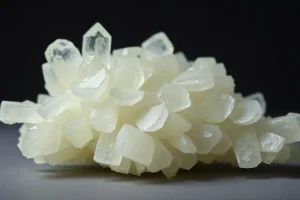
Occasionally, pollucite crystals exhibit a natural “cubic‑like” habit that mimics the shape of leucite, leading to the informal term “leucite‑like pollucite.”
Jewelry Uses and Care
Because of its modest hardness, pollucite is best suited for pendants, earrings, and brooch settings where the stone is protected from abrasive contact. It can be cut into brilliant, step‑cut, or cabochon forms. The stone’s relatively low cleavage and conchoidal fracture mean it should be handled with care during setting.
Cleaning: Use a soft, lint‑free cloth and mild warm soapy water. Avoid ultrasonic cleaners and harsh chemicals, as prolonged exposure may affect surface luster. For stubborn grime, a soft brush can be employed.
Storage: Store pollucite separately from harder gemstones such as quartz or sapphire to prevent scratching. A padded jewelry box or a fabric pouch is ideal.
Buying Guide
When evaluating pollucite for purchase, consider the following criteria:
- Clarity: Gem‑grade pollucite should be free of visible inclusions that obscure light.
- Colour: While colourless stones are most valued, subtle pink or yellow hues can be desirable if uniformly distributed.
- Cut quality: Well‑proportioned facets enhance brilliance; avoid shallow cuts that dull appearance.
- Origin documentation: Reputable dealers often provide a certificate indicating the stone’s locality, especially if sourced from the renowned Bernic Lake region.
- Treatment disclosure: Natural pollucite is rarely treated, but some specimens may be stabilized with resin. Ensure any enhancement is fully disclosed.
n
Due to its rarity, pollucite can command premium prices, particularly for large, clear crystals. As with any rare gemstone, obtaining an independent gemological report from a recognized laboratory (e.g., GIA, IGI) is advisable before finalizing a purchase.
FAQ
What is pollucite good for?
Pollucite is prized by mineral collectors for its rarity and high cesium content. In jewelry it offers a clear, glassy appearance suitable for pendants and earrings. Traditional crystal‑healing beliefs associate it with mental clarity and focus, but these are not medically verified.
Is pollucite rare?
Yes. High‑quality, gem‑grade pollucite is uncommon because it forms only in specific granitic pegmatites and large, clear crystals are scarce. Rarity varies with colour, size, and locality, with specimens from Bernic Lake (Canada) being the most sought after.
How can you tell if pollucite is real?
Authentic pollucite has a refractive index of 1.517–1.523, a Mohs hardness of 5–6, and a white streak. It should feel cool to the touch and display a vitreous luster. Professional verification using spectroscopy or a gemological laboratory report is recommended for certainty.
What chakra is pollucite associated with?
Within crystal‑healing traditions pollucite is sometimes linked to the Crown chakra for its clear, high‑frequency energy, though no single standard chakra association exists.
How should you clean pollucite?
Clean pollucite with warm, soapy water and a soft cloth. Avoid ultrasonic cleaners, harsh chemicals, and high‑pressure steam, as these can damage the surface or affect any resin stabilization. Store separately from harder gemstones to prevent scratches.
Leave a Reply