
Short Answer
Overview
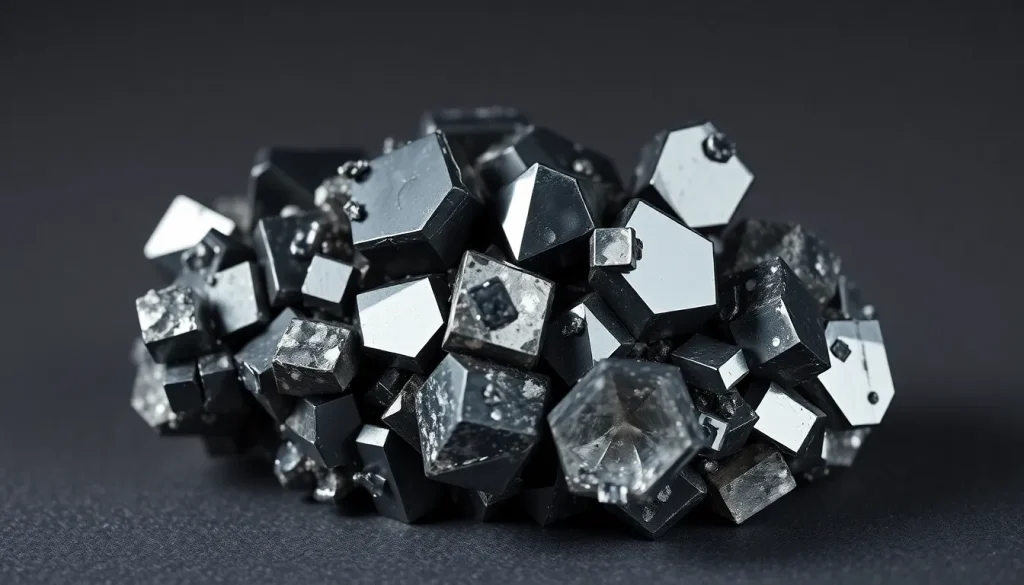
Prosopite is a rare sulfosalt mineral that belongs to the bismuth‑antimony sulfide group. It typically occurs as metallic, black to steel‑gray crystals or massive aggregates with a high specific gravity. Because of its striking metallic luster and relative scarcity, prosopite is primarily of interest to mineral collectors and specialty jewelers rather than mainstream gemstone markets.
History and Origin
The name “prosopite” derives from the Greek word prosopon meaning “face,” a reference to the reflective, mirror‑like surface of well‑formed crystals. The mineral was first described in the early 20th century from specimens collected at the Långban mining district in Sweden, a locality famous for unusual bismuth and antimony minerals. Subsequent occurrences have been reported from hydrothermal vein deposits in the Kola Peninsula (Russia), the Bisbee district of Arizona (USA), and several quartz‑rich veins in Quebec (Canada). Prosopite forms at relatively low temperatures (200–400 °C) where bismuth‑rich fluids interact with antimony‑bearing solutions, precipitating the sulfosalt in fissures and fractures.
Meaning and Symbolism
In traditional gemstone lore, prosopite’s dark metallic sheen is associated with depth, protection, and inner strength. It is thought to help the bearer “face” difficult situations with confidence, reflecting the stone’s etymological roots. Because the mineral is dense and grounded, it is sometimes linked to themes of stability, perseverance, and the ability to remain unshaken amid external pressures.
Healing and Metaphysical Properties
Crystal‑healing practitioners attribute prosopite with grounding and protective qualities. It is believed to absorb negative energies, transform them into constructive force, and reinforce personal boundaries. Some traditions suggest that placing prosopite on the lower abdomen or wearing it near the root chakra can promote a sense of safety and encourage realistic decision‑making. These claims are based on folklore and should not be taken as medical advice.
Varieties and Types
Prosopite does not have widely recognized varietal names, but subtle differences in composition can affect its appearance:
- Antimony‑rich prosopite – higher Sb content, often slightly darker and more opaque.
- Bismuth‑rich prosopite – higher Bi content, may display a faint iridescent tarnish when freshly polished.
- Oxidized specimens – surface oxidation can produce a duller, bronze‑tinged patina.
All varieties share the same orthorhombic crystal habit, typically forming prismatic or tabular crystals that can be twinned.
Jewelry Uses and Care
Because prosopite is relatively soft (Mohs 2.5–3) and has perfect metallic cleavage, it is rarely set in high‑impact jewelry. When used, it is usually incorporated as a decorative accent in pendants, brooches, or cufflinks where the stone can be protected by a bezel or setting that shields it from knocks. Care recommendations include:
- Avoid abrasive cleaners; use a soft, lint‑free cloth to remove dust.
- Do not expose the stone to harsh chemicals, acids, or ultrasonic cleaners.
- Store prosopite separately from harder gemstones to prevent scratching.
- If the surface becomes tarnished, a gentle polishing with a jeweler’s cloth designed for metallic minerals can restore its luster.
Buying Guide
When purchasing prosopite, consider the following factors:
- Source documentation – reputable dealers should provide provenance, especially for specimens from classic localities like Långban.
- Clarity and surface condition – look for minimal oxidation and a well‑polished metallic sheen.
- Cut and setting – because the mineral is soft, a protective bezel or inlay setting is advisable.
- Treatment disclosure – some sellers may apply chemical treatments to enhance luster; ensure any such processes are fully disclosed.
Given its rarity and specialized market, prosopite pieces can range widely in price. Collectors often value specimens with well‑developed crystal faces and clear documentation over merely aesthetic considerations.
FAQ
What is prosopite good for?
Prosopite is prized by collectors for its metallic black appearance and high density. Traditionally it is believed to provide grounding, protection, and inner strength, though these attributes are based on folklore rather than scientific evidence.
Is prosopite rare?
Yes, prosopite is considered rare. High‑quality, well‑crystallized specimens are limited to a few historic localities such as Långban (Sweden) and the Kola Peninsula (Russia). Rarity is influenced by crystal size, clarity, and the presence of surface oxidation.
How can you tell if prosopite is real?
Real prosopite feels heavy for its size, displays a metallic luster, and has a black streak. Because it is opaque and metallic, visual identification can be challenging; a professional gemological laboratory can confirm its composition with X‑ray diffraction or electron microprobe analysis.
What chakra is prosopite associated with?
In crystal‑healing traditions prosopite is linked to the Root (Muladhara) chakra, reflecting its grounding and protective symbolism.
How should you clean prosopite?
Clean prosopite gently with a soft, lint‑free cloth. Avoid abrasive pads, harsh chemicals, ultrasonic cleaners, or excessive water, as the mineral is soft (Mohs 2.5–3) and can be scratched or oxidized. Store it separately from harder gemstones.
Leave a Reply