Short Answer
Overview
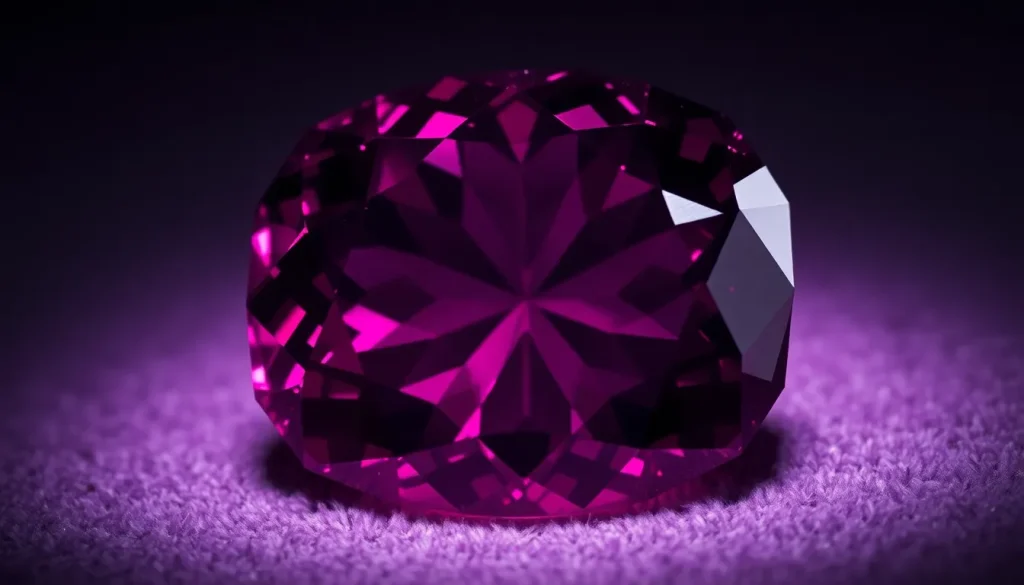
Purpurite is a hydrated manganese phosphate mineral with the formula MnPO4·H2O. It is prized for its vivid purplish‑red to violet hues and a subadamantine to vitreous luster. The stone ranks 4–5 on the Mohs scale, making it suitable for certain types of jewelry when protected from harsh impacts.
History and Origin
The name “purpurite” derives from the Latin *purpura*, meaning purple, reflecting its characteristic color. First described in the early 20th century, notable deposits have been documented in Brazil (São Paulo state), Namibia, the United States (Arizona), and Russia’s Ural region. The mineral forms in oxidizing environments where manganese is abundant.
Meaning and Symbolism
In traditional gemstone lore, purpurite is associated with dignity, spiritual insight, and inner strength. Its deep violet tone is thought to inspire creativity and encourage the wearer to express personal truth. Because the color lies between red’s passion and blue’s calm, purpurite is sometimes regarded as a stone of balanced emotion.
Healing and Metaphysical Properties
Crystal‑healing enthusiasts claim that purpurite supports the Crown and Third‑Eye chakras, helping to open intuition and enhance meditation. It is said to promote emotional healing, reduce feelings of isolation, and assist in releasing old patterns. These beliefs are part of cultural and metaphysical traditions and should not replace professional medical advice.
Varieties and Types
Pure purpurite is manganese‑rich, but iron can substitute for manganese, producing a darker, more brownish hue. Specimens may range from bright magenta to deep violet, and some display fine zoning or inclusions of quartz or calcite. No widely recognized trade names exist beyond the mineral’s own name.
Jewelry Uses and Care
Because of its moderate hardness, purpurite is best set in protective settings such as bezel or channel designs. It is commonly cut as cabochons, beads, or small faceted stones for earrings and pendants. Care recommendations include:
- Avoid abrasive cleaners; use a soft, lint‑free cloth.
- Clean with mild soapy water and a gentle brush if needed.
- Store separately from harder gemstones to prevent scratches.
- Keep away from prolonged heat or direct sunlight, which can alter surface luster.
Buying Guide
When selecting purpurite, consider the following factors:
- Color intensity: Deep, evenly saturated purple‑red tones are most valued.
- Clarity: Transparent to translucent stones without heavy clouding are preferred.
- Cut and setting: Well‑cut cabochons or facets that showcase the stone’s luster.
- Treatment disclosure: Natural purpurite is rarely treated, but any dye or enhancement should be disclosed.
- Certification: For high‑value pieces, request a gemological report from a reputable laboratory.
FAQ
What is purpurite good for?
Purpurite is valued for its striking violet‑red color in jewelry and decorative objects. Traditionally, it is believed to support intuition and emotional balance, though these are metaphysical claims and not medical facts.
Is purpurite rare?
High‑quality, vividly colored purpurite is relatively uncommon, especially in large, clean stones. It is found in several locales, but fine material suitable for fine jewelry is less abundant than more common gemstones.
How can you tell if purpurite is real?
Authentic purpurite exhibits a subadamantine luster, a Mohs hardness of 4–5, and a characteristic purple‑red hue. Professional testing (e.g., refractive index measurement or spectroscopy) can confirm its identity and detect any treatments.
What chakra is purpurite associated with?
In crystal‑healing traditions, purpurite is linked to the Crown Chakra and sometimes the Third‑Eye Chakra, believed to aid spiritual insight and meditation.
How should you clean purpurite?
Clean purpurite with mild soapy water and a soft brush, then dry with a lint‑free cloth. Avoid ultrasonic cleaners, harsh chemicals, and high‑impact activities that could scratch or damage the stone.
Leave a Reply