
Short Answer
Overview
Pyrrhotite is a magnetic iron sulfide mineral with the general formula Fe(1‑x)S, where x ranges from 0 to 0.2. It belongs to the sulfide mineral class and typically forms in monoclinic or hexagonal crystal systems. The stone displays a metallic luster and an opaque appearance, ranging in color from bronze‑gold and coppery red to dark gray or black. Its Mohs hardness lies between 3.5 and 4.5, and it has a relatively high specific gravity of 4.58–4.71, making it noticeably heavy for its size.
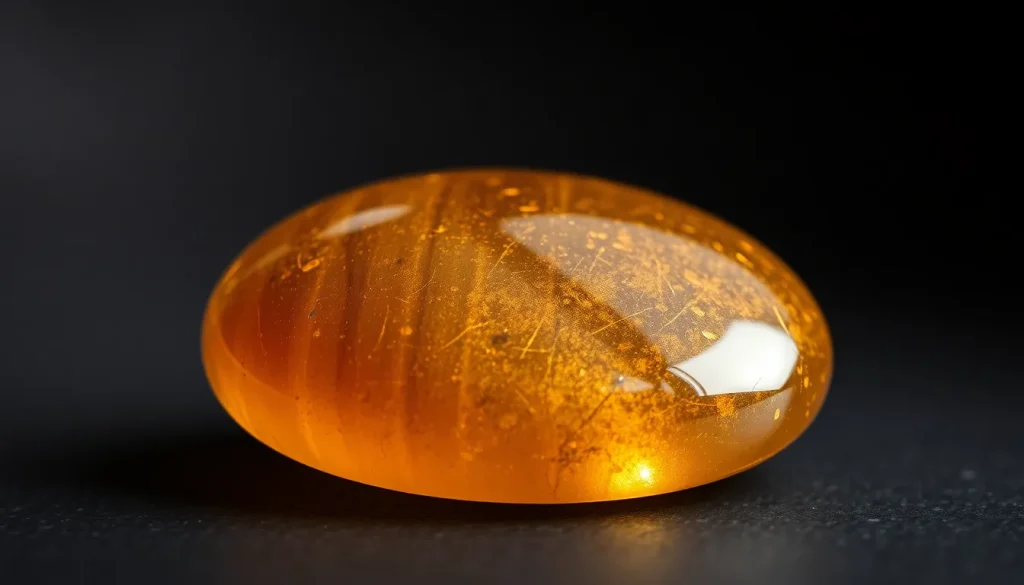
Because of its magnetic properties and striking metallic sheen, pyrrhotite is sometimes cut as a cabochon or used in inlay work, although it is less common than other gemstones. The mineral is primarily of interest to mineral collectors, geologists, and a niche segment of jewelry designers.
History and Origin
The name “pyrrhotite” derives from the Greek word pyr meaning fire, referencing the mineral’s bronze‑like color. It was first described in 1845 from specimens collected in the Långban iron‑ore district of Sweden. Pyrrhotite occurs worldwide in mafic and ultramafic igneous rocks, metamorphic schists, and in some hydrothermal veins. Major localities include the Sudbury Basin (Canada), the Lake Superior region (USA), the Kiruna district (Sweden), the Kola Peninsula (Russia), and parts of Australia and South Africa.
Historically, pyrrhotite was studied for its magnetic properties, contributing to early research on Earth’s magnetism. In modern times, it is valued primarily as a collector’s mineral and, occasionally, as an ornamental stone.
Meaning and Symbolism
In traditional gemstone lore, pyrrhotite is associated with grounding, protection, and the encouragement of inner strength. Its dark metallic hue is thought to absorb negative energy, while its magnetic nature symbolizes attraction and the ability to draw in resources or opportunities. Some cultures view the stone as a talisman for perseverance during challenging times.
Healing and Metaphysical Properties
Crystal‑healing practitioners attribute the following properties to pyrrhotite, describing them as beliefs rather than medical facts:
- Grounding: Helps users feel more rooted and stable, especially during periods of rapid change.
- Protection: Said to create an energetic shield against negativity and psychic intrusion.
- Magnetic attraction: Believed to enhance personal magnetism, aiding confidence and charisma.
- Emotional balance: Thought to assist in releasing repressed anger and fostering calm determination.
These attributes are part of traditional metaphysical systems and should not replace professional medical advice.
Varieties and Types
Pyrrhotite occurs in several structural varieties, distinguished by the stacking sequence of its crystal layers:
- Pyrrhotite‑4C (monoclinic): The most common form, with a four‑layer repeat.
- Pyrrhotite‑5C (hexagonal): Exhibits a five‑layer repeat and often forms well‑developed hexagonal prisms.
- Pyrrhotite‑6C: Less common, with a six‑layer stacking pattern.
- Troilite (FeS): The stoichiometric end‑member lacking the iron deficiency that gives pyrrhotite its magnetic character.
All varieties share the metallic luster and opacity that define pyrrhotite, but magnetic strength can vary, with the 4C form typically being the most strongly magnetic.
Jewelry Uses and Care
Because pyrrhotite is relatively soft and brittle, its use in jewelry is limited to protective settings such as bezel or channel settings that guard against impact. It is most commonly found as a cabochon or as an accent stone in metalwork, rather than as a faceted gemstone.
Care instructions:
- Clean with a soft, lint‑free cloth; avoid ultrasonic cleaners and harsh chemicals.
- Do not expose to prolonged sunlight or high heat, which can accelerate oxidation.
- Store separately from harder gemstones to prevent scratching.
- Because pyrrhotite can oxidize to form a thin surface tarnish, occasional gentle polishing with a jeweler’s cloth is recommended.
Buying Guide
When purchasing pyrrhotite, consider the following factors:
- Color and Luster: High‑quality specimens display a uniform metallic bronze or coppery sheen without excessive surface oxidation.
- Magnetism: Genuine pyrrhotite will be attracted to a magnet; however, some treated stones may lose magnetism.
- Cut and Setting: Look for a well‑executed cabochon or inlay that protects the stone’s edges.
- Origin: Reputable sources from known localities (e.g., Canada, Sweden) often indicate better quality.
- Price: Prices are modest compared with traditional gemstones; value is driven by rarity of high‑grade, well‑preserved material.
Because pyrrhotite can be confused with other metallic sulfides such as marcasite or certain types of pyrite, obtaining a certification from a recognized gemological laboratory is advisable for high‑value pieces.
FAQ
What is pyrrhotite good for?
Pyrrhotite is valued for its metallic appearance in jewelry, as a collector’s mineral, and traditionally for grounding and protective symbolism in crystal‑healing practices.
Is pyrrhotite rare?
High‑quality, well‑preserved pyrrhotite specimens are relatively uncommon, especially those with uniform color and strong magnetism, but the mineral itself is not considered rare worldwide.
How can you tell if pyrrhotite is real?
Real pyrrhotite is magnetic, has a metallic luster, and shows a black streak. Professional gemologists can confirm identity with X‑ray diffraction or chemical analysis.
What chakra is pyrrhotite associated with?
In traditional metaphysical systems, pyrrhotite is linked to the Root (Muladhara) chakra, promoting grounding and stability.
How should you clean pyrrhotite?
Wipe gently with a soft, dry cloth; avoid ultrasonic cleaners, harsh chemicals, and prolonged exposure to heat. Store separately from harder gemstones to prevent scratches.
Leave a Reply