
Short Answer
Overview
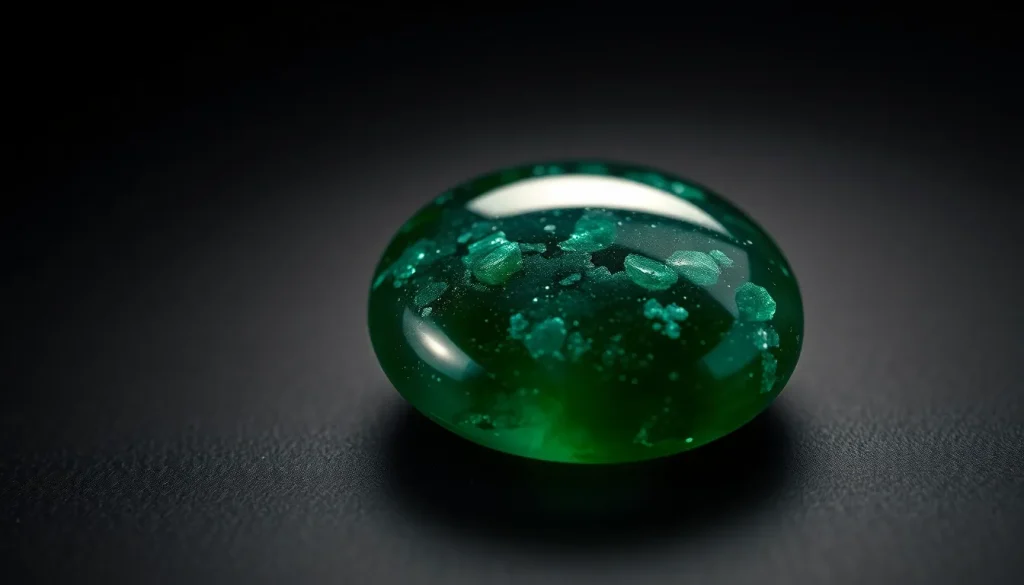
Aventurine is a variety of quartz (SiO₂) distinguished by its glittering effect, known as aventurescence. The sparkle is caused by minute, plate‑like mineral inclusions—most commonly fuchsite (a chromium‑rich mica) or hematite—that reflect light. The stone is typically found in green, but also appears in blue, orange, brown, and red hues.
History and Origin
The name “aventurine” derives from the Italian word avventura, meaning “by chance,” a reference to the accidental discovery of the stone’s shimmering quality. Historically, green aventurine was used in ancient Roman mosaics and medieval stained glass. Modern production began in the 19th century when mineralogists identified the cause of the sparkle and began mining the stone commercially in India, Brazil, and Russia.
Meaning and Symbolism
In traditional gemstone lore, aventurine is associated with prosperity, luck, and emotional balance. Green aventurine is often called the “Stone of Opportunity” because of its reputed ability to attract new ventures and enhance confidence. Blue aventurine is linked to communication and calm, while brown or orange varieties are thought to ground and stabilize the wearer.
Healing and Metaphysical Properties
Crystal‑healing practitioners describe aventurine as a stone that promotes heart‑centered growth. Common beliefs include:
- Encouraging optimism and forward‑moving energy.
- Supporting the heart chakra and fostering compassion.
- Assisting in the release of old emotional patterns.
- Enhancing physical recovery, especially of the circulatory system.
These claims are traditional and not supported by medical research. Aventurine should never replace professional medical treatment.
Varieties and Types
While all aventurine is quartz, the color and type of inclusions create distinct varieties:
- Green Aventurine – the most common, featuring chromium‑rich fuchsite plates.
- Blue Aventurine – contains hematite or goethite inclusions that give a deep blue shimmer.
- Orange/Red Aventurine – colored by inclusions of iron oxides; sometimes called “Tiger’s Eye Aventurine” when the effect is particularly strong.
- Brown Aventurine – earthy tones caused by higher concentrations of iron.
All varieties share the same basic chemical composition and hardness, but their market value can differ based on color intensity, clarity, and the visibility of aventurescence.
Jewelry Uses and Care
Aventurine is widely used in rings, pendants, earrings, and cabochons. Its relatively high hardness (Mohs 7) makes it suitable for most jewelry settings, though the stone can be brittle if struck sharply.
- Cleaning: Use warm, soapy water and a soft brush. Avoid ultrasonic cleaners for heavily included stones, as vibrations may loosen inclusions.
- Storage: Keep separate from harder gemstones (e.g., diamonds) to prevent scratching.
- Repair: Re‑setting should be performed by a professional who understands the stone’s fracture pattern (conchoidal) and avoids excessive heat.
Buying Guide
When selecting aventurine, consider the following factors:
- Color Saturation: Deeper, uniform colors are generally more valuable.
- Aventurescence Visibility: A strong, evenly distributed sparkle indicates quality.
- Clarity: While inclusions create the sparkle, large cracks or cloudiness reduce value.
- Cut and Finish: Cabochons that showcase the stone’s depth are preferred over heavily faceted pieces.
- Origin: Reputable sources from India, Brazil, or Russia often provide consistent quality.
Request a gem‑ological report for large or high‑value pieces, especially if the stone has been heat‑treated or dyed.
FAQ
What is aventurine good for?
Aventurine is prized for its attractive sparkle in jewelry and is traditionally believed to promote luck, emotional balance, and heart‑centered growth. These metaphysical claims are based on folklore and are not scientifically proven.
Is aventurine rare?
Aventurine is relatively abundant, especially green varieties from India and Brazil. High‑quality stones with intense color and strong aventurescence are less common and command higher prices.
How can you tell if aventurine is real?
Real aventurine shows a natural glitter that moves with the light, a hardness of 7 (scratch test with a steel file), and a specific gravity around 2.65. Professional gemologists can confirm authenticity with refractive index measurements and spectroscopic analysis.
What chakra is aventurine associated with?
In crystal‑healing traditions, aventurine is most often linked to the Heart (Anahata) chakra, supporting love, compassion, and emotional healing.
How should you clean aventurine?
Clean aventurine with warm, mildly soapy water and a soft cloth or brush. Avoid ultrasonic cleaners if the stone has strong inclusions, and keep it away from harsh chemicals or extreme heat.
Leave a Reply