
Short Answer
Overview
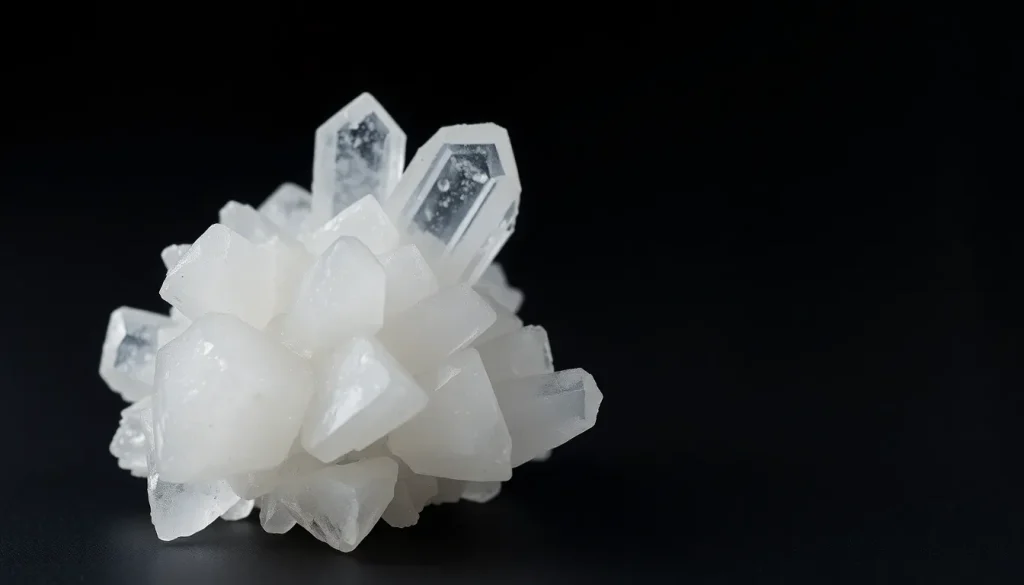
Anhydrite is the anhydrous form of calcium sulfate (CaSO4). It typically forms tabular or prismatic crystals with a vitreous to pearly luster. The most common colors are white and colourless, though specimens can display shades of blue, gray, or pink due to trace impurities.
History and Origin
Anhydrite occurs in evaporite deposits that form when seawater or lake water evaporates, leaving behind concentrated salts. Major historic localities include the Salton Sea region of California, the Great Salt Lake basin in Utah, and evaporite sequences in Spain and Italy. While not widely used in ancient jewelry, anhydrite nodules have been collected as curiosities since the 19th century.
Meaning and Symbolism
In traditional gemstone symbolism, anhydrite is associated with clarity of thought and the ability to “see through” confusion. Its crisp, clean appearance is thought to represent purity and straightforward communication.
Healing and Metaphysical Properties
Crystal‑healing practitioners claim that anhydrite can help balance the root chakra, promote grounding, and aid in releasing old emotional patterns. It is sometimes used in meditation to foster mental clarity. These beliefs are not medical facts and should not replace professional healthcare.
Varieties and Types
- White Anhydrite – the most common, transparent to opaque.
- Blue Anhydrite – displays a pale blue hue, often found in the United States.
- Gray or Pink Anhydrite – colored by iron or manganese impurities.
- Fibrous Anhydrite – occurs as fine fibers, occasionally used for decorative purposes.
Jewelry Uses and Care
Because of its relatively low hardness (3–3.5 on the Mohs scale) and perfect cleavage, anhydrite is seldom used in mainstream jewelry. When employed, it is typically set in protective settings such as bezel or pendant backings. Care instructions include:
- Avoid scratches – clean with a soft, lint‑free cloth.
- Prevent moisture exposure – prolonged water contact can lead to conversion into gypsum.
- Store separately – its perfect cleavage makes it vulnerable to chipping.
Buying Guide
When purchasing anhydrite, consider the following:
- Color and Clarity: Look for even coloration without cloudy inclusions.
- Cut and Setting: Well‑cut stones show clear crystal faces; protective settings are advisable.
- Origin: Reputable sources often provide locality information (e.g., California, Utah, Spain).
- Treatment Disclosure: Some specimens are stabilized or dyed; ask for full disclosure.
Because anhydrite is relatively inexpensive, the primary value lies in its rarity of high‑quality crystals and personal aesthetic appeal.
FAQ
What is anhydrite good for?
Anhydrite is valued by collectors for its distinctive crystal habit and by some jewelry makers for ornamental pendants. Traditional crystal‑healing beliefs attribute grounding and clarity benefits, though these are not medically proven.
Is anhydrite rare?
High‑quality, well‑formed anhydrite crystals are relatively uncommon, especially in vivid colors like blue. However, the mineral itself is abundant in evaporite settings, making bulk material inexpensive.
How can you tell if anhydrite is real?
Real anhydrite has a perfect cleavage, a Mohs hardness of 3–3.5, and a white streak. It is less dense than many gemstones (SG ≈ 2.9). Professional gemologists can confirm authenticity with refractive index and density measurements.
What chakra is anhydrite associated with?
In crystal‑healing traditions, anhydrite is sometimes linked to the Root chakra for grounding, though there is no universally accepted chakra association.
How should you clean anhydrite?
Wipe gently with a soft, dry cloth. Avoid ultrasonic cleaners, harsh chemicals, or prolonged water exposure, as moisture can convert anhydrite to gypsum and damage its surface.
Leave a Reply