Short Answer
Overview
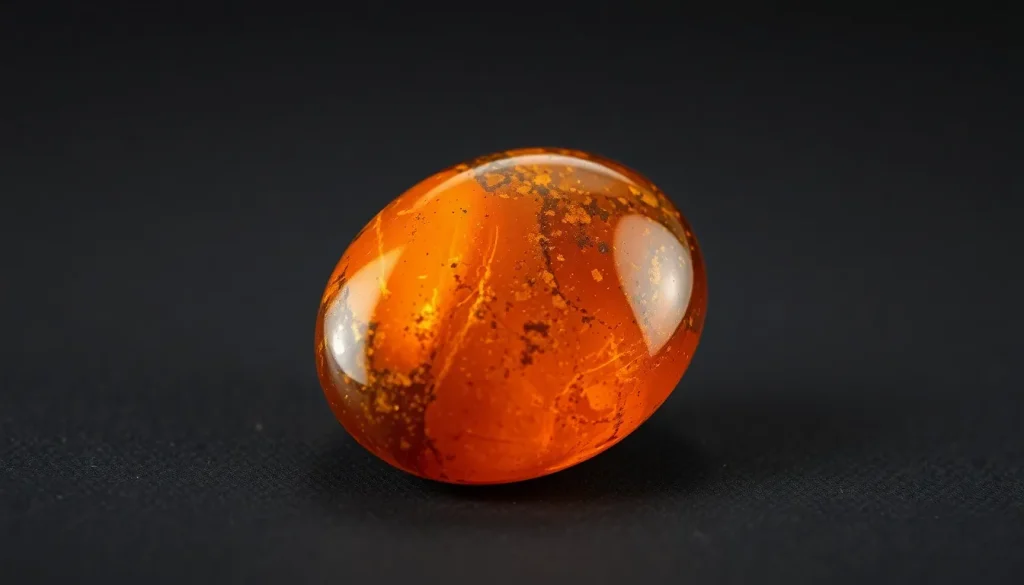
Scorodite is an iron arsenate hydrate mineral with the chemical formula FeAsO₄·2H₂O. It crystallises in the orthorhombic system and typically appears in shades of yellow, brown, orange, or greenish‑brown. While not a traditional gemstone, scorodite is valued by collectors and occasionally fashioned into cabochons for decorative pieces.
History and Origin
The name “scorodite” derives from the Greek word skorodion, meaning “garlic”, referring to the garlic‑like odor some specimens emit when heated. Scorodite forms in the oxidised zones of arsenic‑rich ore deposits, often as a secondary mineral from the weathering of arsenopyrite and other arsenic‑bearing sulfides. Notable historical localities include the United States (Arizona), Germany (Bavaria), Morocco, Spain, Brazil, and Australia.
Meaning and Symbolism
In traditional gemstone lore, scorodite is associated with transformation and grounding. Its earthy tones are said to reflect stability, while the mineral’s formation process—from toxic arsenic‑bearing ores to a stable, ornamental form—is interpreted as a metaphor for personal growth and resilience.
Healing and Metaphysical Properties
Crystal‑healing practitioners attribute the following beliefs to scorodite, noting that these are not medical facts:
- Grounding: Helps anchor emotional energy and promote a sense of calm.
- Detoxification: Symbolically supports the release of negative patterns.
- Protection: Thought to shield the wearer from psychic overload.
These properties are based on folklore and should not replace professional health advice.
Varieties and Types
Scorodite occurs in several habit forms, including:
- Stout Prismatic Crystals: Well‑formed orthorhombic prisms, prized by collectors.
- Massive Aggregates: Granular or botryoidal masses, often displaying vivid color.
- Cabochon‑Cut Specimens: Polished slices used in ornamental jewelry.
Colour variations range from bright yellow to deep brown, occasionally showing a greenish tint due to iron content.
Jewelry Uses and Care
Because scorodite has a Mohs hardness of 3.5–4.5, it is relatively soft and can be scratched by many harder gemstones. It is best suited for pendants, earrings, or brooches where the stone is set securely and not exposed to frequent impact. Care instructions include:
- Avoid harsh chemicals and prolonged exposure to water.
- Clean gently with a soft, dry cloth; if necessary, use a mild soap solution and rinse quickly.
- Store separately from harder gemstones to prevent scratching.
Due to its perfect cleavage on {010}, handling should be gentle to avoid accidental breakage.
Buying Guide
When purchasing scorodite, consider the following factors:
- Color Saturation: Vivid, uniform colours are more desirable.
- Clarity: Minimise inclusions and surface cracks, especially for jewelry pieces.
- Cut Quality: Well‑polished cabochons showcase the stone’s natural luster.
- Origin Documentation: Reputable dealers should provide locality information and any treatment disclosures.
Because scorodite contains arsenic, ensure that the piece is properly sealed or set in a way that limits direct skin contact, especially for sensitive individuals.
FAQ
What is scorodite good for?
Scorodite is primarily valued by mineral collectors for its vivid colors and crystal forms. In traditional belief systems it is associated with grounding and transformation, but it has no proven medical or therapeutic effects.
Is scorodite rare?
High‑quality, well‑crystallised scorodite specimens are relatively uncommon, especially those without surface cracks. It occurs in several localities worldwide, but gem‑grade material suitable for jewelry is scarce.
How can you tell if scorodite is real?
Authentic scorodite exhibits a submetallic to vitreous luster, a yellow‑brown streak, and perfect cleavage on {010}. Because it contains arsenic, professional testing (e.g., X‑ray diffraction or spectroscopy) is recommended for verification.
What chakra is scorodite associated with?
In crystal‑healing traditions scorodite is sometimes linked to the Root (Muladhara) chakra for grounding, though there is no universally accepted association.
How should you clean scorodite?
Use a soft, dry cloth to remove dust. For deeper cleaning, a mild soap solution applied with a soft brush is acceptable, followed by a quick rinse and gentle drying. Avoid ultrasonic cleaners, harsh chemicals, and prolonged water exposure.
Leave a Reply