
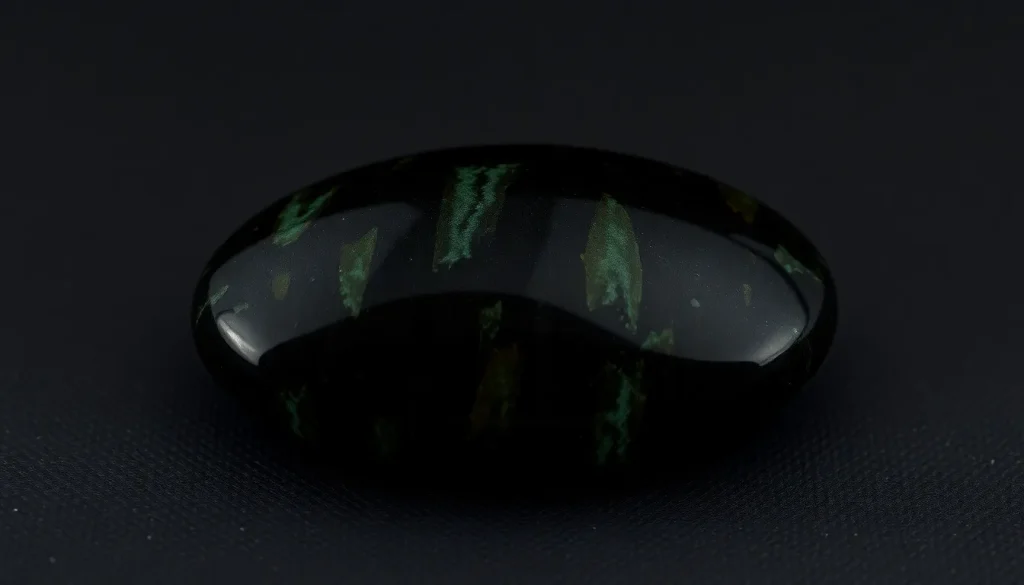
Short Answer
Overview
Sogdianite is a cryptocrystalline variety of silica (SiO2) that belongs to the quartz family. It is characterized by an opaque to semi‑translucent black, dark brown, or deep green coloration and a smooth, waxy to vitreous luster. Because of its fine texture and deep color, it has been used historically as a decorative stone in jewelry and ornamental objects.
History and Origin
The name “Sogdianite” derives from the ancient region of Sogdiana, located in present‑day Uzbekistan and surrounding Central Asian territories. Early trade routes, notably the Silk Road, carried dark silica artifacts from this area to markets in Persia, India, and China. Modern mineralogical description of the stone dates to the early 20th century when samples were examined and classified as a form of chalcedony‑type quartz.
Meaning and Symbolism
In traditional Central Asian cultures, Sogdianite was considered a protective talisman, believed to absorb negative energies and provide strength to the wearer. Its deep, grounding color is often associated with stability, endurance, and inner resolve.
Healing and Metaphysical Properties
Crystal‑healing practitioners attribute Sogdianite with grounding and protective qualities. It is said to help anchor one’s thoughts, promote emotional balance, and assist in releasing fear. These claims are part of traditional belief systems and are not intended as medical advice.
Varieties and Types
Sogdianite occurs primarily in the following visual forms:
- Black Sogdianite: Uniform deep black, often used as a substitute for onyx.
- Brown‑Black Banding: Fine, irregular bands of brown within a black matrix, valued for decorative contrast.
- Greenish Sogdianite: Rare specimens displaying a dark, jade‑like hue.
The stone is found as cabochons, beads, and polished cabochon tiles. No significant heat or irradiation treatments are commonly applied, though some specimens may be polished to enhance their natural sheen.
Jewelry Uses and Care
Because of its hardness (6.5–7 on the Mohs scale) and relatively low cleavage, Sogdianite is suitable for rings, pendants, earrings, and ornamental inlays. Care recommendations include:
- Clean with a soft, lint‑free cloth and mild soapy water; avoid harsh chemicals.
- Do not expose to prolonged ultrasonic cleaning, which can cause micro‑fractures in the surface polish.
- Store separately from harder gemstones (e.g., diamonds, corundum) to prevent scratching.
Buying Guide
When purchasing Sogdianite, consider the following factors:
- Color Uniformity: Deep, even coloration without excessive banding is generally more valuable.
- Clarity and Surface Finish: A smooth, well‑polished surface enhances the stone’s natural luster.
- Origin Documentation: Reputable dealers will provide provenance, especially for material sourced from Uzbekistan or neighboring regions.
- Treatment Disclosure: Ensure the seller confirms that the stone is untreated or only mechanically polished.
Because Sogdianite is not as widely marketed as more common gemstones, price points can vary considerably. Obtaining a gemological report from a recognized laboratory (e.g., GIA) is advisable for high‑value pieces.
FAQ
What is Sogdianite good for?
Sogdianite is valued for its deep, grounding color in jewelry and as a decorative stone; traditionally it is believed to provide protection and emotional stability.
Is Sogdianite rare?
High‑quality, uniformly colored Sogdianite is relatively uncommon, especially specimens from well‑documented Central Asian localities, making it less abundant than standard quartz varieties.
How can you tell if Sogdianite is real?
Examine hardness (scratch test), check for a uniform waxy‑vitreous luster, and verify the absence of synthetic imitations; for certainty, obtain a gemological report from a recognized laboratory.
What chakra is Sogdianite associated with?
In crystal‑healing traditions Sogdianite is commonly linked to the Root (Muladhara) chakra, thought to aid grounding and stability.
How should you clean Sogdianite?
Clean with mild soap and warm water using a soft cloth; avoid ultrasonic cleaners and harsh chemicals, and store separately from harder gemstones to prevent scratches.
Leave a Reply