Short Answer
Overview
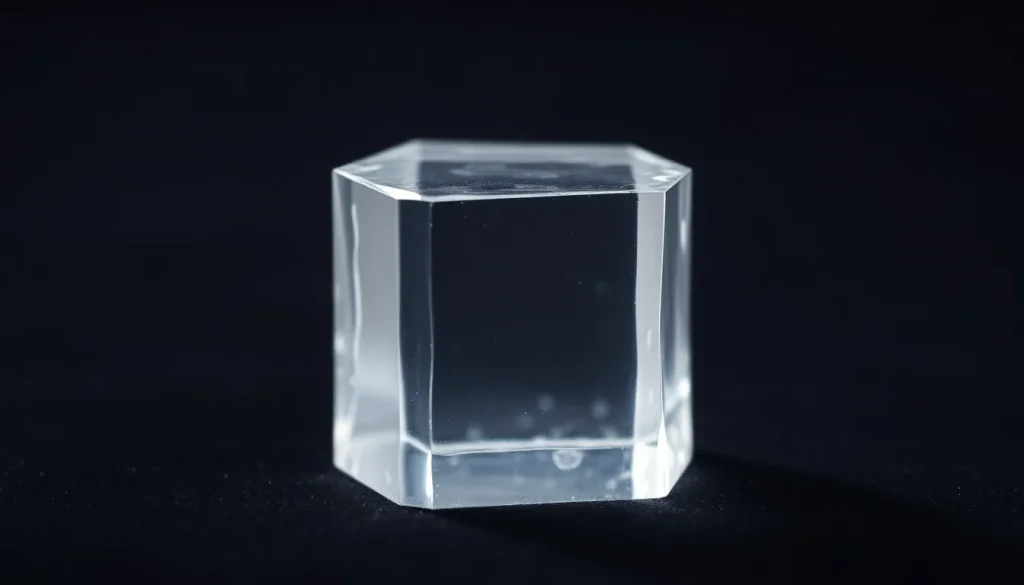
Sylvite is the mineral form of potassium chloride (KCl). It belongs to the halide family and crystallizes in the isometric (cubic) system, forming clear, often colorless cubes that can display a glassy, vitreous luster. Because of its low hardness (Mohs 2–2.5), sylvite is rarely used in mainstream jewelry but is prized by collectors and in crystal‑healing circles for its bright appearance and symbolic attributes.
History and Origin
The name “sylvite” derives from the Latin word silva (forest) because early deposits were found in forested salt‑bearing regions. Sylvite was first described scientifically in the early 19th century from deposits in Stassfurt, Germany. Large natural deposits occur in evaporite sequences where seawater or lake water has evaporated, often alongside halite (NaCl). Today, major sylvite sources include the potash mining districts of Saskatchewan, Canada; the Ural region of Russia; and smaller localities in Germany and the United States.
Meaning and Symbolism
In traditional crystal lore, sylvite is associated with clarity of thought and the flow of ideas. It is believed to help release mental blockages, promote honest communication, and support the manifestation of intentions. Some practitioners link sylvite to the concept of “abundance,” viewing its potassium content as a metaphor for energetic nourishment.
Healing and Metaphysical Properties
Crystal‑healing advocates attribute the following properties to sylvite:
- Emotional balance: Helps calm anxiety and encourages emotional stability.
- Mental clarity: Said to sharpen focus and aid in decision‑making.
- Physical support: Traditionally believed to assist the body’s electrolyte balance, though this is not a medical claim.
These beliefs are part of cultural traditions and should not replace professional medical advice.
Varieties and Types
Sylvite is generally uniform in composition, but variations in color occur due to trace impurities:
- Pure sylvite: Colorless to white, often forming perfect cubes.
- Impure specimens: May appear pink, orange, gray, or brown when iron, manganese, or other elements are present.
Unlike many gemstones, sylvite does not undergo common gemstone treatments; its appearance is natural.
Jewelry Uses and Care
Because sylvite is soft and has perfect cubic cleavage, it is unsuitable for rings or bracelets that experience frequent impact. It is occasionally set in pendants, earrings, or display pieces where the stone is protected. Care recommendations include:
- Handle with care; avoid dropping or striking the stone.
- Clean gently with a soft, dry cloth; if needed, use lukewarm water and a mild soap, then dry thoroughly.
- Avoid ultrasonic cleaners, steam cleaning, and harsh chemicals, as they can damage the crystal lattice.
- Store separately from harder gemstones to prevent scratching.
Buying Guide
When purchasing sylvite, consider the following factors:
- Clarity: Look for specimens free of fractures or surface scratches.
- Color: Pure white or colorless stones are most valued for their classic appearance; colored varieties are collected for uniqueness.
- Origin: Reputable sources from known potash districts often provide documentation of authenticity.
- Cut and setting: Choose protective settings that minimize exposure to mechanical stress.
- Certification: While formal gem‑ological certification is uncommon for sylvite, a reputable dealer should offer a guarantee of natural origin.
Because sylvite is not a mainstream gemstone, prices are modest, and the primary value lies in its rarity as a collector’s mineral and its metaphysical appeal.
FAQ
What is sylvite good for?
Sylvite is valued as a collector’s mineral and ornamental stone. Traditionally, it is believed to promote mental clarity and abundance, though these are spiritual concepts, not scientific facts.
Is sylvite rare?
Sylvite is not extremely rare in its natural form, but gem‑quality, clear, well‑formed cubes are uncommon. High‑quality specimens are limited to specific evaporite deposits and are less frequently found than more durable gemstones.
How can you tell if sylvite is real?
Real sylvite has a vitreous luster, perfect cubic cleavage, and a Mohs hardness of 2–2.5, meaning it can be scratched easily with a fingernail. Professional gemologists use refractive index measurement (≈1.51) and specific gravity testing to confirm authenticity.
What chakra is sylvite associated with?
In crystal‑healing traditions, sylvite is most often linked to the Solar Plexus (Manipura) chakra, where it is said to support personal power and confidence.
How should you clean sylvite?
Clean sylvite gently with a soft, dry cloth. For deeper cleaning, use lukewarm water with mild soap, then dry thoroughly. Avoid ultrasonic cleaners, steam, or harsh chemicals, and store it away from harder gemstones to prevent scratching.
Leave a Reply