
Short Answer
Comparison Table
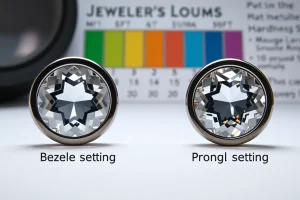
| Feature | Bezel Setting | Prong Setting |
|---|---|---|
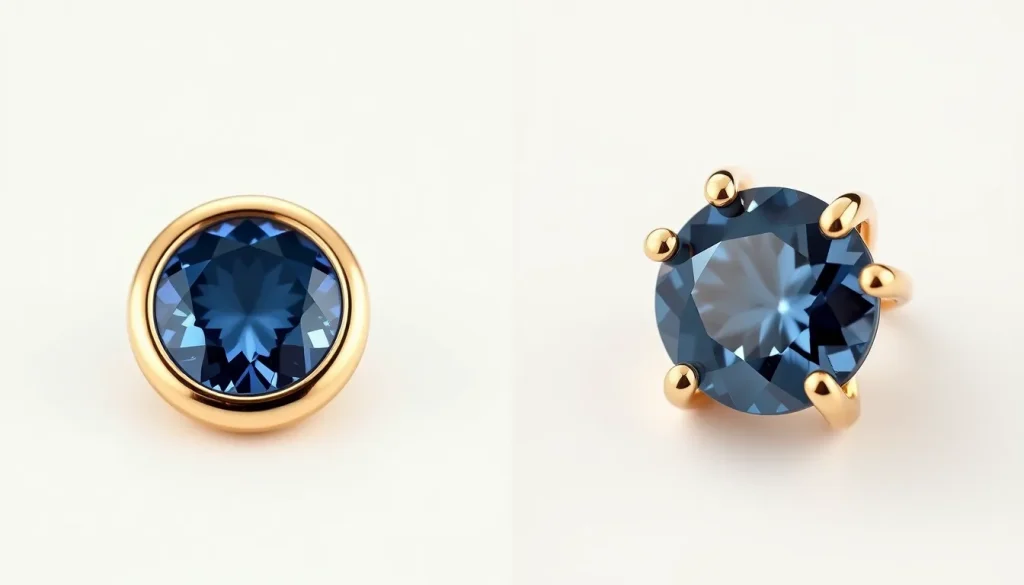
| Stone Security | Maximum; metal encircles the entire perimeter. | Moderate; relies on a few points of contact. |
| Light Entry | Limited; primarily enters through the crown. | High; light enters from the sides and top. |
| Protection | High protection against edge chipping. | Exposed edges are vulnerable to impact. |
| Maintenance | Low; no prongs to loosen or snag. | Higher; prongs require periodic tightening. |
| Visual Impact | Modern, sleek, and substantial. | Classic, airy, and emphasizes the stone. |
Shared Features
Regardless of the architectural difference, both bezel and prong settings share the primary goal of securing a gemstone within a metal mounting. Both methods utilize the girdle of the gemstone as the primary point of contact. Furthermore, both settings can be crafted from a variety of precious metals, including gold, platinum, and palladium, and both are capable of being modified to accommodate different stone shapes, from round brilliants to irregular cabochons.
Important Differences
The fundamental difference lies in the distribution of pressure and the level of physical shielding. A bezel setting uses a continuous rim of metal that wraps around the gemstone’s girdle, effectively “locking” it in place. This provides a physical barrier that protects the edges of the stone from external impacts.
In contrast, a prong setting (or claw setting) uses small metal posts to hold the stone. While this allows more light to enter the pavilion and crown—enhancing the brilliance of transparent stones—it leaves the gemstone’s edges exposed. For gemstones with medium hardness, this exposure is a significant risk factor, as a sharp blow to the girdle can cause a chip or a complete fracture.
Expert Tip: When dealing with gemstones in the 6.0 to 7.0 range on the Mohs scale, the risk of “cleavage’ or “conchoidal fracturing” increases. A bezel setting acts as a shock absorber, whereas prongs offer no such protection.
Suitability by Use
The choice between these two settings often depends on the intended use of the jewelry:
- Daily Wear (Active Lifestyles): Bezel settings are vastly superior for rings worn during manual work or sports. They prevent the stone from snagging on clothing and protect the gemstone from accidental knocks.
- Formal/Occasional Wear: Prong settings are often preferred for high-jewelry pieces where maximum light return and visual “float” are desired.
- Medium-Hardness Stones: For gems like Amethyst, Tourmaline, or Tanzanite, a bezel is highly recommended to ensure the stone remains intact over decades of wear.
Identification Limits
From a gemological standpoint, the setting can impact the ability to identify a stone. A bezel setting may obscure the girdle, making it difficult to inspect for girdle chips or to verify the stone’s exact dimensions without removing it. Prong settings allow for easier access for a loupe or microscope to examine the stone’s sides and the junction where the stone meets the metal.
Related Profiles
To further understand the necessity of these settings, one should examine the profiles of stones typically classified as medium-hardness, such as:
- Tanzanite: Known for its stunning color but relative fragility.
- Tourmaline: Possesses good hardness but can be prone to cleavage.
- Fluorite: A soft gem that almost exclusively requires a full bezel or flush setting for safety.
FAQ
Can I put a medium-hardness stone in a prong setting?
Yes, but it is riskier. If you choose prongs, ensure they are sturdy and check them frequently for looseness to prevent the stone from falling out.
Does a bezel setting make a gemstone look smaller?
Often, yes. Because the metal covers the perimeter of the stone, the visible surface area is slightly reduced compared to a prong setting.
Which setting is better for an engagement ring with a medium-hard stone?
A bezel or a 'hybrid' setting (prong with a protective gallery) is recommended for engagement rings due to the constant wear and tear of daily life.

Leave a Reply