
Short Answer
Overview
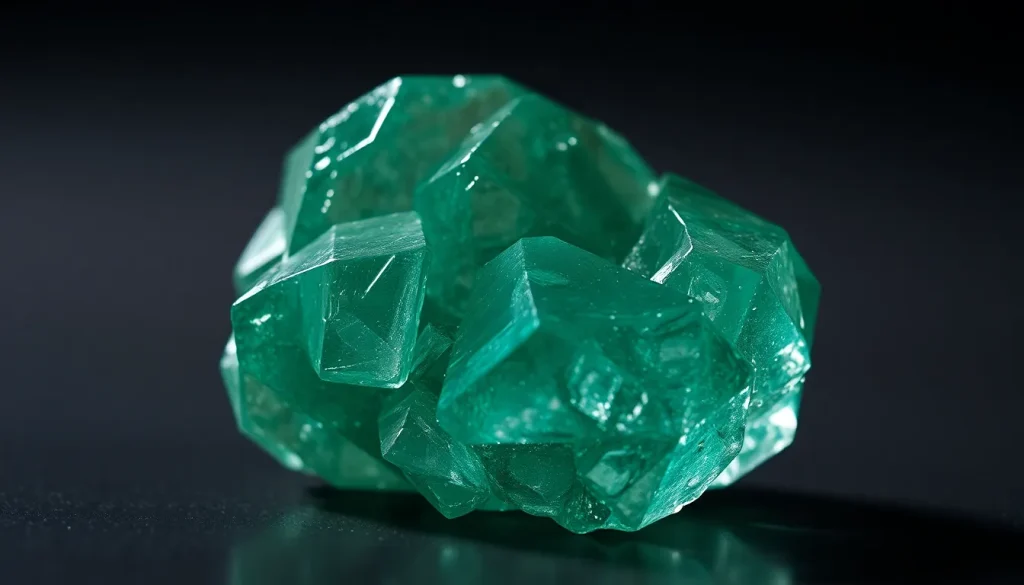
Achroite is a rare, typically colorless to very pale gray silicate mineral that belongs to the wollastonite‑type group. Its name derives from the Greek achrós meaning “without color.” In gemological circles it is regarded more as a collector’s mineral than a mainstream gemstone, valued for its transparency, vitreous luster, and subtle internal reflections.
History and Origin
The mineral was first described in the early 20th century from specimens found in Brazil. Subsequent occurrences have been reported from a handful of localities, including Madagascar, the United States (particularly in the western states), and limited deposits in Europe. Because it forms in low‑temperature skarn environments where tin‑rich fluids interact with calcium silicates, achroite remains uncommon and is usually encountered in mineral collections rather than commercial jewelry markets.
Meaning and Symbolism
In contemporary crystal‑healing literature achroite is associated with clarity of thought and the removal of mental “noise.” Its near‑colorless appearance is said to reflect purity, openness, and an ability to see situations without bias. Practitioners often place achroite on the forehead or third‑eye area to encourage unbiased perception and to support decision‑making processes.
Healing and Metaphysical Properties
Traditional beliefs attribute the following metaphysical qualities to achroite:
- Mind clarity: Helps to clear mental fog and improve focus.
- Emotional balance: Said to calm scattered emotions and promote inner peace.
- Spiritual alignment: Linked to higher‑frequency energies, encouraging a connection with one’s higher self.
These claims are based on crystal‑healing traditions and are not supported by medical science. The stone should never be used as a substitute for professional health care.
Varieties and Types
Achroite itself is a specific variety of a tin‑bearing calcium silicate. It is sometimes referred to as “colorless wollastonite” because of its structural similarity to the more common calcium silicate mineral wollastonite. No significant gem‑cut variations exist; the stone is typically presented as raw or cabochon‑cut specimens to showcase its transparency.
Jewelry Uses and Care
Due to its modest hardness (approximately 5–6 on the Mohs scale) and perfect cleavage on {001}, achroite is not suited for everyday wear in rings or bracelets that endure heavy impact. It is most often set in pendants, earrings, or brooches where the stone can be protected from knocks. When cleaning, use a soft, lint‑free cloth and mild soap with lukewarm water. Avoid ultrasonic cleaners, steam, or harsh chemicals, as they can exploit the mineral’s cleavage and cause micro‑fractures.
Buying Guide
When purchasing achroite, consider the following points:
- Source documentation: Reputable dealers should provide provenance, especially since the mineral is rare and often sourced from limited localities.
- Clarity and cut: High‑quality specimens display good transparency with minimal internal fractures.
- Treatment disclosure: Some sellers may enhance color or clarity with heat or oil; ensure any treatment is fully disclosed.
- Certification: For valuable pieces, a gemological laboratory report (e.g., GIA, IGI) can verify authenticity.
Because achroite is primarily a collector’s mineral, prices can vary widely based on size, clarity, and locality. Always compare multiple sources before making a purchase.
FAQ
What is achroite good for?
Achroite is prized by collectors for its clarity and subtle glow. In crystal‑healing circles it is believed to aid mental clarity and emotional balance, though these are traditional beliefs, not medical facts.
Is achroite rare?
Yes, achroite is considered rare. Quality, colorless specimens are limited to a few localities, and the stone is not widely mined for commercial jewelry.
How can you tell if achroite is real?
Real achroite displays a vitreous luster, perfect {001} cleavage, and a refractive index around 1.70. Because it can be confused with colorless quartz or glass, professional gemological testing (e.g., spectroscopy) is recommended for certainty.
What chakra is achroite associated with?
Traditional crystal lore links achroite to the Crown Chakra, supporting higher‑level consciousness and mental clarity.
How should you clean achroite?
Clean achroite gently with lukewarm soapy water and a soft cloth. Avoid ultrasonic cleaners, steam, or harsh chemicals, as its perfect cleavage makes it vulnerable to fractures.
Leave a Reply