
Short Answer
Overview
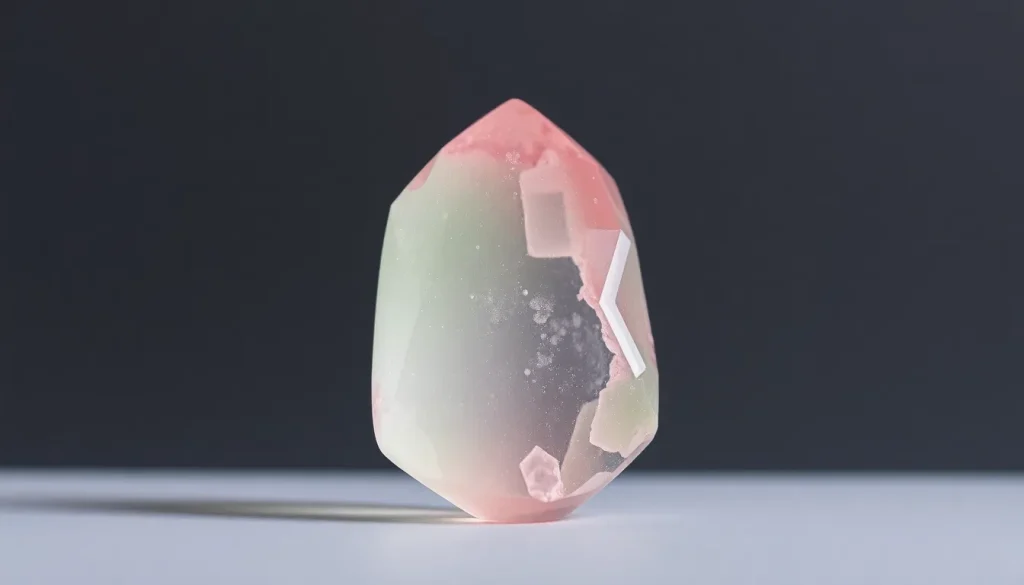
Ussingite is a rare sodium‑aluminum silicate mineral with the chemical formula Na₂Al₃(SiO₄)₃(OH). It belongs to the silicate family and crystallises in the monoclinic system. The stone typically appears in pale‑green, greenish‑white, pink, or colourless varieties and displays a vitreous luster. With a Mohs hardness of 6–6.5, it is suitable for certain types of jewelry, though care is required.
History and Origin
The mineral was first described in 1932 and named after the Danish mineralogist Henrik Ussing. Early documented occurrences were from the Langesundsfjord area in Norway, where hydrothermal veins produced fine‑grained crystals. Subsequent discoveries have been reported from Brazil (Bahia), Canada (Quebec), Madagascar, and the Ural region of Russia. Ussingite remains a collector’s gem rather than a commercial gemstone due to its limited size and colour range.
Meaning and Symbolism
Traditional gemstone lore associates Ussingite with calm, renewal, and emotional balance. Its soft green tones are thought to echo the soothing qualities of nature, encouraging inner peace and the release of past grievances. In contemporary crystal circles, it is sometimes used as a talisman for personal growth and clear communication.
Healing and Metaphysical Properties
Within crystal‑healing belief systems, Ussingite is said to:
- Promote emotional clarity and help release stagnant feelings.
- Support the heart centre, fostering compassion and forgiveness.
- Assist in grounding and stabilising energy during meditation.
These attributes are based on traditional and contemporary metaphysical teachings and are not medical advice.
Varieties and Types
Ussingite occurs in several colour varieties, the most common being:
- Green Ussingite – pale to medium green, often with a translucent appearance.
- Pink Ussingite – delicate pink hues, sometimes mistaken for pink tourmaline.
- Colourless Ussingite – clear to almost invisible, prized by collectors for its rarity.
All varieties share the same crystal structure and physical properties; colour is controlled by trace impurities during formation.
Jewelry Uses and Care
Because of its moderate hardness, Ussingite is best suited for earrings, pendants, and brooches where abrasion risk is low. It should be set with protective prongs or bezels to minimise contact with hard surfaces.
Care guidelines:
- Clean with warm, soapy water and a soft brush; avoid ultrasonic cleaners.
- Dry with a lint‑free cloth; do not expose to harsh chemicals.
- Store separately from gemstones with a Mohs hardness above 7 to prevent scratching.
Buying Guide
When purchasing Ussingite, consider the following factors:
- Colour and Transparency – Look for even, saturated colour without cloudiness.
- Cut and Faceting – Well‑cut stones display the characteristic vitreous luster.
- Origin – Reputable sources will disclose the locality; Norwegian and Brazilian specimens are most common.
- Treatment Disclosure – Ussingite is rarely treated, but ask if any enhancement (e.g., heat) has been applied.
- Certification – For higher‑value pieces, request a gemological report from a recognized laboratory.
Because the market is niche, prices can vary widely. Authentic, untreated stones from known localities typically command the highest value.
FAQ
What is Ussingite good for?
Ussingite is valued by collectors for its rarity and distinctive colour, and it is used in fine jewellery such as earrings and pendants. Metaphysical practitioners also use it for emotional balance and heart‑centered meditation, though these uses are based on traditional belief.
Is Ussingite rare?
High‑quality, transparent Ussingite is considered rare because it forms only in limited hydrothermal environments and is usually found in small crystal sizes. Specimens from classic localities like Norway and Brazil are especially prized.
How can you tell if Ussingite is real?
Real Ussingite exhibits a vitreous luster, a Mohs hardness of 6–6.5, and a white streak. Under magnification it shows characteristic monoclinic crystal habits and perfect {001} cleavage. Professional gemological testing (e.g., refractive index measurement) confirms authenticity.
What chakra is Ussingite associated with?
There is no single standard chakra for Ussingite, but some crystal‑healing traditions link it to the Heart (Anahata) chakra because of its soothing green and pink tones.
How should you clean Ussingite?
Clean Ussingite with warm, mildly soapy water and a soft brush. Rinse thoroughly and pat dry with a lint‑free cloth. Avoid ultrasonic cleaners, harsh chemicals, and high‑temperature steam, as the stone can be sensitive to sudden temperature changes.
Leave a Reply