
Short Answer
Overview
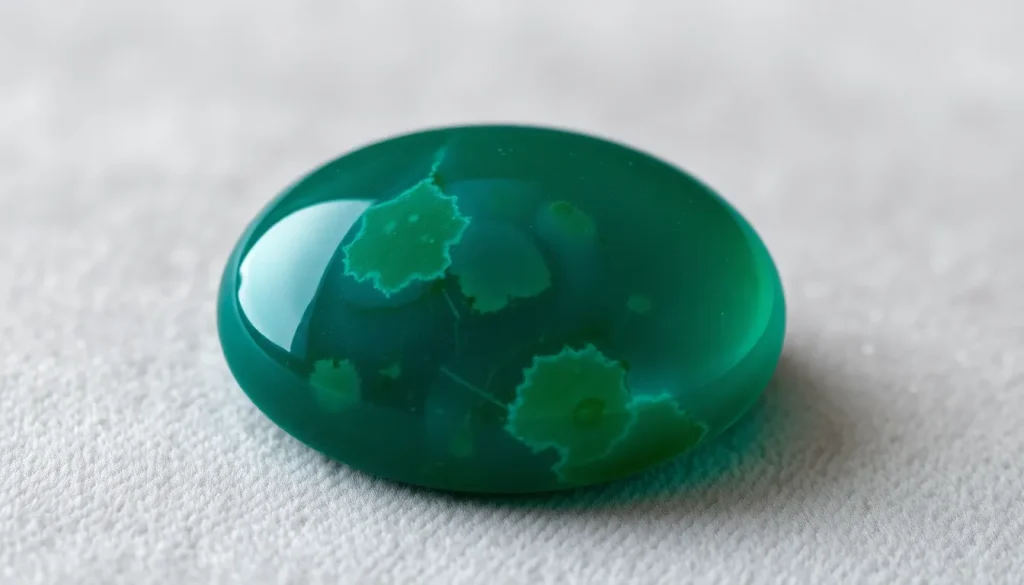
Californite is the trade name for a vivid green to blue‑green variety of the mineral vesuvianite. It is a silicate mineral that forms in metamorphic environments and is most commonly found as translucent to opaque crystals or massive aggregates. The gemstone is valued for its bright, often emerald‑like hue, and is frequently cut as a cabochon for use in rings, pendants, and earrings.
History and Origin
The name “Californite” originated in the early 20th century when green vesuvianite from the San Benito County region of California entered the commercial market. Early miners and gem traders promoted the stone as a distinct Californian treasure, distinguishing it from the more common brown or yellow vesuvianite varieties. While the original deposits were Californian, similar green vesuvianite has since been identified in other localities worldwide, including Italy, Japan, and the United Kingdom.
Meaning and Symbolism
In traditional gemstone lore, Californite is associated with renewal, growth, and emotional balance. Its green color is linked to the heart’s energy, symbolizing compassion, empathy, and the nurturing of relationships. Many believe that wearing Californite can encourage personal development and help the wearer stay grounded while pursuing new opportunities.
Healing and Metaphysical Properties
According to crystal‑healing traditions, Californite is said to promote emotional healing by soothing anxiety and fostering a sense of calm. Practitioners claim it can assist in releasing old patterns and supporting the heart chakra’s flow of love and forgiveness. These properties are considered metaphysical beliefs and are not a substitute for professional medical advice.
Varieties and Types
Californite is essentially a color variety of vesuvianite, but several sub‑varieties are recognized based on hue and clarity:
- Emerald‑Green Californite – deep, saturated green, often compared to emerald.
- Blue‑Green Californite – a teal or turquoise shade with subtle blue undertones.
- Yellow‑Green Californite – lighter, chartreuse tones, sometimes resulting from slight iron content.
Heat treatment is occasionally applied to enhance or stabilize color, a practice that should be disclosed by reputable dealers.
Jewelry Uses and Care
Because Californite rates 6.5–7.5 on the Mohs scale, it is suitable for most types of jewelry but should be protected from hard impacts. The stone’s typical vitreous luster and translucency make it ideal for cabochon settings that showcase its color without relying on facet brilliance.
Care recommendations:
- Clean with warm, soapy water and a soft brush; avoid ultrasonic cleaners if the piece contains delicate settings.
- Dry with a lint‑free cloth; store away from harder gemstones such as quartz or diamond.
- Avoid prolonged exposure to high heat or direct sunlight, which can occasionally cause color fading in treated stones.
Buying Guide
When purchasing Californite, consider the following factors:
- Color Saturation – Deep, even color is most desirable; uneven or washed‑out tones lower value.
- Clarity – Inclusions are common; eye‑clean stones fetch higher prices.
- Cut – Cabochons should have a smooth, polished dome that enhances depth.
- Treatment Disclosure – Ask the seller whether any heat treatment or dye has been applied.
- Certification – For larger or high‑value pieces, a gemological report from a recognized laboratory (e.g., GIA) provides assurance of authenticity.
Reputable sources include certified gemstone dealers, reputable online marketplaces with return policies, and local mineral clubs that can provide provenance information.
FAQ
What is Californite good for?
Californite is prized for its vivid green to blue‑green color, making it popular in jewelry such as cabochon pendants and rings. Traditionally, it is also believed to support emotional balance and heart‑centered energy.
Is Californite rare?
High‑quality, deep‑color Californite is less common than standard vesuvianite, especially when free of visible inclusions. However, the mineral itself is not considered extremely rare, and specimens are sourced from several global localities.
How can you tell if Californite is real?
Real Californite exhibits a vitreous luster, a specific gravity of 3.3–3.5, and a refractive index around 1.71–1.73. A professional gemologist can confirm authenticity with spectroscopy or a refractometer and can disclose any heat treatment.
What chakra is Californite associated with?
In crystal‑healing traditions, Californite is linked to the Heart (Anahata) chakra, where it is said to promote love, compassion, and emotional healing.
How should you clean Californite?
Clean Californite with warm, soapy water and a soft brush. Avoid ultrasonic cleaners and harsh chemicals. Dry with a lint‑free cloth and store it separately from harder gemstones to prevent scratches.
Leave a Reply