
Short Answer
Overview
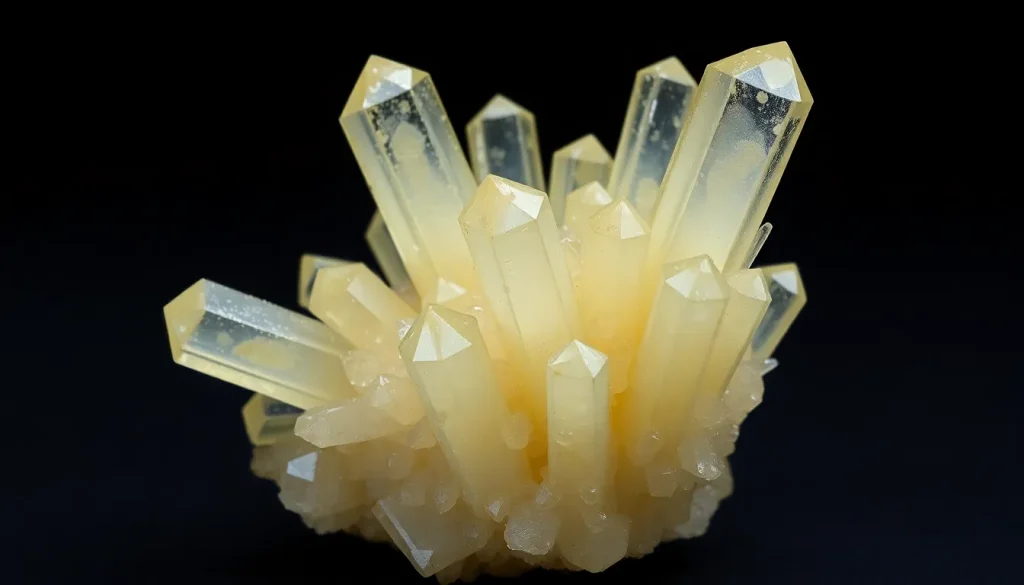
Vlasovite is a rare silicate mineral composed of sodium, zirconium, silicon, oxygen, and water (Na2ZrSi3O9·2H2O). It typically forms prismatic, tabular crystals that are colorless, white, or very pale yellow. With a Mohs hardness of about 5.5, it is softer than many traditional gemstones, which limits its widespread use in jewelry but makes it a prized specimen for mineral collectors.
History and Origin
The mineral was first described in 1961 from the Vlasov deposit in the Kola Peninsula of north‑western Russia, after which it is named. Subsequent occurrences have been reported from a handful of localities worldwide, including Norway, Canada (Nunavut), and the United States (California). Because it forms in low‑temperature hydrothermal environments, Vlasovite is often found alongside other rare silicates and zeolites.
Meaning and Symbolism
In gemstone lore, Vlasovite is associated with clarity of thought and the ability to see hidden truths. Its translucence is said to symbolize transparency in relationships and personal intentions. Collectors value it for its rarity and the sense of discovery it conveys.
Healing and Metaphysical Properties
Traditional crystal‑healing beliefs attribute Vlasovite with the following qualities:
- Intuition enhancement: It is thought to stimulate the third‑eye chakra, aiding psychic perception.
- Emotional balance: Some practitioners claim it helps release suppressed emotions and promotes inner peace.
- Physical support: Within crystal‑healing circles, Vlasovite is occasionally linked to the skeletal system and joint health, though these claims are not medically verified.
These properties are based on folklore and should not replace professional medical advice.
Varieties and Types
Vlasovite does not have widely recognized varieties, but specimens can differ in:
- Color intensity: From completely colorless to faint yellow or brownish hues.
- Crystal size: Small, microscopic crystals to well‑developed prismatic crystals up to several centimeters.
- Hydration level: Minor variations in water content may affect transparency.
Jewelry Uses and Care
Because of its modest hardness and perfect cleavage on {010}, Vlasovite is rarely set in high‑impact jewelry. When used, it is typically featured in pendants, earrings, or brooches where the setting protects the stone from knocks.
Cleaning: Use a soft, lint‑free cloth and mild soapy water. Avoid ultrasonic cleaners, steam, and harsh chemicals, as the mineral can absorb moisture and may be damaged by sudden temperature changes.
Storage: Keep Vlasovite pieces in a padded compartment, separate from harder gemstones such as quartz or sapphire to prevent scratching.
Buying Guide
When purchasing Vlasovite, consider the following criteria:
- Source documentation: Reputable dealers should provide locality information and, if possible, a gem‑ological report.
- Clarity and color: Look for specimens that are free of inclusions and have a uniform, gentle hue.
- Cut and setting: Since Vlasovite is brittle, a protective bezel or low‑profile setting is advisable.
- Treatment disclosure: Vlasovite is generally untreated; any enhancement (e.g., heat) should be disclosed.
- Price range: Expect modest prices for small, untreated pieces, while larger, well‑formed crystals can command higher collector values.
FAQ
What is Vlasovite good for?
Vlasovite is prized by collectors for its rarity and distinctive crystal habit; in jewelry it is used sparingly due to its moderate hardness. Traditional belief associates it with clarity of thought and emotional balance.
Is Vlasovite rare?
Yes, Vlasovite is considered rare. High‑quality, well‑formed crystals are limited to a few localities, and most specimens are small or require careful handling.
How can you tell if Vlasovite is real?
Identify Vlasovite by its orthorhombic prismatic crystals, perfect cleavage on {010}, vitreous luster, and refractive indices around 1.60. A professional gem‑lab can confirm its composition with X‑ray diffraction or spectroscopy.
What chakra is Vlasovite associated with?
In crystal‑healing traditions Vlasovite is sometimes linked to the third‑eye chakra, though there is no universally accepted association.
How should you clean Vlasovite?
Clean Vlasovite gently with warm soapy water and a soft cloth. Avoid ultrasonic cleaners, steam, or harsh chemicals, and store it separately from harder gemstones to prevent scratches.
Leave a Reply